
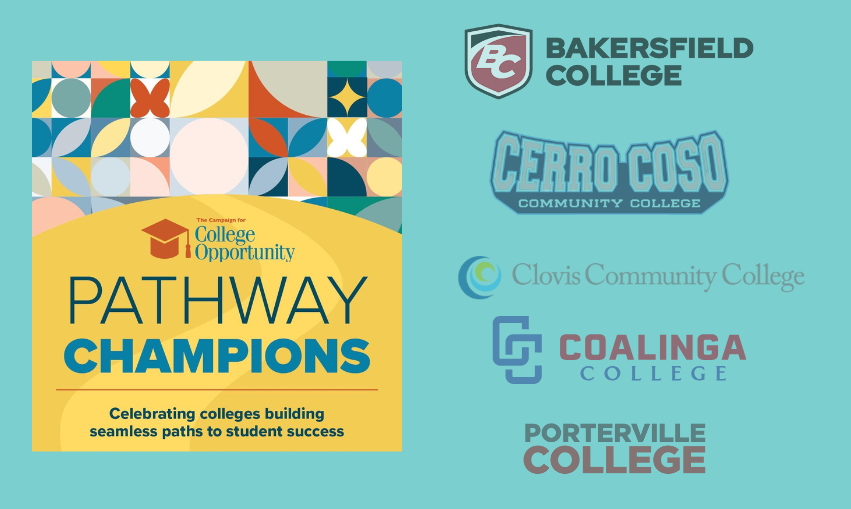
These five CVHEC community college members were recently recognized as 2025 Pathway Champions by the Campaign for College Opportunity. All are actively involved in the consortium’s Central Valley Transfer Project.
(NOV. 12, 2025) — The Campaign for College Opportunity recently honored 40 California Community Colleges and California State Universities (CSU) – including five Central Valley Higher Education Consortium members – as 2025 Pathway Champions for their work paving pathways to college and economic opportunity for thousands of California students by strengthening the transfer process.
The CVHEC-member California Community Colleges and California State Universities honored in a virtual awards presentation Oct. 23 as part of National Transfer Student Week (Oct. 20-24) for their work implementing equitable placement and Associate Degree for Transfer (ADT) policies were: Bakersfield College, Cerro Coso Community College, Coalinga College, Clovis Community College and Porterville College. (See category breakdown below).
According to CCO’s website press release, the 40 higher education institutions selected statewide were awarded for their efforts in implementing two landmark policies:
These five, along with CVHEC’s 10 other community college members, have been working through the consortium’s Central Valley Transfer Project to create a clear path to transition between community college and the 10-county regions’s four-year institutions, said Ángel Ramírez, CVHEC associate director.
“Strengthening transfer pathways for valley students has been a goal of CVHEC since the launch of our CV transfer project in 2021 ,” Ramírez said.
This year, there were four categories (Pathway Champion of Placement, Pathway Champion of Placement Equity, Pathway Champion of Transfer, Pathway Champion of Transfer Equity) recognizing achievement and equity in placement and transfer outcomes.
The CCO website press release provided additional details:
“These reforms have been pivotal as students are increasingly being supported to succeed in courses that count towards their transfer goals and placed on an expedited, guaranteed path to a four-year degree, particularly Latinx and Black Californians, who have long faced disproportionate obstacles in completing their degrees.
“Supporting higher education is vital to the future of California, especially community colleges, where nearly two-thirds of California’s college students begin their higher education journey.
“Historically, transferring from community college to a four-year university has been filled with systemic barriers, with only seven percent of transfer-intending students being able to transfer within two years, prior to 2015. In the decade since, thanks to the implementation of ADT and placement policies, more students are transferring faster, with ten percent of current community college students transferring within two years and 19 percent after four years.
“While there is room for improvement, this growth showcases the vital importance of the work that this year’s Pathway Champions are doing and presents a major solution to the looming economic challenges that California faces.
Jessie Ryan, president of the Campaign for College Opportunity, said, “Our multiracial democracy and economy require us to support the growing majority of diverse students to complete college and earn a degree. At a time when students are increasingly questioning their place in higher education due to mounting attacks on their ability to thrive, we applaud the colleges that are courageously meeting the moment to implement the policies and practices we know transform student success and strengthen transfer in California.”
See:



(UPDATE OCT. 13): The Fresno State Feria de Educación Oct. 11 featured opening remarks by José C. Ramírez, a Fresno State alumnus and boxing champion who has represented the United States in the Olympics. He delivered a moment-of-silence tribute to the late Dr. Joseph Castro, former California State University chancellor and former Fresno State president who passed away Aug. 24. In this 2016 photo, José poses with Dr. Castro, former First Lady Mary Castro and son Jess. Ramírez, who also spoke at the first Feria in 2015, delivered a eulogy at Dr. Castro’s Celebration of Life Oct. 5 at Harris Ranch in Coalinga. Like the boxing champion, Dr. Castro was a champion of La Feria de Educación that is presented by Fresno State Outreach and Special Programs, the CSU and UnivisionFresno.
By MARISA MATA
Fresno State TODAY
(OCT. 8, 2025) — Students and families from across the Valley will gather at Fresno State on Saturday, Oct. 11 from 10 a.m. to 2 p.m. to participate in the university’s 10th Feria de Educación. An annual event meant to empower bilingual students and families, Feria de Educación connects students with resources to succeed in higher education and beyond, while offering their families tools to support and advocate for their students.
Hosted in partnership with Univision, Feria de Educación was implemented at Fresno State and other California State University campuses as part of the CSU’s Graduation Initiative 2025, aimed at eliminating equity gaps in college readiness and degree completion.
This year’s Feria de Educación will feature opening remarks by José Ramírez, a Fresno State alumnus and boxing champion who has represented the United States in the Olympics.
Throughout the day, attendees will have access to a resource fair, campus tours, a kids area and reading garden. Feria de Educación will also host a variety of informative workshops on topics including Bulldog Bound, Cal State Apply, financial aid and scholarship opportunities, what to expect during the first year of college and developing social-emotional skills.
Intended to also celebrate Latine art and culture, Feria de Educación will feature performances from Mariachi Orgullo de Fresno State and Los Danzantes de Aztlan. Attendees will also be able to view the newly installed statues in the Maple Mall that are part of the “Alebrijes & Nahuales: Fantastic Animals from Mexico” exhibition in Fresno, showcasing the artistic traditions of Oaxaca and Central Mexico.
“We are expecting between 3,000 and 4,000 attendees this year, and for many families and students, this will be their first time stepping onto a college campus,” said Martina Granados, interim associate vice president for Strategic Enrollment Management at Fresno State. “It’s an important opportunity for them to envision themselves in a collegiate environment, to learn about the resources available to support their goals, and understand the pathways that make higher education attainable.”
“Feria de Educacion is more than an event–it’s a celebration of access, opportunity, and belonging. It reaffirms to our students and their families that they matter, that they are seen, valued, and capable of shaping their own futures no matter the challenges they may face or what they may hear or experience elsewhere. Their dreams and goals are worth pursuing.”
To see all resources available to students, visit https://studentaffairs.fresnostate.edu/studentresources/index.html.
INFO: Jesse Farias at jfarias@csufresno.edu or Martina Granados, martinag@mail.fresnostate.edu.
See original Fresno State TODAY story.
BY VIVIENNE AGUILAR
CV Journalism Collaborative
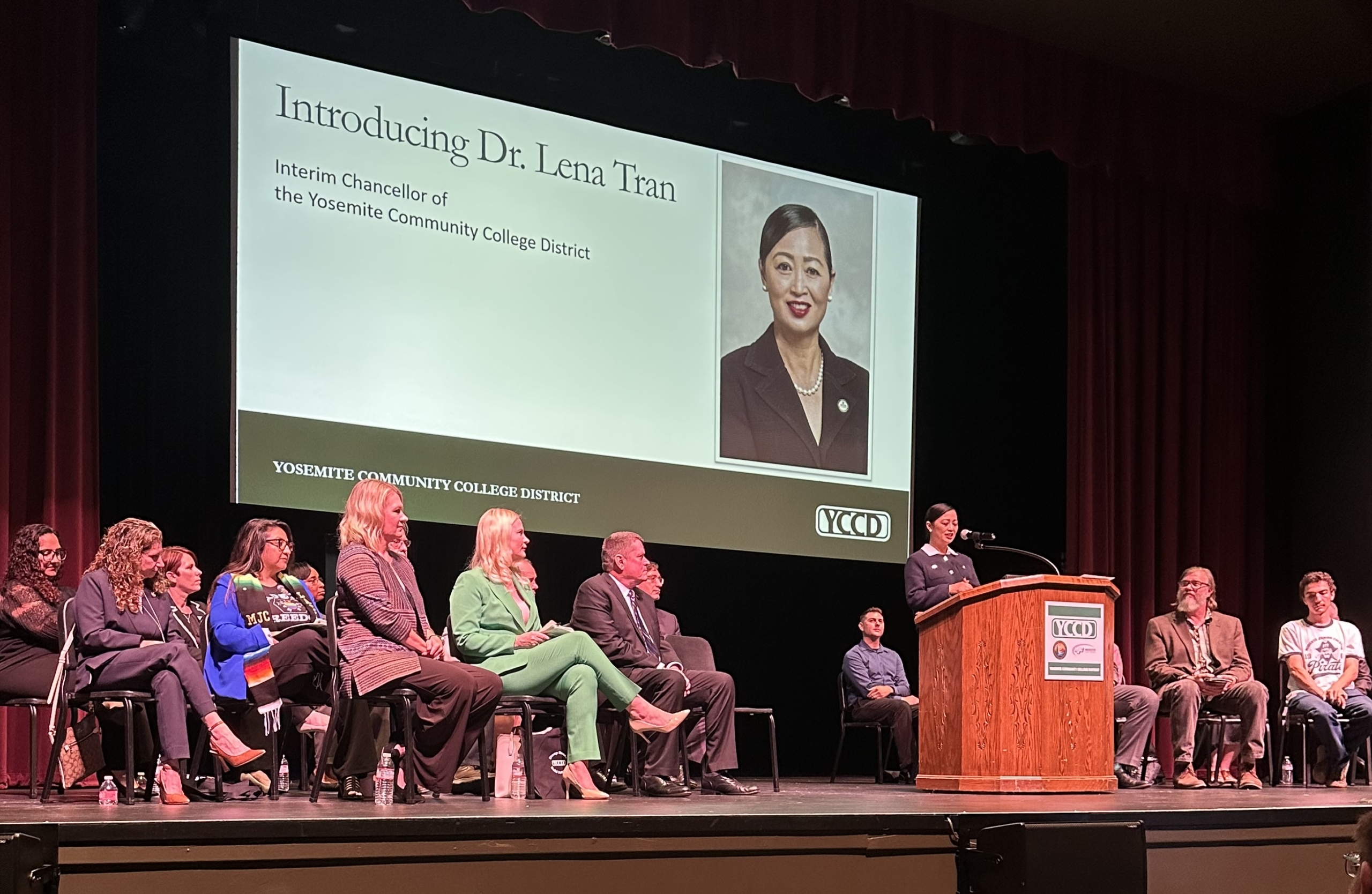
In a year when many California colleges faced the possibility of deep budget cuts, Yosemite Community College District leadership offered a brighter vision in the first-ever State of the District address Wednesday.
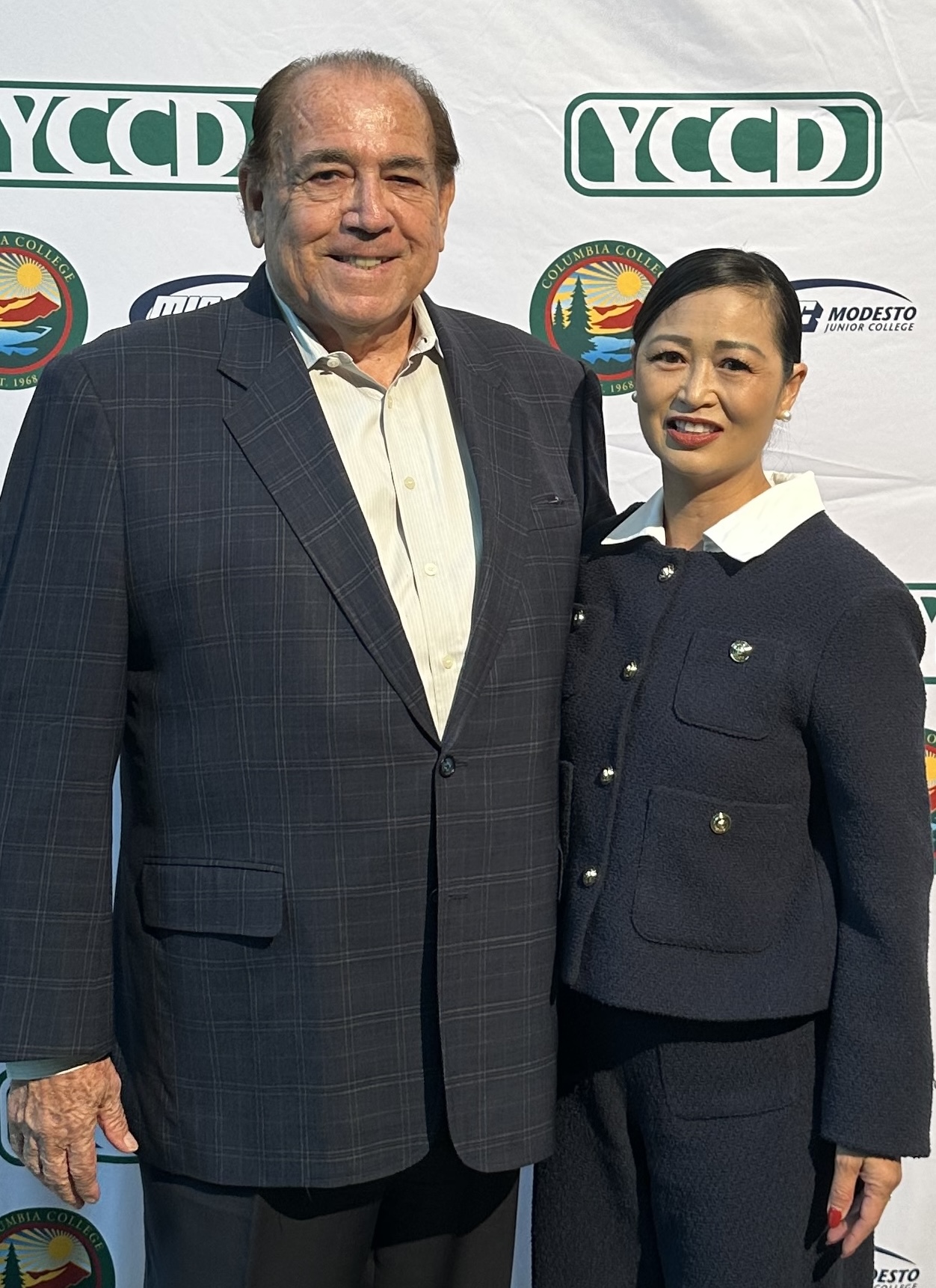
Dr. Benjamín Durán, CVHEC executive director, with Dr. Lena Tran, interim chancellor of YCCD, at her first state-of-the-district address Sept. 24 held at Modesto Jr. College.
Interim Chancellor Lena Tran spoke to about 200 assembled fellow administrators, staff, faculty, students and community members on the Modesto Junior College east campus in a speech showcasing the slogan “Deep Roots, Bold Futures.”
In her opening remarks, Tran recounted the barriers she faced to obtain higher education as an immigrant who was brought to America from Vietnam at 8-years-old, and connected her experience to those she hears from students of YCCD colleges.
She acknowledged the sacrifice and struggle community college students in the region face as they work to improve themselves and ultimately, their families and communities.
“That is why I stand here, not only as your interim chancellor, but as someone who deeply understands what it means to fight for that promise. That is why this year’s theme is deep roots and bold futures,” she said.
Since taking on the role of interim chancellor for the district in May, Tran said she and the board of trustees drew on her recent experience as president of Columbia College to create the program. In that role, she held State of the College events at the beginning of each semester, so it was natural for her to continue the tradition.
YCCD oversees MJC and Columbia College in Sonora.
Student enrollment across the district went down slightly in the 2023-24 academic year at 28,500. The year before, YCCD reported 30,000 students between the two colleges.
While the district only operates two schools, its coverage area reaches all of Stanislaus and Tuolumne counties, and parts of Alpine, Calaveras, San Joaquin, Merced and Santa Clara counties.
The district’s 2024-25 budget is more than $170 million, over $20 million more than the previous academic year.
In the last academic year, YCCD helped 2,400 students obtain associate degrees and 83% of career program graduates found employment after graduation. More than half of all YCCD students identify as female, and just over half identify as Hispanic. The district reported 32% of all students are enrolled full-time.
While the California State University and University of California systems initially both faced the prospect of big cuts from the state budget, funding for the state’s 116 community colleges has largely remained intact. The state legislature eventually backed off the deepest cuts.
Darin Sousa, a classified employee at MJC, said he didn’t know what to expect from an event like this, since there has never been one before, and was simply excited to learn what the district’s leadership had to say.
“I’ve worked part time with the athletics department (at MJC) for over 20 years. Now I’m a full time employee, but this is the first time I’ve seen (the district) host an event like this,” he said.
Gov. Gavin Newsom sent congratulations to YCCD for their inaugural program.
“The Central Valley, as you know, is the backbone of our economy and the targeted investments in agriculture, manufacturing and the trades we’re giving more Californians the skills to support their families and strengthen their communities,” he wrote in a message, read by Jesse Ryan, president of the Campaign for College Opportunity.
Health care and agriculture are two of the most notable and necessary workforces in the region, according to Tran. In an effort to innovate and strengthen these sectors, YCCD is connecting its students with local and global experts in these fields.
The district offers students in the health care field dual-enrollment within rural high schools, like the ones in Calaveras and Sonora.
In Modesto, students studying animal husbandry, a sector of agriculture, are being connected with experts in Europe.
This summer, the district combined over $15,000 in scholarship funds from dairies around the Modesto-area to send MJC’s dairy judging to represent the state and country in The Royal Highland Show, a global competition held in Scotland.
Matthew Gutierrez, 19, serves as YCCD student trustee and is studying plant science and education at MJC. He told The Modesto Focus that he’s a product of the district’s strategic planning, especially when it comes to their plans to integrate tools like artificial intelligence and virtual reality into classrooms.
In his agricultural courses, Gutierrez is learning firsthand how artificial technology can be used to improve genetic engineering in plant science.
“It’s not really a future thing. I think it’s already happening,” he said.
Later this year, Gutierrez will intern at Generation Growers Inc., a Modesto-based and family-owned nursery as he plans his transfer to a university.
Tran praised student leaders like Gutierrez for energizing her team and showing them why their work matters.
“Our job is to give them that gift of hope, the tools to achieve their goals, while also reminding them the importance of being humble,” she said.
For more information on career pathway opportunities at Modesto Junior College, visit the school’s “Accelerated Careers Training (ACT)” webpage.
— Vivienne Aguilar is a reporter for The Modesto Focus, a project of the Central Valley Journalism Collaborative. Contact Aguilar at vivienne@cvlocaljournalism.org.
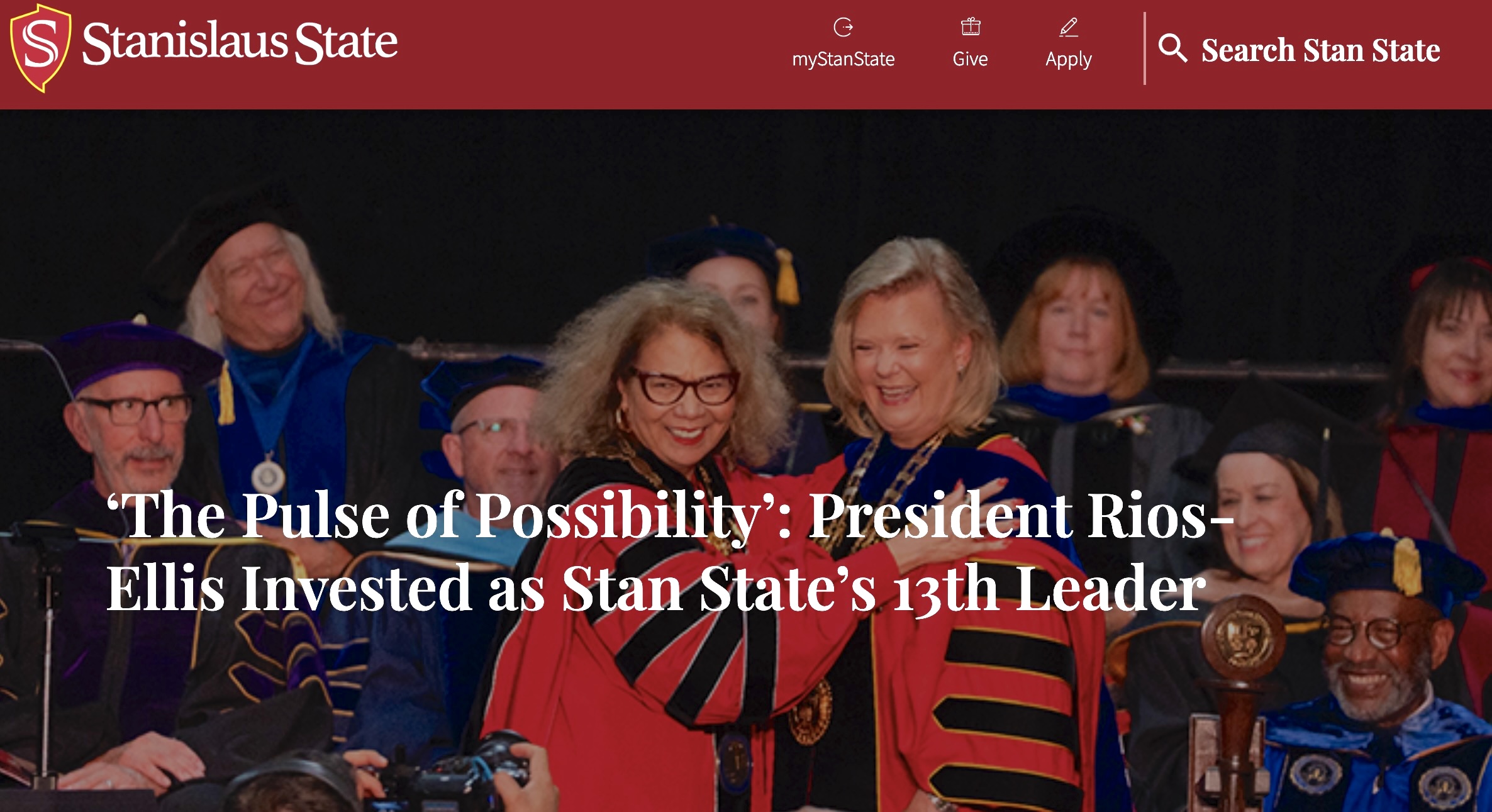
Stanislaus State marked a historic moment with the investiture of Dr. Britt Rios-Ellis as its 13th president during a ceremony Oct. 3, at Ed and Bertha Fitzpatrick Arena with several fellow Central Valley Higher Education Consortium Board of Directors members and team attending.
The event blended academic tradition with the spirit of the Central Valley, welcoming campus and community members to celebrate Stan State’s mission and future.
President Rios-Ellis began her tenure on July 1, 2024. The investiture, a longstanding academic tradition, formally celebrates her leadership and the university’s shared vision for the future.
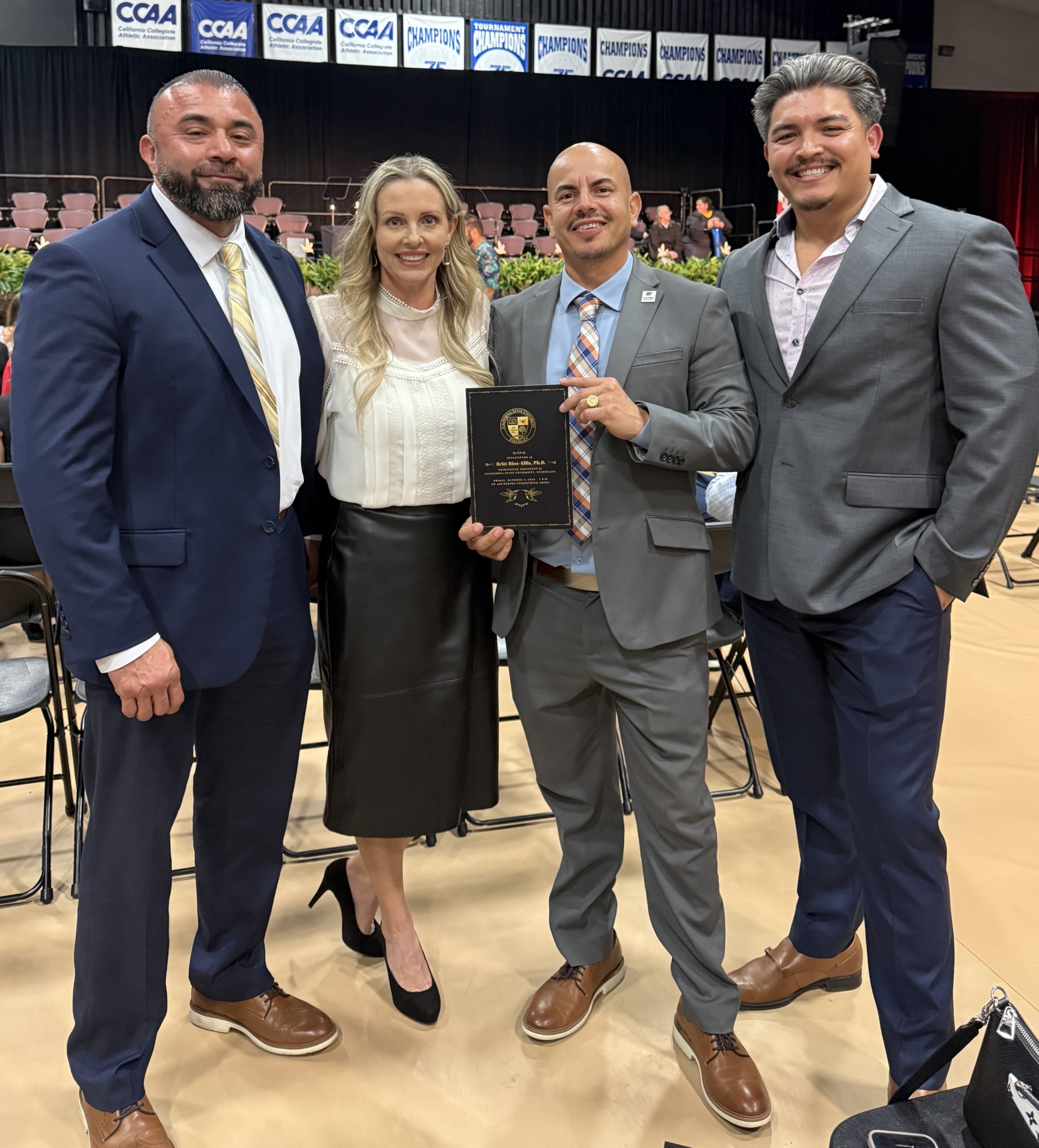
CVHEC board members at the Stanislaus State investiture were Chancellor Robert Pimentel, President Carla Tweed, President Angel Reyna and CVHEC Associate Director Angel Ramirez.
From the moment guests arrived, the program reflected the University’s student-centered identity. CVHEC board members who attended were: West Hills Community College District Chancellor Robert Pimentel, Coalinga College President Carla Tweed and Madera College President Angel Reyna.
Team members attending were CVHEC Associate Director Ángel Ramírez and Administrative Specialist Priscilla Arrellano.
Outside the arena, Ballico Taiko, a student drumming group from the Ballico-Cressey School District, set the tone with a powerful drum performance. Student-athletes lined the processional route, creating a corridor of Warrior pride as the platform party entered Fitzpatrick Arena in academic regalia.
Provost and Vice President for Academic Affairs Rich Ogle served as the emcee for the celebration. Jack Clarke Jr., chair of the California State University Board of Trustees, offered greetings on behalf of the board, welcoming Rios-Ellis and acknowledging the significance of the occasion. Additional greetings were offered by the speaker of the Academic Senate, chair and secretary of Staff Council, president of Associated Students, Inc. and chair of the Alumni Advisory Council.
Musical performances throughout the program reflected the cultural richness of the region and the personal story of the president. The Stanislaus State Latin Jazz Ensemble took the stage early in the ceremony, led by Rios-Ellis’s husband, music educator and musician Enrique Rios-Ellis, on flute. The ensemble performed one of the president’s favorite songs, “La Bikina.”
One of the most heartfelt moments came when Rios-Ellis’s three children — Xóchitl, Enrique Jr. and Itzél — took the stage to share their reflections. As her daughter Xóchitl Rios-Ellis grew emotional, President Rios-Ellis wiped away tears of joy.
“What gives me hope is to see people like you in leadership — people who choose to lead with kindness, respect, integrity and empathy,” Xóchitl Rios-Ellis said. “To have watched you climb from professor all the way to the president of a university is incredibly inspiring, but above all it is well deserved.”
The Mariachi Juvenil Corazón Ranchero from Los Banos Unified School District, featuring students in grades K-12, followed with three songs, delighting the audience and filling the arena with the sounds of celebration.
The ceremony then turned to reflections from distinguished guests. Ron Carter, president and chief executive officer of Carter & Associates and a nationally respected leader in higher education, recognized as an A-C-E Sage and a longtime mentor to Rios-Ellis, offered heartfelt remarks recalling her leadership journey and the qualities that have defined her career.
The Chancellor of the California State University Mildred García followed with remarks praising Rios-Ellis’ vision and the compassion that drives her leadership.
“She calls it a spirit of cariño — a deep caring and commitment to the students, faculty, staff, alumni and community members who comprise the extended Stan State family,” García said.
“Britt, there is no doubt in my mind that under your leadership this institution will reach even greater heights as a shining model of inclusive excellence, a powerful engine for social mobility and as a vital and essential community, economic, social and cultural hub for the Central Valley.”
As the final speaker, Rios-Ellis took the podium to close the ceremony with a message of shared purpose and gratitude.
“Please know that I am both deeply blessed and inspired by the trust you place in me to lead this extraordinary University,” she said. “Our gathering today symbolizes a unified commitment to nurturing a vibrant community dedicated to progress. This investiture is about us.”
In her address, titled “The Pulse of Possibility and Leading with Cariño,” Rios-Ellis reflected on the University’s role as more than an academic institution.
“We have always aspired to be much more than an academic institution,” she said. “We are a beacon where dreams flourish and opportunities abound. Together, we are creating an environment wherein knowledge, diversity, respect and collaboration thrive, ultimately shaping a brighter future for the Valle Central.”
“Together we are building something powerful: A University nationally recognized for its quality, value and impact. A University that not only reflects the Valle Central but shapes its future. There is one undeniable fact: When Stan State thrives, the Central Valley thrives,” said President Rios-Ellis
Throughout her remarks, Rios-Ellis returned to recurring themes of belonging, equity and shared purpose, ideas that have defined her first year as president. She emphasized the transformative power of education and the importance of equity-driven practices as catalysts for progress.
“My vision for Stan State is one where everyone, of all backgrounds, has equitable access to the resources and opportunities they need to thrive,” she said. “Cariño-laden inclusivity is the force that transforms education into equity, and equity into progress. At Stan State, cariño is demonstrated in the way we show up for one another, the way we center students in every decision and the way we embody strength and kindness as Warriors.”
She described the “pulse of possibility” she felt the moment she arrived on campus — a rhythm of resilience, dreams and aspirations carried by students, faculty, staff, alumni and partners throughout the Valley.
“It is the rhythm of hard work through challenges overcome and destinations realized,” she said. “This pulse is alive in every lecture hall, every lab, every relationship and every graduate who walks across our stage. It is truly the sound of bright futures unfolding.”
The Investiture served as the centerpiece of a series of events celebrating Rios-Ellis’s presidency. Additional festivities are scheduled for later this month.
Friday’s ceremony reflected the themes that have guided her first year: belonging, collaboration and a shared commitment to the Valley’s future.
“This moment,” Rios-Ellis said, “is our chance to reaffirm our dedication to excellence, belonging and the transformative power of education, ensuring that Stan State is a place where dreams are realized and families and communities are strengthened.
“Together we are building something powerful: A University nationally recognized for its quality, value and impact. A University that not only reflects the Valle Central but shapes its future. There is one undeniable fact: When Stan State thrives, the Central Valley thrives.”
See original Stan State story:
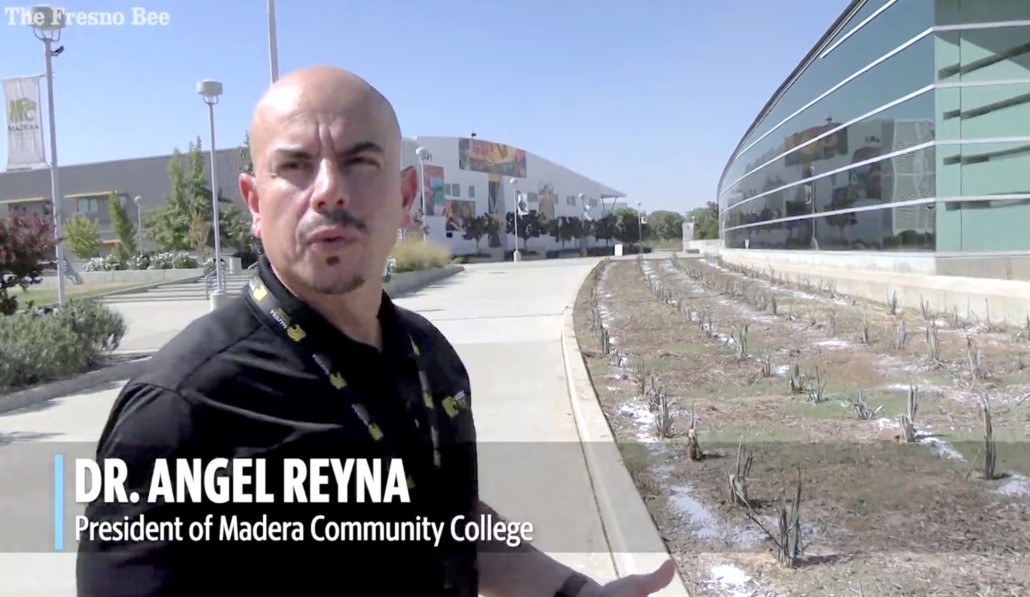
In a Fresno Bee video published last fall, Madera Community College President Ángel Reyna explains the college’s new academic Agave Distilling Program that will begin later this fall, he announced at his recent State-of-the-Campus address.
In his recent state-of-the-campus address, Madera Community College President Ángel Reyna announced that the college’s new academic Agave Distilling Program will roll out later this fall as a community education course with a credit curriculum currently in the development stages.
In a story published last fall, The Fresno Bee reported that community college students will work with a local winery where they will use commercial-grade equipment to make alcoholic spirits from the increasingly popular agave plant, famous for its production of tequila and mezcal in Mexico.
“Establishing an academic agave distilling program would be an innovative step for the state’s youngest community college: not only would it be the first of its kind at a public college in California, but it would train the future workforce of the state’s growing agave industry,” the story reported.
President Reyna told The Bee that, in the long-term, capitalizing on agave-based education could lead to an economic and cultural boost for Madera County.
At his campus address Oct. 3, he said Madera Community College is now leasing the Balbas American Winery located in south Madera and that $300,000 worth of equipment has been purchased. The program will plant 10-20 acres of various agave on campus and MCC plans to collaborate with the University of California Merced and UC Agriculture and Natural Resources for agave-related research.
President Reyna said in addition to its training and educational aspects, the vision of the Madera Community College academic Agave Distilling Program is to:
Background:

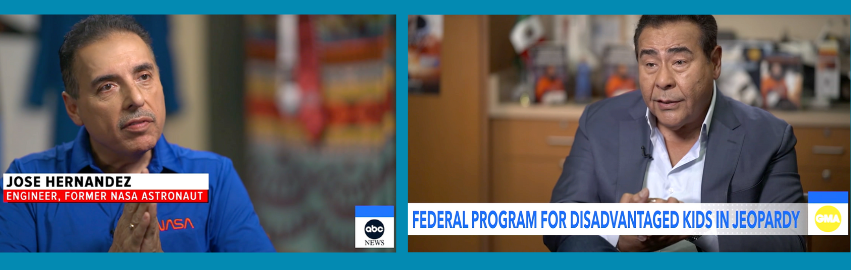
“You and I wouldn’t be here if those programs didn’t exist,” Quinones told Hernandez. “You and I both picked vegetables as migrant farm workers and then our wildest dreams came true.” Hernandez agreed. “Without the TRIO program, I never would have achieved my dream of becoming an astronaut,” he said. “I don’t think I would have been prepared for the rigors of graduate school. I have found education to be the great equalizer.”
BY MERRITT MCLAUGHLIN
Senior Writer – University of the Pacific
University of the Pacific’s leadership in improving access, retention and graduation rates for first-generation students and students with disabilities through the TRIO program received national recognition on Good Morning America recently.
The television appearance Sept. 8 — part of a segment on TRIO’s impact on students across the country — highlighted Pacific’s long-standing commitment to providing resources to underserved students. Pacific has supported low-income students through TRIO since 1979, helping more than 1,400 students stay on track, graduate and launch successful careers.
“Our TRIO success students are no different than any other college student in the United States,” said Vice President of Student Life Maria Blandizzi during the segment. “They have brilliance and ability that will matter to all of us and to future generations.”
Current students Simran Mann ’27, in the Eberhardt School of Business, and Mark Castaneda ’26, in the School of Engineering and Computer Science, shared their experiences while Pacific alumnus and former NASA astronaut Jose Hernandez ’84 joined Good Morning America host John Quinones to discuss the TRIO Upward Bound program, which both men participated in as students.
“You and I wouldn’t be here if those programs didn’t exist,” Quinones told Hernandez. “You and I both picked vegetables as migrant farm workers and then our wildest dreams came true.”
Hernandez agreed. “Without the TRIO program, I never would have achieved my dream of becoming an astronaut,” he said. “I don’t think I would have been prepared for the rigors of graduate school. I have found education to be the great equalizer.”
Upward Bound is one of several programs under the TRIO umbrella. Funded by the U.S. Department of Education, it partners with Pacific students to offer tutoring and a six-week college exploration summer program for students from nearby Edison High School.
Pacific also recently launched the First Gen Hub last year to support all first-generation students. The collaborative space includes study rooms, a computer lab, a kitchen and common areas on the ground floor of the McCaffrey Center.
“We all are going through this college journey together and we all are trying our best to reach our best potential,” Mann said. “It really makes my college degree much more accessible and it makes me feel a lot more confident in my space of being at college.”
The hub supports Pacific’s equity programs, including the Community Involvement Program, Success TRIO and Promise Scholars, and also serves first-generation students who are not enrolled in an equity program.
“I was homeless for about eight years. I’m very proud of the things that I have been able to overcome,” Castaneda said. “Without programs like TRIO, without that type of support, the growth and healing and resilience that I’ve developed doesn’t happen.”
The U.S. Department of Education recently awarded Pacific a $1.7 million grant to improve college retention and graduation rates for first-generation students and students with disabilities.
The five-year TRIO Student Support Services grant will help 200 students per year receive academic tutoring, financial aid, scholarship guidance, career exploration, personal and academic counseling and mentoring.
Current Pacific students can apply for the program’s services online.
See: original Pacific press release.
For University of Pacific media inquiries, contact Sallie Poggi, Pacific Chief Communications Officer: 209.932.4436 or spoggi@pacific.edu
Click here to add your own text

The CVHEC Board of Directors and team members convened Aug. 15 at UC Merced for a hybrid strategic planning retreat. Attending in person: (FRONT): Fresno State President Saúl Jiménez-Sandoval; CHSU President Flo Dun; Coalinga College President Carla Tweed; YCCD Interim Chancellor Lena Tran; San Joaquin Delta College Superintendent/ President Lisa Aguilera Lawrenson; Madera Community College President Ángel Reyna; Clovis Community College President Kim Armstrong; Merced College Superintendent/ President Chris Vitelli; CVHEC Dual Enrollment Lead Kristin Clark; UC Merced Chancellor Juan Sánchez Muñoz. (MIDDLE): CVHEC Admin Assistant Priscilla Arellano; Fresno City College President Denise Whisenhunt; Bakersfield College Interim President Stacy Pfluger; Taft College Acting Superintendent/ President Leslie Minor; CVHEC Executive Director Benjamín Durán; Reedley College President Jerry Buckley. (BACK): CVHEC Associate Director Angel Ramirez; WHCCD Chancellor Robert Pimentel; Lemoore College President James Preston; Modesto Junior College President Brian Sanders; Fresno Pacific University President André Stephens; College of the Sequoias President Brent Calvin. (Photo: Juan Rodriguez – UCM).
BY TOM URIBES
CVHEC Communications/Media Lead
Leaders from colleges and universities across California’s Central Valley gathered at the University of California, Merced for a one-day Strategic Planning Retreat hosted by the Central Valley Higher Education Consortium (CVHEC) Board of Directors Aug. 20.
The session marked an important milestone in the consortium’s 23-year history, as presidents, chancellors and higher education CEOs from across the region came together to chart a bold course for the next three to five years, said Dr. Benjamín Durán, CVHEC executive director, .
“This was a ‘roll up your sleeves’ kind of day,” Durán said, reflecting the spirit of the retreat. “It was about open discussion, candid collaboration, and making decisions that will set the state and direction for CVHEC in the years to come.”
A Trusted Voice for Higher Education Advocacy and Collaboration in the Valley
Hosted by UC Merced Chancellor Juan Sánchez Muñoz, the retreat began with welcome remarks that underscored the importance of regional collaboration in advancing higher education opportunities.
The day carried special significance as participants reflected on CVHEC’s origins. Founded at California State University, Fresno under the leadership of President-Emeritus John Welty, the consortium has grown into a trusted voice for higher education advocacy and collaboration in the Valley.
Current Fresno State President Saúl Jiménez-Sandoval noted in a social media post after the event the historical connection he found in reminiscing about his predecessor.
“This is a deeply meaningful program to our university and region,” President Jiménez-Sandoval said. “It represents not just a partnership but a shared responsibility to lift up the Central Valley through education. I look forward to our continued intentional collaboration on so many areas — from AI to transfer pathways to joint research projects.”
The retreat agenda featured a presentation by Durán and Ángel Ramírez, associate director, who revisited CVHEC’s founding story and outlined its core purpose: strengthening higher education access and success across the Central Valley.
“When institutions across the Valley work together, we amplify our impact for students, families, and communities,” said Ramírez, who previewed a draft of a video currently in progress telling the CVHEC story.
Their presentation highlighted the consortium’s current initiatives, including:
Dr. Kristin Clark, chancellor-emerita of the West Hills Community College District participating as a former CVHEC board member, reinforced CVHEC’s uniqueness. She served on the board including as chair until her retirement from WHCCD last year.
“The CVHEC Board of Directors is made up of CEOs. That’s powerful,” she said. “It means we have the ability to drive collective impact at the highest levels of our institutions. We are not duplicating anyone’s work. We are doing what no single institution can do alone. That’s why this board matters.”
Collaborative Workshops: From Challenges to Solutions
Facilitated by Nitya Wakhlu and Greg Netzer of Drawbridge Innovations, the retreat emphasized interaction and problem-solving. Prior to the retreat, board members participated in a survey identifying regional challenges most pressing to their institutions.
During the session, participants divided into small groups to tackle those challenges. Using structured templates, they explored questions such as:
Each group developed a “challenge charter” and presented their ideas to the full board. Using a dot-voting process, members prioritized three to five strategic initiatives for CVHEC to pursue over the next three to five years. Champions were identified for each initiative to ensure follow-through and accountability.
“This is the hard part,” said Wakhlu with a smile. “It’s easy to generate ideas. It’s harder to commit to action. But today you’ve done both.”
“This was the consortium at its best,” Dr. Duran said. “We saw CEOs from across the Valley not only identify shared challenges but also commit to being part of the solution. That’s the spirit of CVHEC.”
Building Toward the Future
The retreat outcomes included:
In addition to the retreat, UC Merced staff offered participants a guided campus tour, showcasing the university’s growth and commitment to serving the Valley.
Reflecting on the day, Associate Director Ramírez expressed optimism for what lies ahead.
“This was more than just planning,” Ramírez said. “It was about reaffirming our shared purpose and commitment in CVHEC’s work. Together, we can expand opportunities and outcomes for every student we serve.