
CVHEC to present rural dynamic at the
2026 California Dual Enrollment Equity Conference in March
Presentation will spotlight scalable rural dual enrollment models and preview forthcoming CVHEC Dual Enrollment Playbook
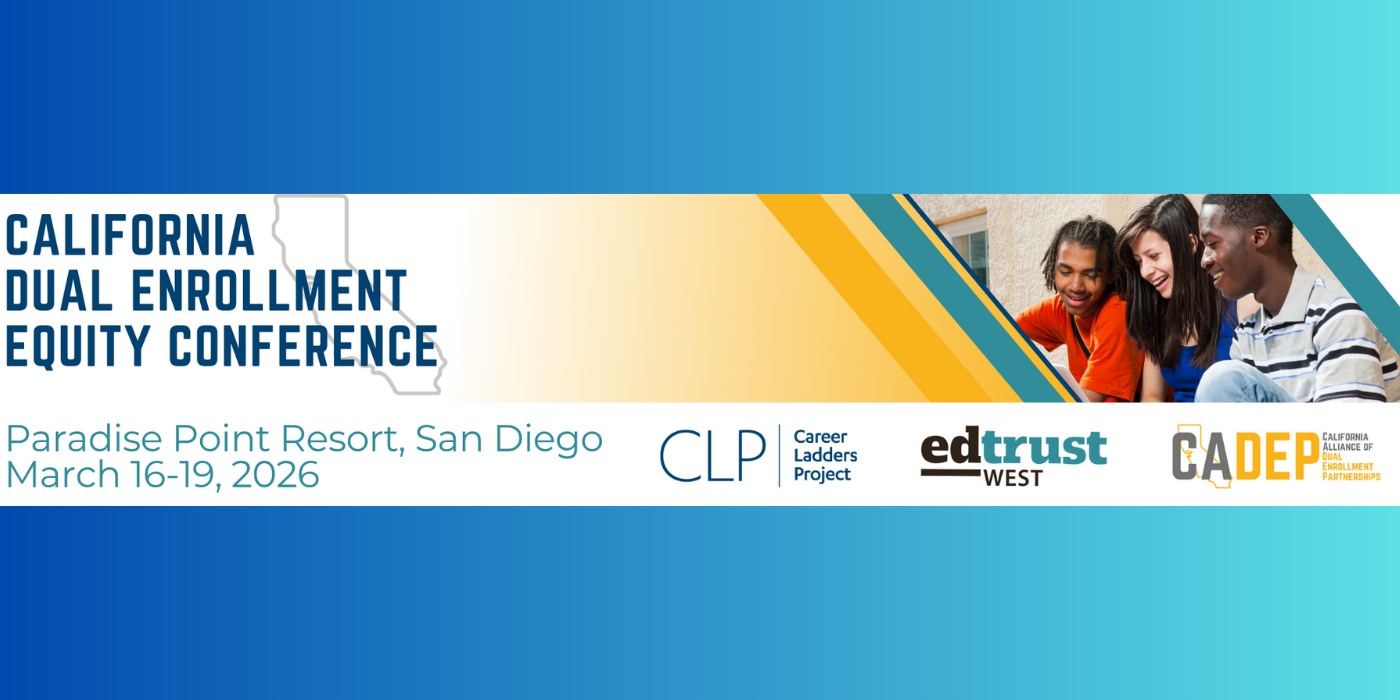
(FEB. 11, 2026) — The Central Valley Higher Education Consortium (CVHEC) will present at the 2026 California Dual Enrollment Equity Conference March 17 in San Diego with a focus on rural students.
CVHEC’s session, “Random Acts to Roadmaps: Dual Enrollment in Rural Schools,” will highlight best practices and equity-driven strategies that have enabled rural and under-resourced schools and colleges across the Central Valley to build sustainable, high-impact dual enrollment pathways, said Dr. Kristin Clark, CVHEC’s dual enrollment lead.
Clark, who also is chancellor-emerita of the West Hills Community College District, will make the presentation that is set for 10 a.m., alongside Elaine Cash, CVHEC grants coordinator and former superintendent of the Riverdale School District.
The conference is presented March 16-19 by the California Alliance of Dual Enrollment Partnerships (CADEP), Career Ladders Project, and EdTrust–West. Regular registration is now sold out, but overflow conference registration is available.
Last year, CVHEC presented its Master’s Upskilling Program, also a consortium dual enrollment initiative providing tuition support for high school teachers to earn a master’s degree that qualifies them to teach college dual enrollment courses at their campus.
For this year’s session, CVHEC’s goal is “to move the field beyond isolated or ‘random acts’ of dual enrollment toward intentional, scalable roadmaps that truly serve rural students,” said Clark.
“The Central Valley has become a statewide leader in this work, and we’re excited to share what we’ve learned with educators and policymakers from across California as well as continue to hear experiences and encourage collaboration whenever we can.”
CVHEC’s presentation at the state dual enrolment conference will draw from interviews conducted last year with Central Valley colleges and K–12 partners as part of the consortium’s forthcoming CVHEC Dual Enrollment Playbook, which is currently in production and scheduled for release in early March, just ahead of the conference.
The playbook will chronicle how several CVHEC-member community colleges — Coalinga College, Columbia College, Lemoore College, Merced College, Reedley College and Taft College — have developed effective and replicable dual enrollment models despite challenges such as geographic isolation, limited staffing and scarce resources.
San Joaquin Delta College’s Math Bridge Program in partnership with CVHEC and College Bridge will also be featured as an example of how intentional academic pathways can support student persistence and success. The program also addresses placement and readiness gaps.
“These colleges are demonstrating that equity-centered dual enrollment is not only possible in rural regions, but scalable,” said Clark. “Their work shows how leadership alignment, community engagement and high-touch student supports can fundamentally change access to early college opportunities.”
The presentation will emphasize a shift from fragmented dual enrollment offerings to structured, intentional pathways that support students from high school entry through college completion.
“CVHEC’s findings show that these approaches improve access, persistence and completion for students in rural communities — populations that have historically been underrepresented in early college programs,” Clark said.
Participants will learn about intentional pathway design, innovative staffing models, high-touch student supports and family engagement strategies that dismantle barriers for rural, underserved students and create attainable systems of early college access.
“It will include real voices from practitioners across the Central Valley and provide a replicable framework for schools,” Clark said adding that by the end of the session, participants will leave with practical tools to:
- Identify scalable dual enrollment strategies that improve access and persistence for rural and underserved students
- Identify intentional pathway designs that can create sustainable equity-driven models in even the smallest of high schools and colleges.
The session is designed for a broad audience of education leaders, including college and high school administrators, dual enrollment program leads, counselors and K–12 and college district superintendents and chancellors.
Several Central Valley rural high school practitioners are expected to attend the conference, Cash added.
In the session application, conference organizers seek a strong equity focus and practical relevance which fits the rural dynamic, Clark said.
“Rural students face unique barriers to early college access,” Clark said. “This conference provides an important platform to elevate rural voices and ensure that equity conversations include communities that are often left out of statewide reform efforts.”
CVHEC Executive Director Benjamin Duran said the acceptance of the consortium’s session at the 2026 California Dual Enrollment Equity Conference builds on CVHEC’s growing leadership in dual enrollment policy and practice.
“In recent years, CVHEC has convened regional partners, supported cross-sector collaboration and contributed to statewide conversations on expanding dual enrollment at scale and with equity,” Duran said.
He noted that the upcoming Dual Enrollment Playbook will further extend this work by offering a replicable framework grounded in the lived experiences of Central Valley educators and students.
“This presentation is both a celebration of what our region has accomplished and a call to action,” Duran said. “Rural communities have powerful lessons to offer, and we’re proud to help bring those lessons to a statewide audience. ”
About California Alliance of Dual Enrollment Partnerships (CADEP): an affiliated chapter of the National Alliance of Concurrent Enrollment Partnerships (NACEP), is a unified coalition committed to the advancement of equity, student success and quality in dual enrollment programs in California. Its vision is to unite individuals, state agencies and organizations committed to dual enrollment in California to promote and advance quality dual enrollment programming across the state.
Click here to add your own text
