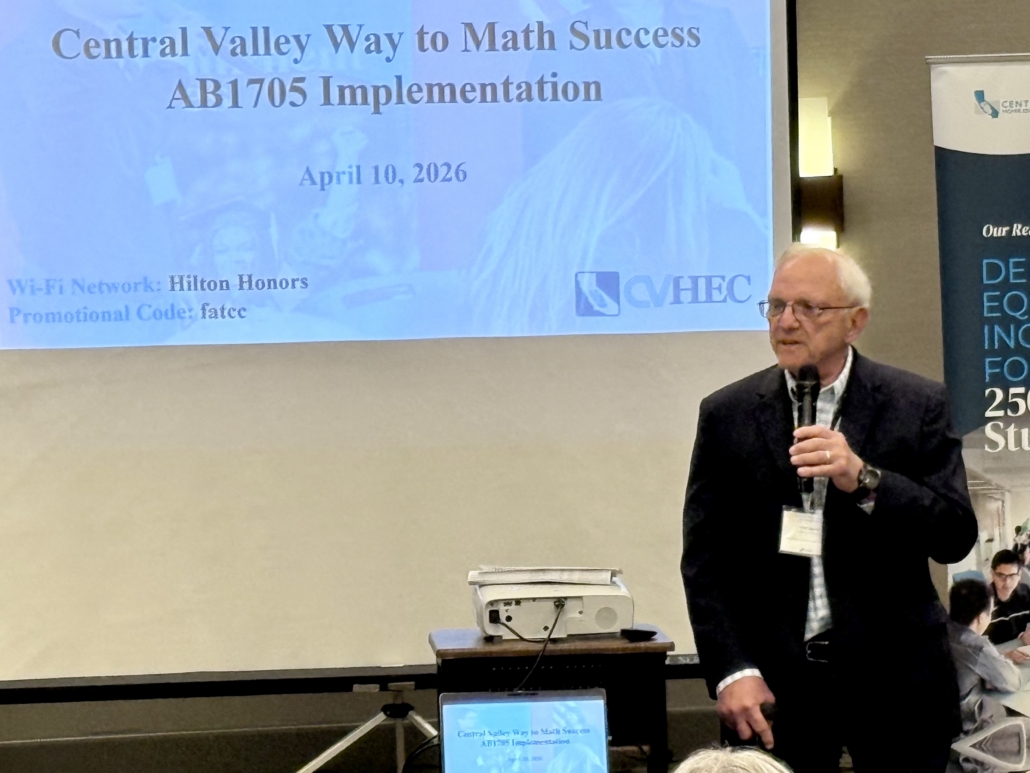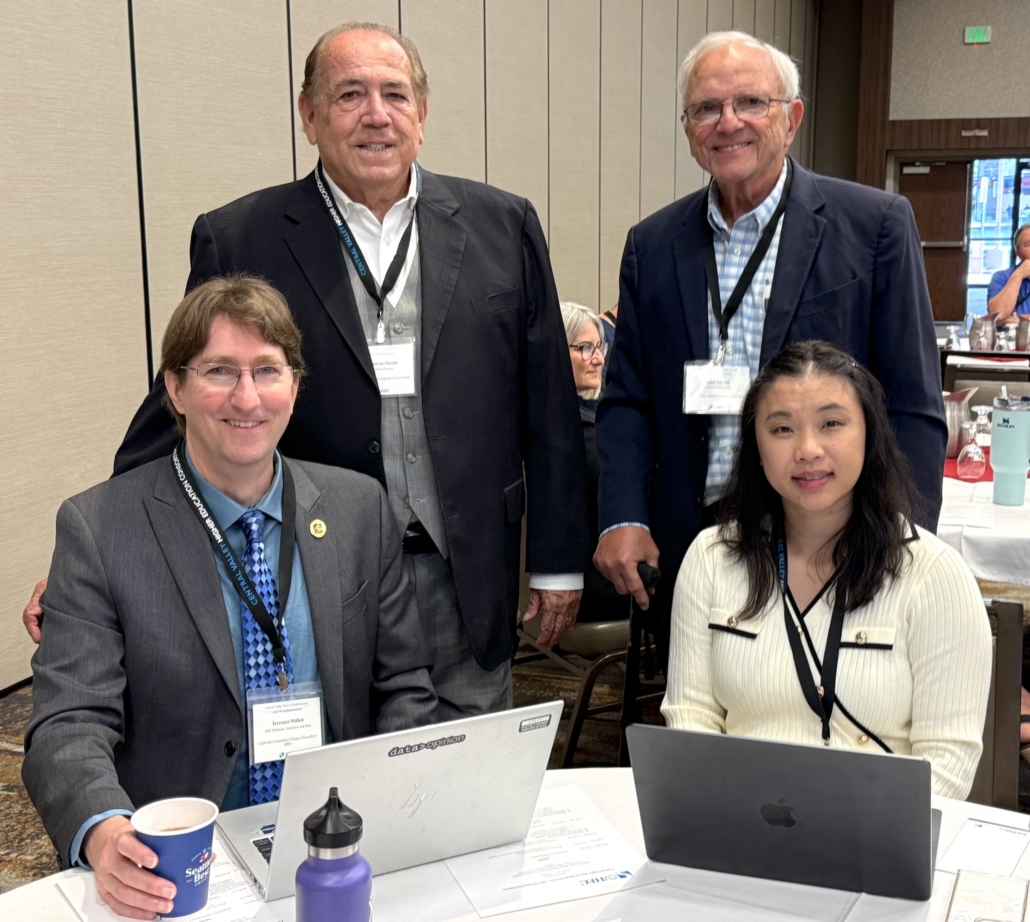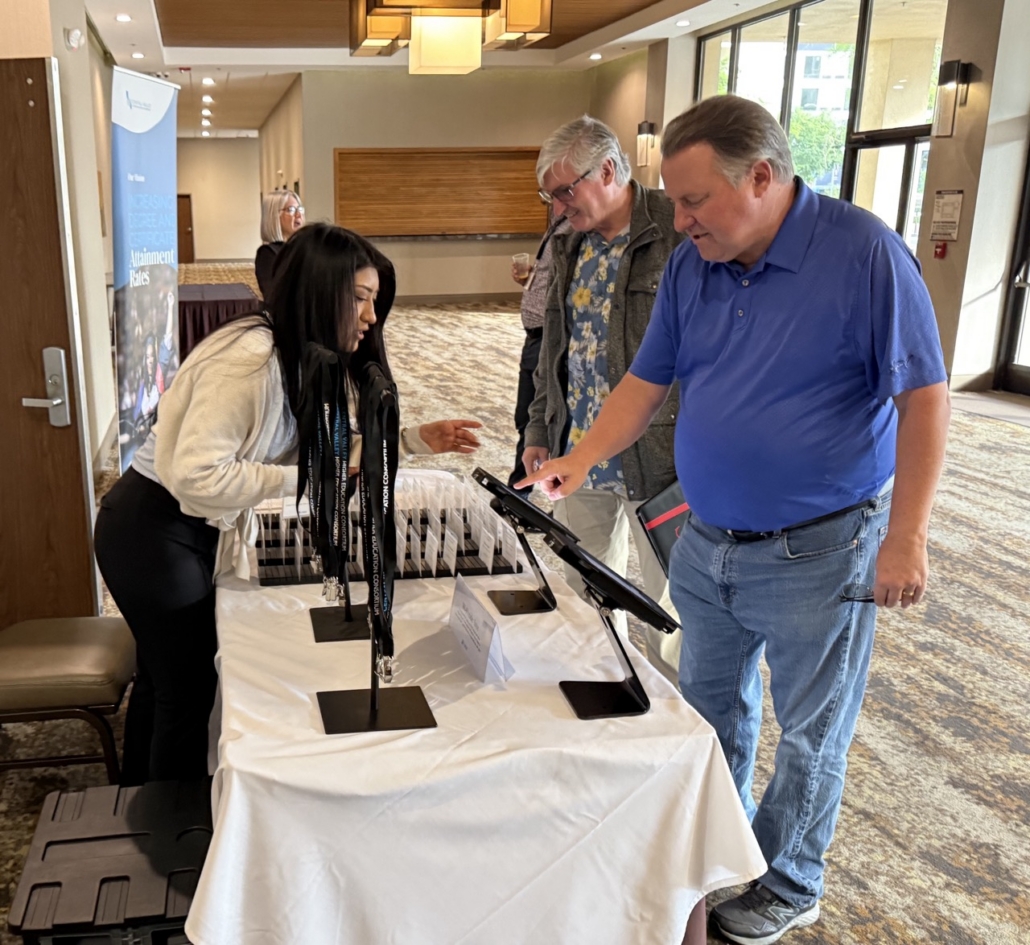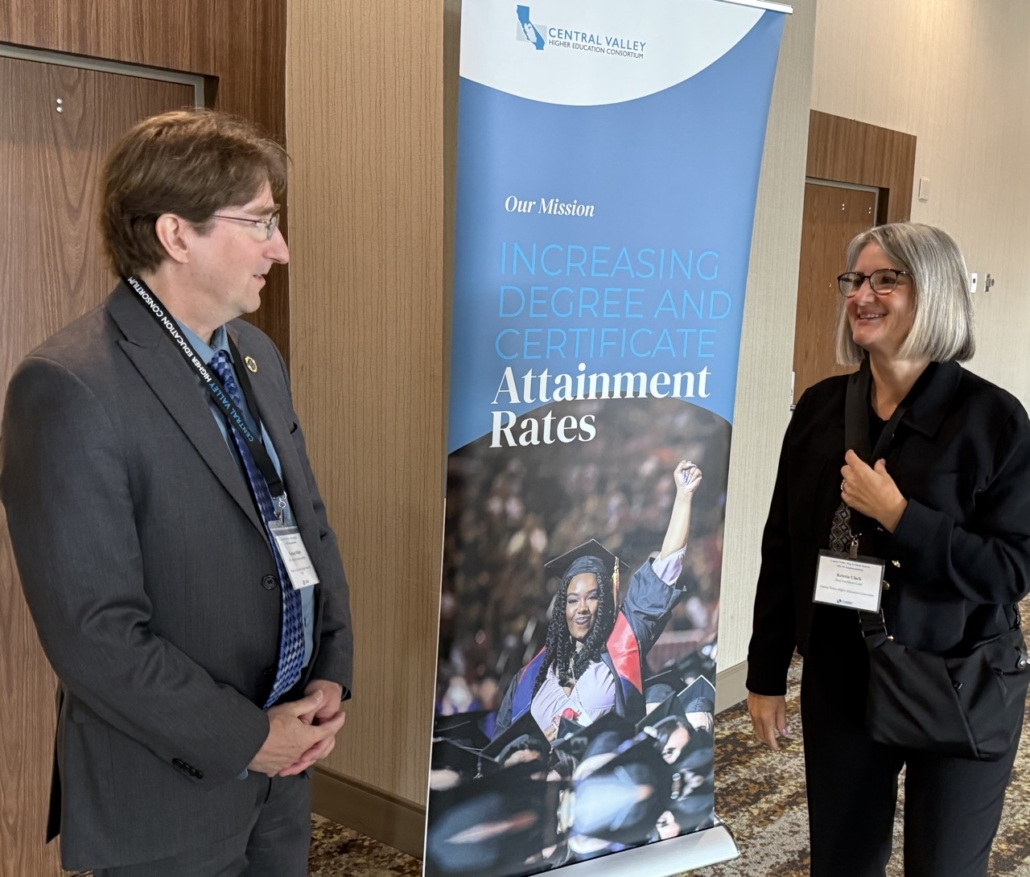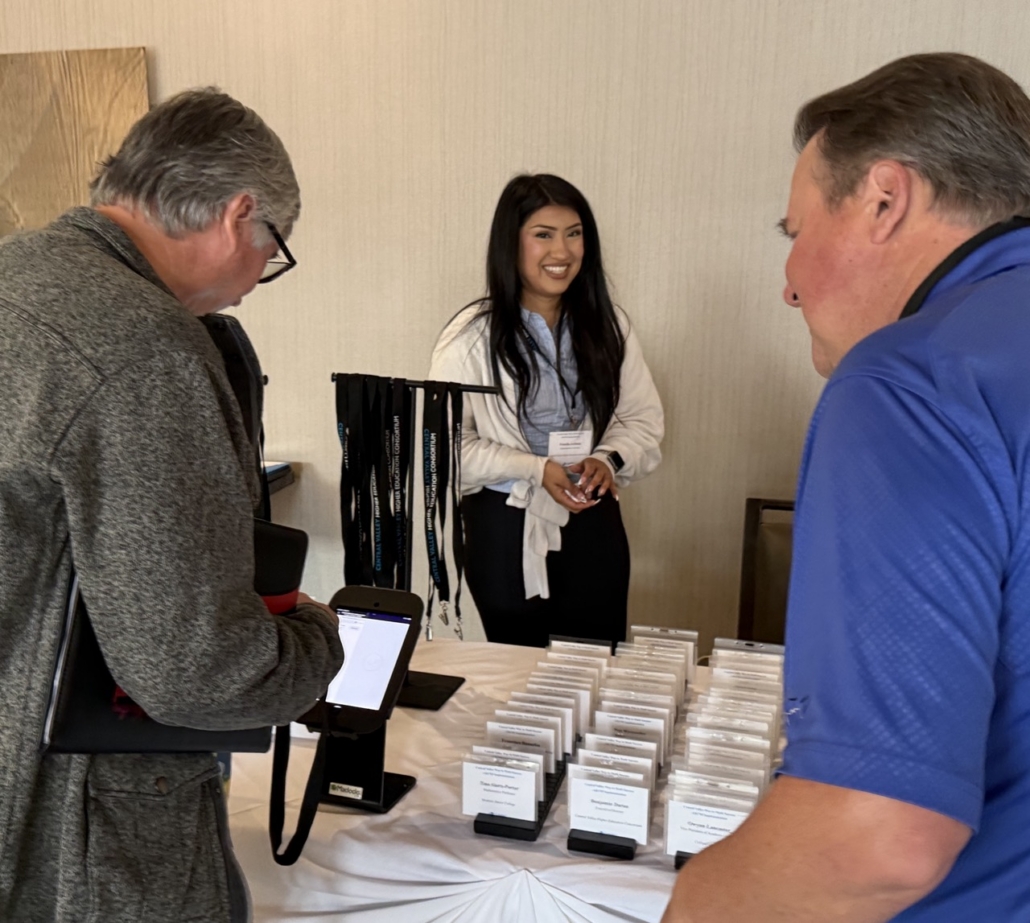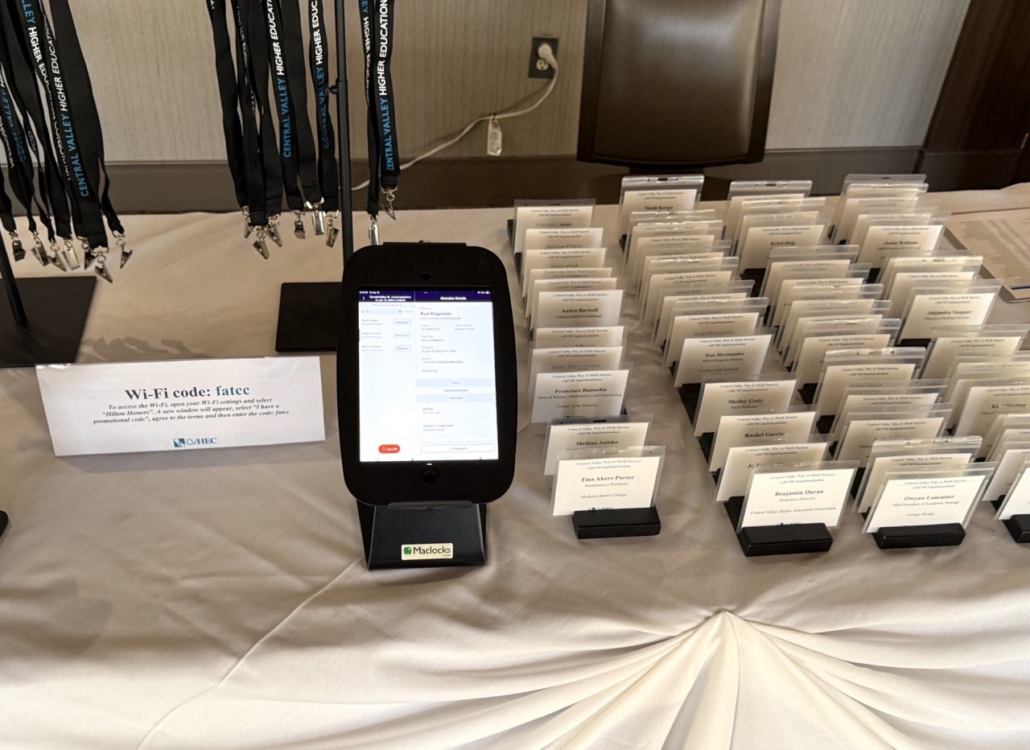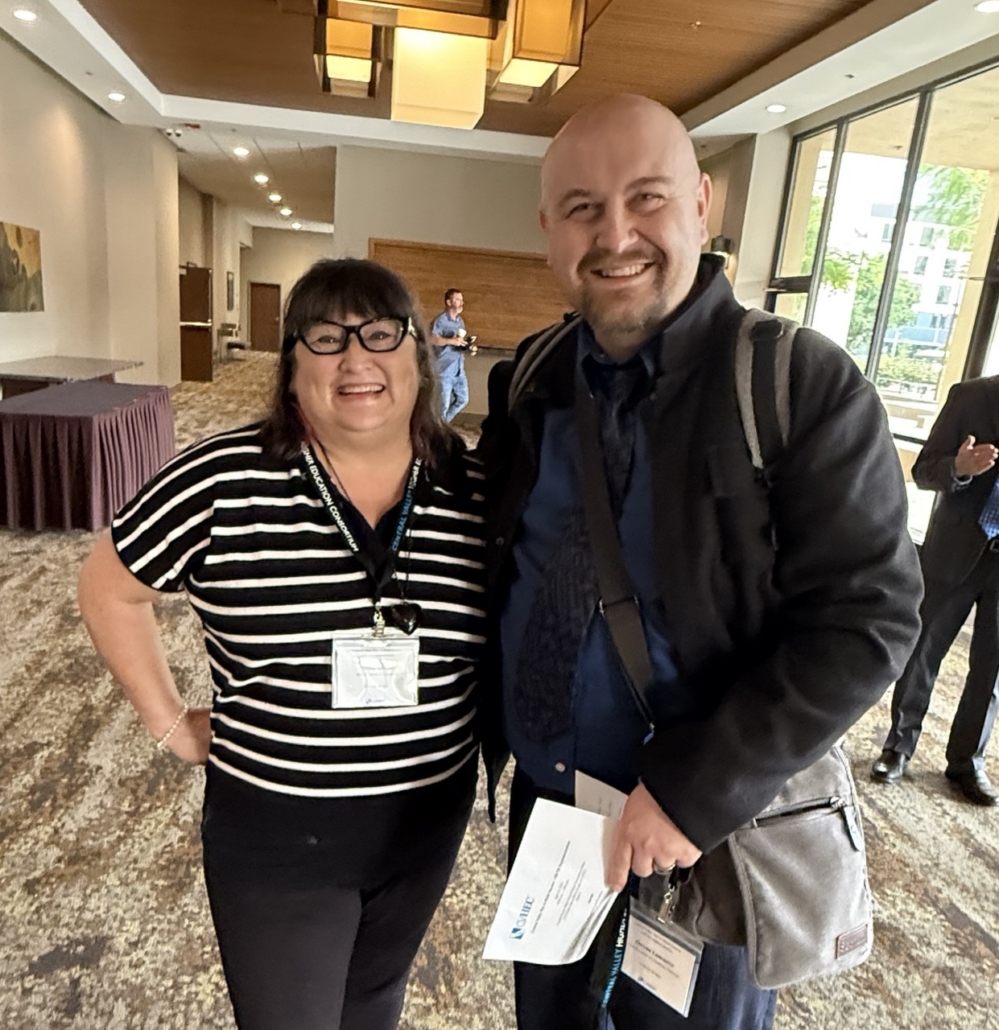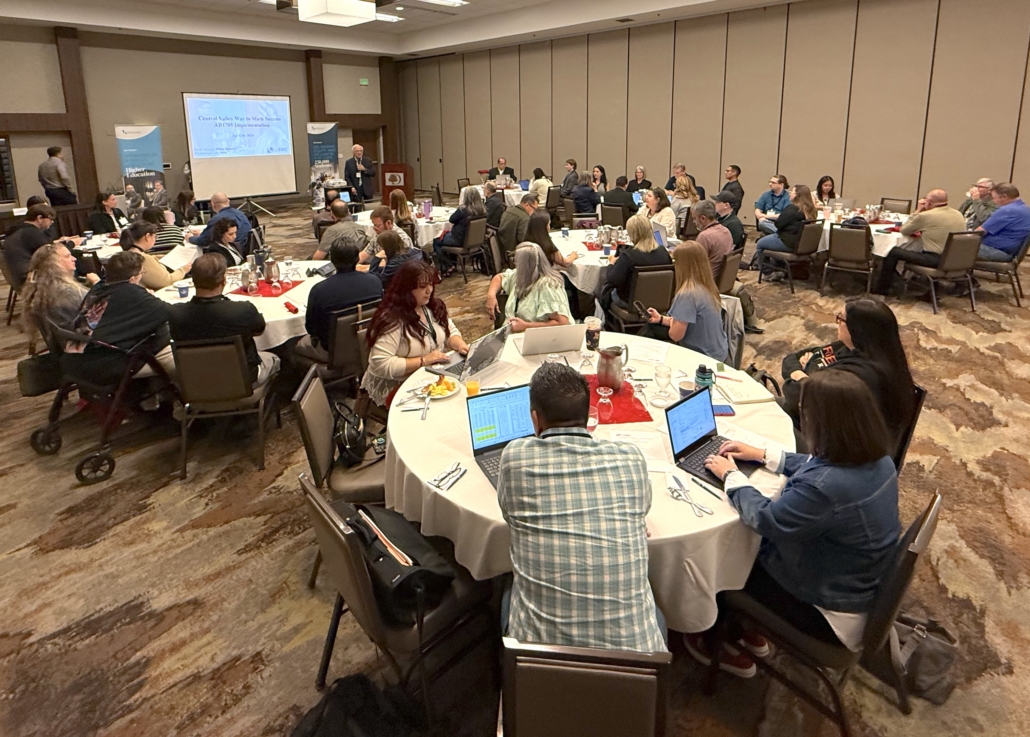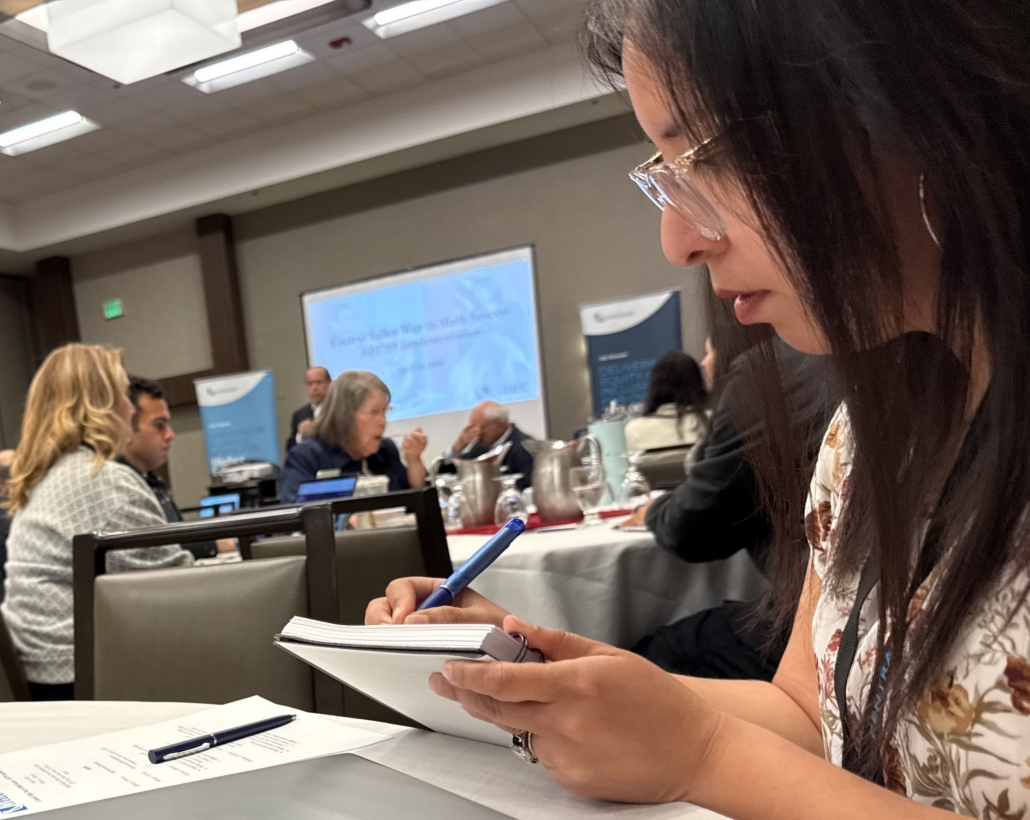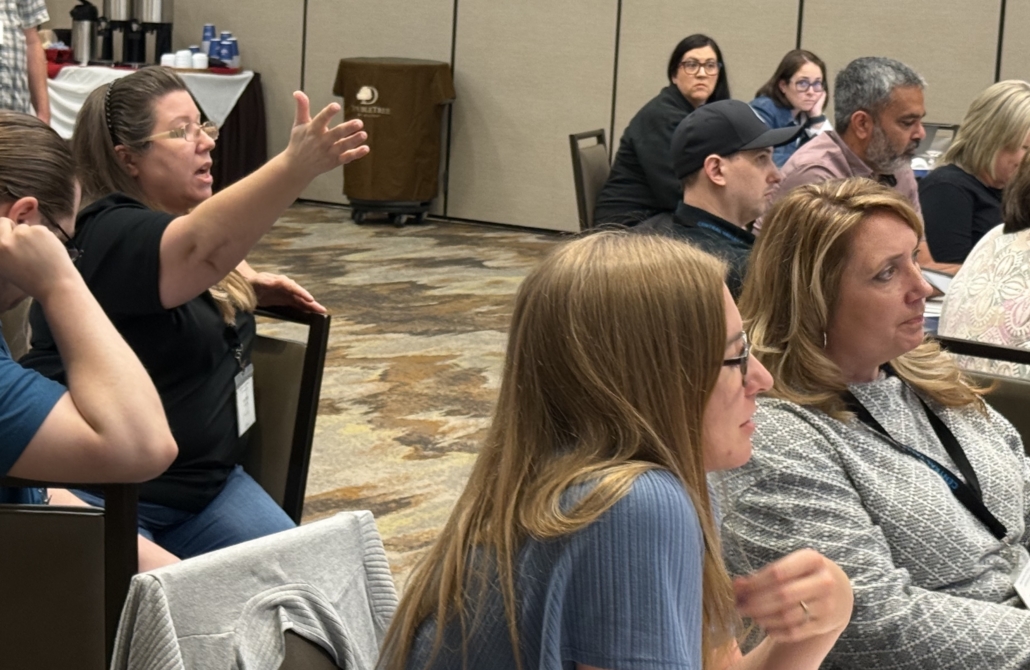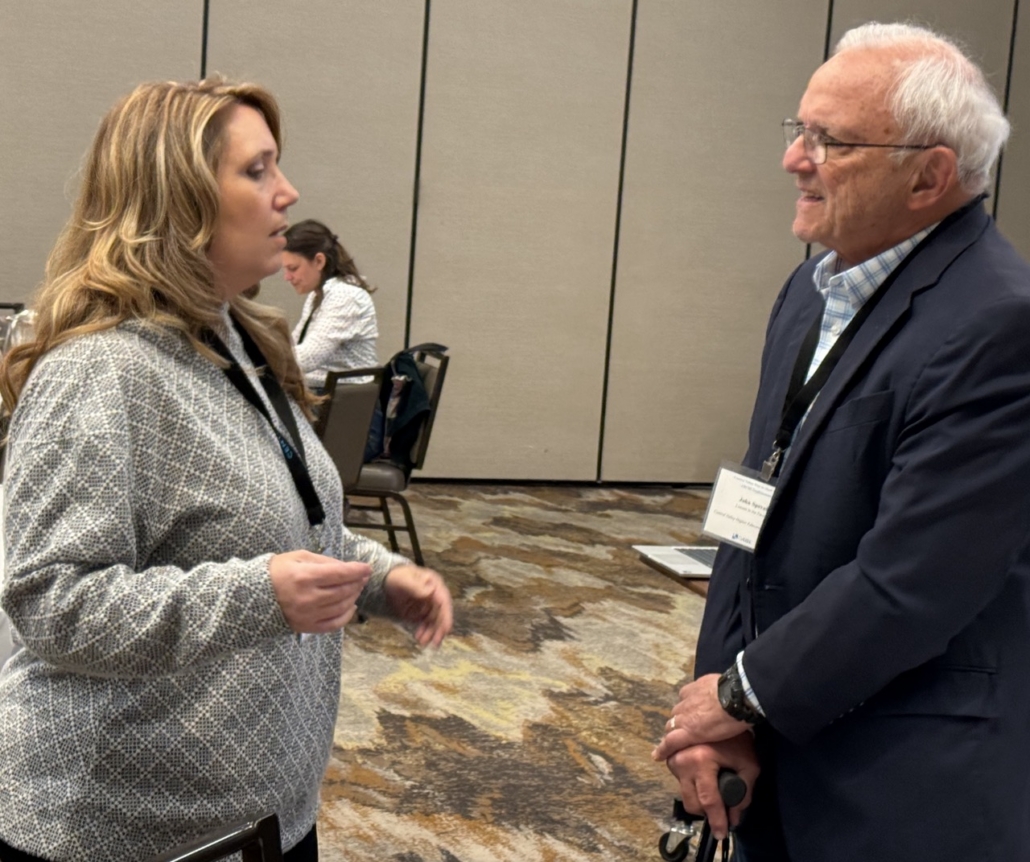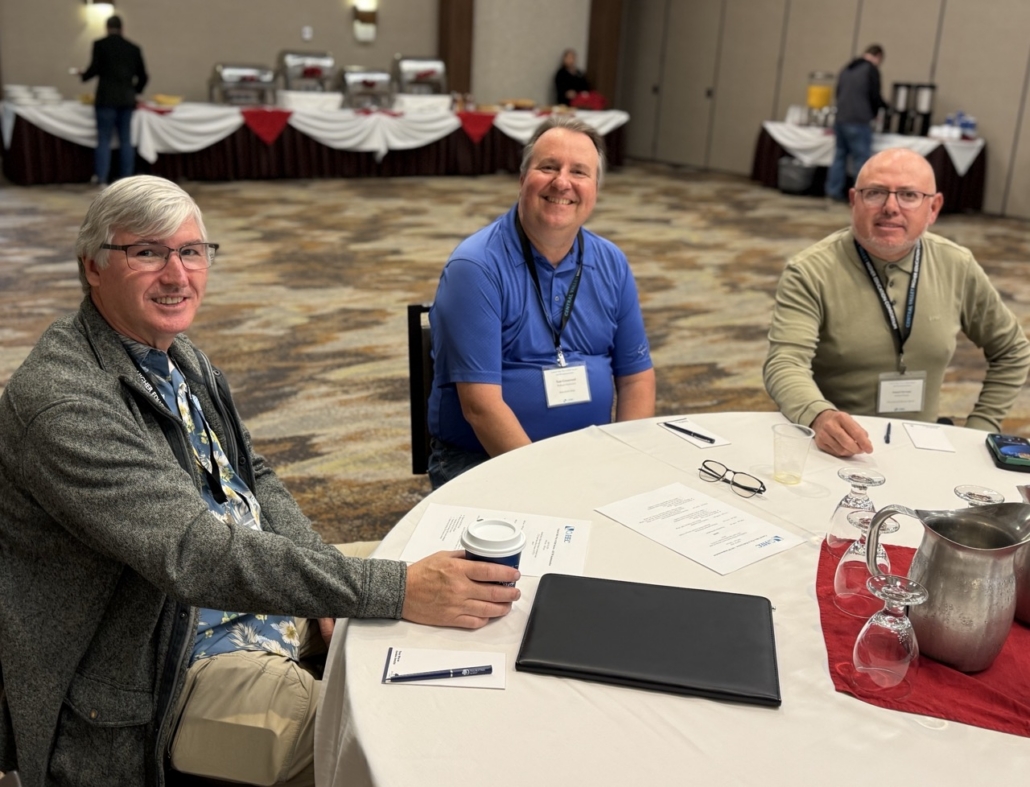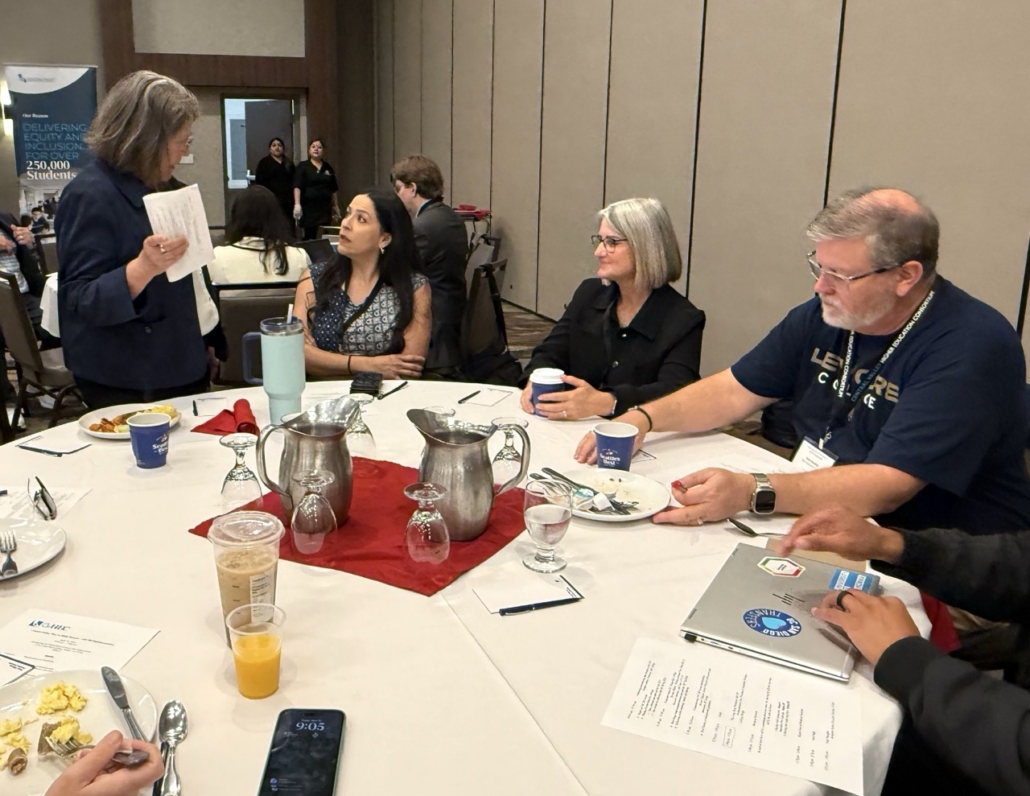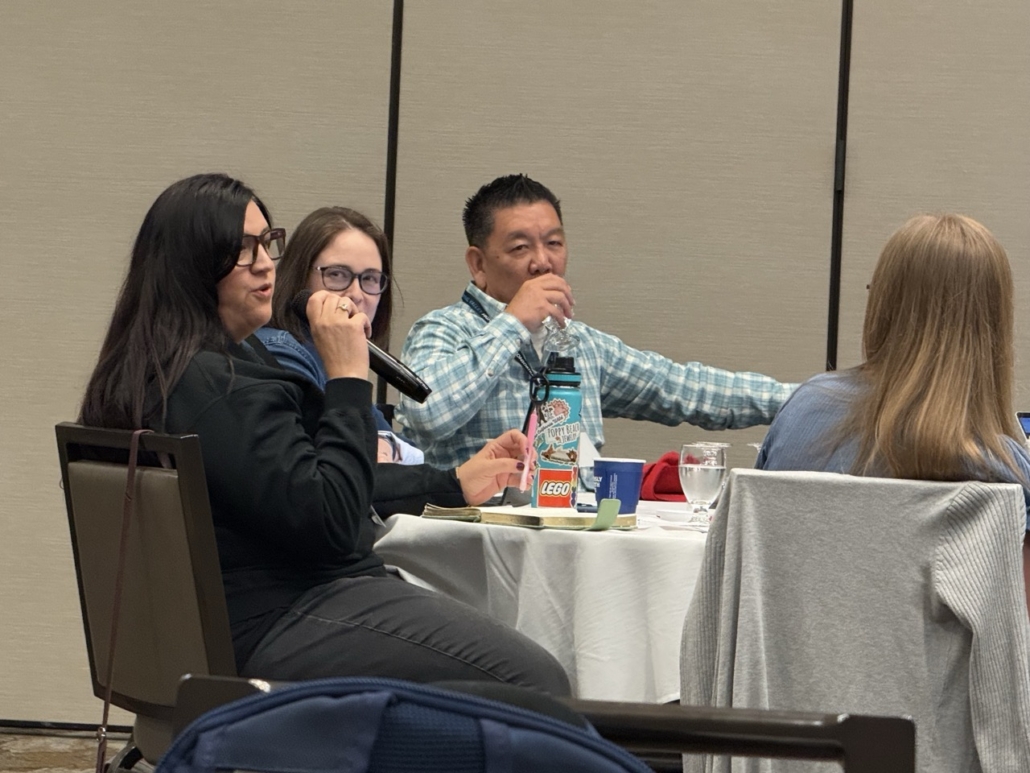
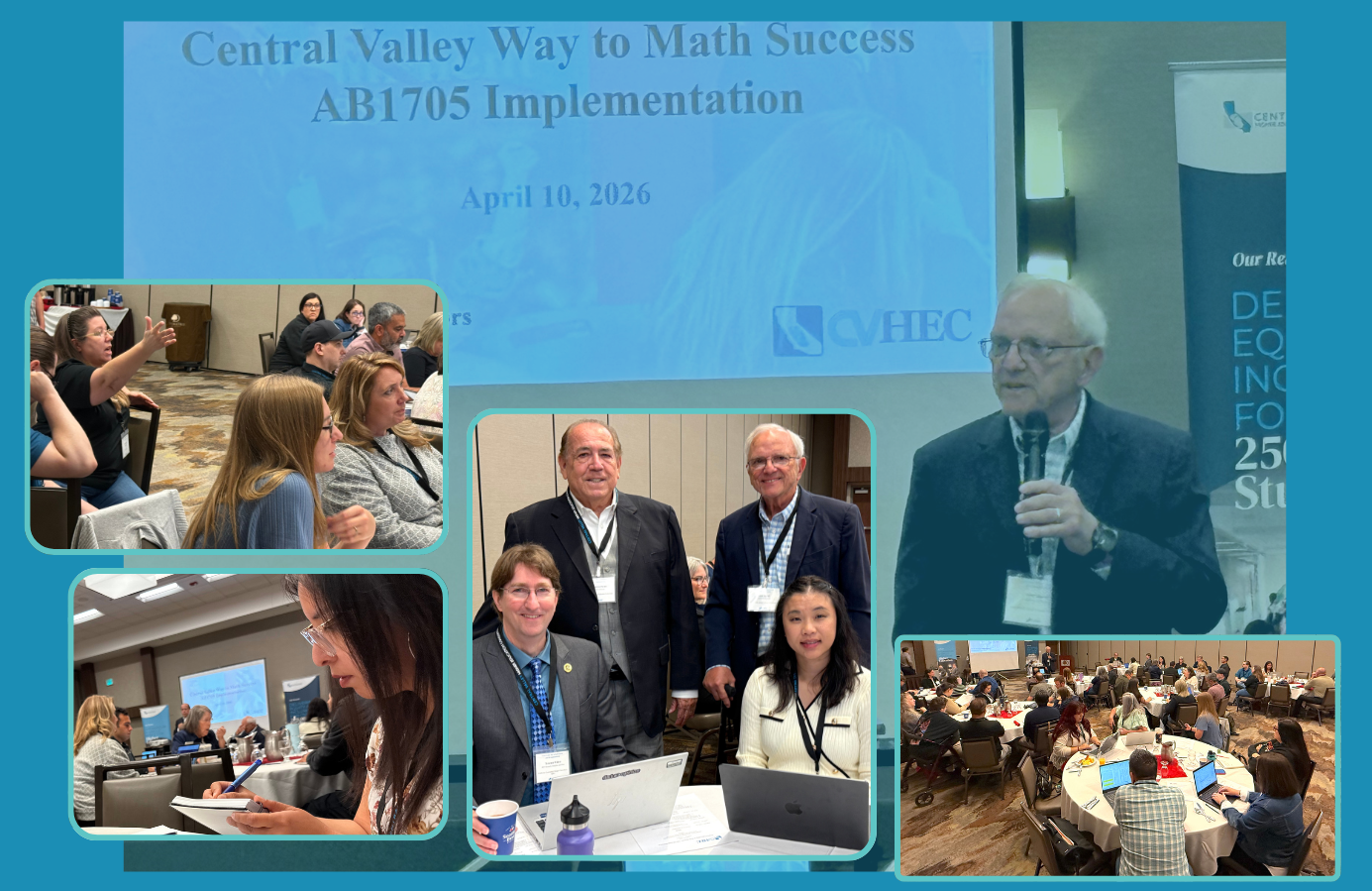
Dr. John Spevak announces at the April 10 Math Task Force Convening that he will once again retire this summer. Middle inset photo: Dr. Spevak (right) with CVHEC Executive Director Benjamin Duran and California Community Colleges reps (seated) Terrence Willet and Alyssa Nguyen. (See photo gallery below).
CVHEC Math Task Force: mission accomplished!
Valley math educators convene April 10 for
update on AB1705 implementation last fall — then disbands
BY JOHN SPEVAK
CVHEC Task Force Coordinator
(APRIL 14, 2026) — The CVHEC Math Task Force, first formed in 2019, met in Fresno on April 10 for its last hurrah.
For now.
By definition, a “task force” is assigned a task, sees it through to completion, and then disbands. For the past seven years, the CVHEC Math Task Force has done its job of assessing implementation strategies for Assembly Bill AB705 and more recently AB1705 and can be dissolved.
For now.
I have had the honor to oversee this venture and at the meeting, I announced that I will be stepping away from the organization this summer. More on that next issue. Here is an account of the current task force’s last hurrah.
After being welcomed by CVHEC Executive Director Benjamin Duran, members shared their approaches to conforming to the California Community Colleges Chancellor’s Office directives for following AB 1705.
The math professors talked about changes they made in their fall 2025 courses, outcomes for these classes, and any adjustments they made in their pedagogy for their spring 2026 courses. They also discussed what they hope for in the academic year 2026-27 and beyond.
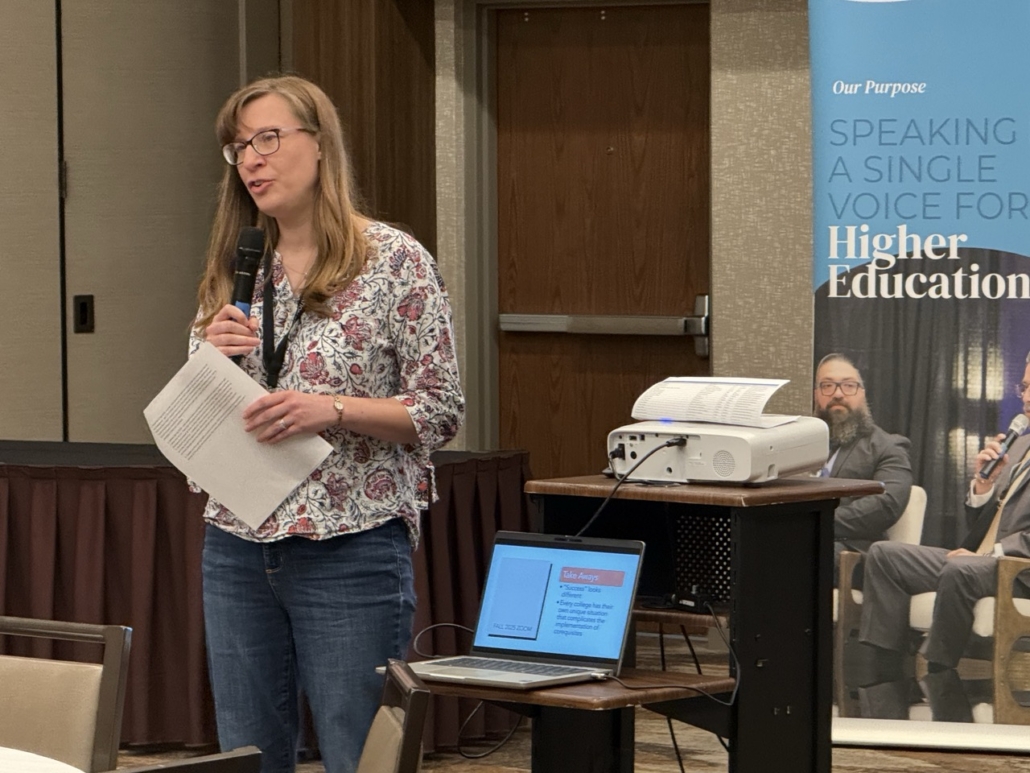
Taft College Professor Shelley Getty led a discussion of different approaches to teaching a calculus course with a corequisite, beginning with a recap of a Zoom meeting during the fall of 2025. Different colleges had different approaches to teaching the corequisite course, including different unit values and pedagogies.
She followed this by asking for input from college representatives from Stockton to Bakersfield. Most members said the student outcomes were not as positive as they would have liked, especially for those students who had little or no preparation in intermediate algebra and/or trigonometry; too many students were failing or withdrawing. Getty said that more research needs to be done to determine best practices.
Fresno City College Professor David Yang led a discussion of different approaches to teaching an innovative single-course prerequisite to calculus. beginning with a recap of a Zoom meeting during fall 2025. Most members said their college based the innovative class on the existing prerequisite course, but made some changes, including streamlining content.
He followed this by asking for input from representatives of other colleges. Most members said the student outcomes were not as positive as they would have liked, especially for those students who had little or no preparation in intermediate algebra and/or trigonometry; too many students were failing or withdrawing. Yang said that more research needs to be done to determine the best practices.
Taft College Professor Nathan Cahoon talked about collecting necessary data, especially for the prerequisite course. He used Taft College as an example, which used an outside consultant to gather data. He pointed out that Taft created its own survey of students, noting that including student voices in the data was crucial.
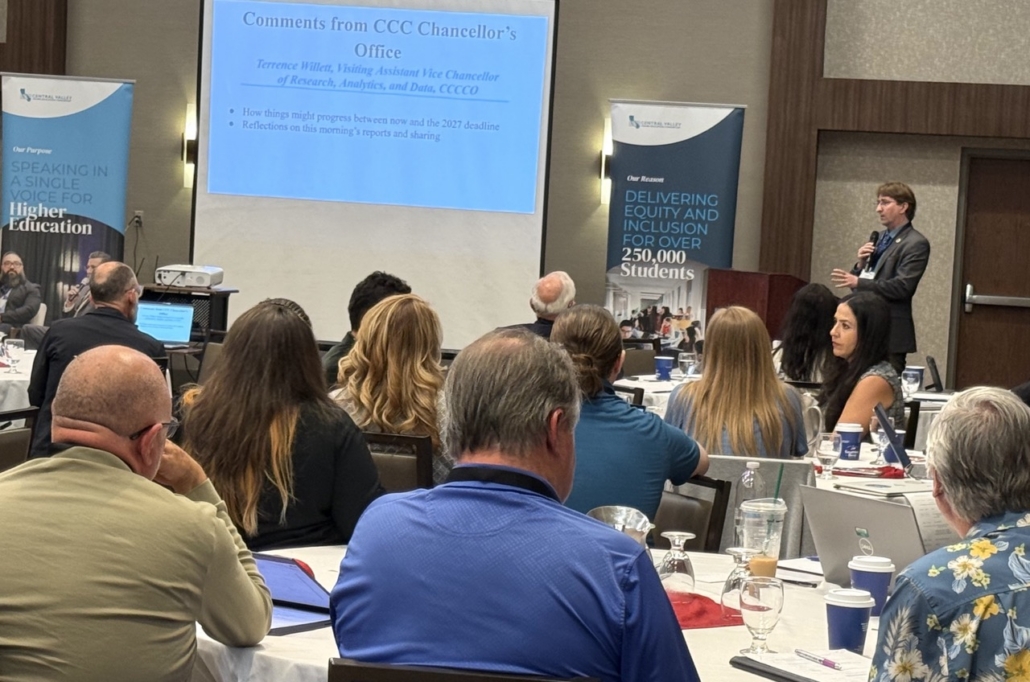
Terrence Willet, visiting assistant vice chancellor of Research, Analytics, and Data at the California Community College Chancellor’s Office, told the group about the ongoing work at Chancellor’s Office in collecting statewide data. Although the Chancellor’s Office requires a minimum amount of data, he encouraged colleges to send any and all data they have collected.
Willet also said he hoped there would be continued discussions about the implementation of the Chancellor’s Office guidelines to AB 1705, especially in light of a July 2027 deadline for submitting data supporting the continuation of a calculus prerequisite course.
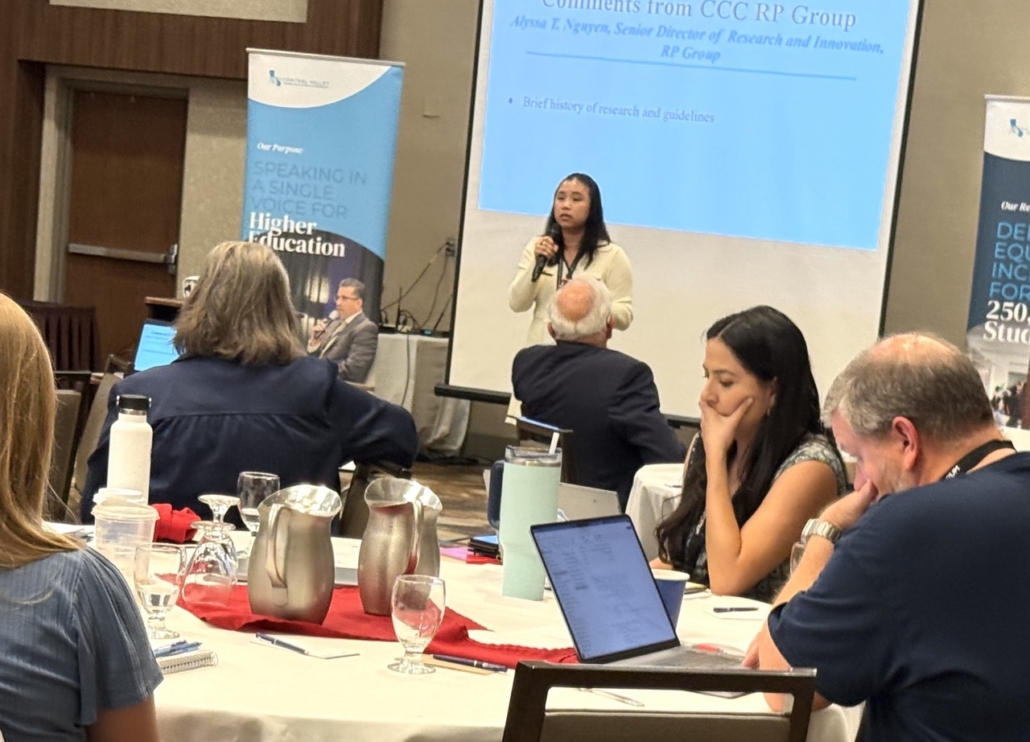
Alyssa Nguyen, senior director of Research and Innovation at the California Community Colleges RP Group — who will be earning her doctoral degree from UC Davis later this semester — talked about the challenges students faced several years ago when they were required to take many semesters of prerequisite courses before they could enroll in a transferable math course, creating a through-put rate of only 30 percent. She acknowledged that going forward math professors in the room were the real experts in enabling student success in math.
After lunch Owynn Lancaster and other staff members from College Bridge talked about the success the Math Bridge programs have had in the Central Valley, with several community colleges and many high schools participating. Through Math Bridge, many high school students who hadn’t believed they were good math students passed a transferable college course in their senior year. He attributed the success primarily to the extensive collaboration of math high school teachers and college math professors.
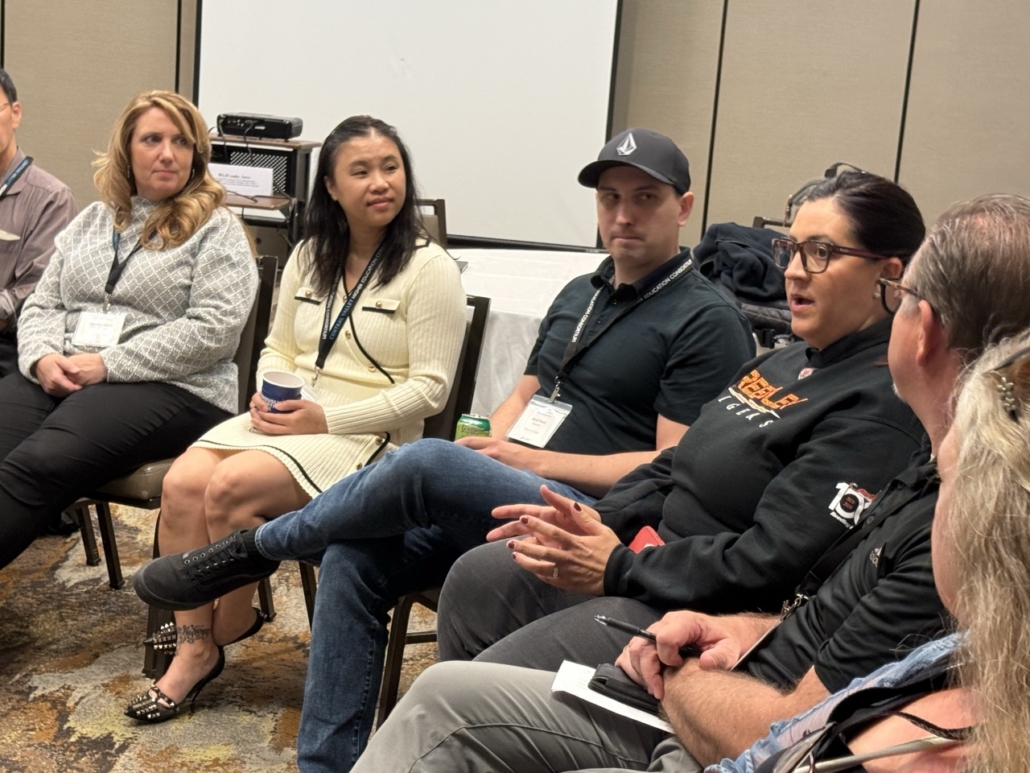
After three breakout sessions during which colleges shared ideas and comments, the group leaders reported out on the discussions. Professor Getty reported that all colleges felt there was one hurdle after another that math professors had to overcome in offering a successful calculus course with a corequisite. Professor Cahoon reported that colleges realized there were many, many variables involved in collecting meaningful data.
Cahoon said the consensus among the colleges is that more time was needed to collect data. He also stressed that going forward it was critical for students to have choices in what courses would be best for them to take. He noted that a big challenge facing colleges is the current discrepancy in criteria for deeming a calculus with a corequisite course successful vis-a-vis the criteria for judging a calculus prerequisite course to be successful.
Near the end of the meeting, when next steps were discussed, a proposal was made that could help in moving forward.
There was a general consensus in the room that the old approach to requiring three or four prerequisite courses before calculus could be taken was not helpful to student success. There was also a consensus that the chancellor’s guidelines and deadlines were also not in the best interest of achieving a sufficient level of student success.
The suggested proposal involves getting eight people in a room early this fall to brainstorm and create a new path forward for student success in light of AB 1705. The individuals would include four math professors from different regions of the Central Valley, two representatives from the Chancellor’s Office, and two representatives from the RP Group.
There was a general consensus that such a group could meet once or twice and then present a meaningful proposal, which could be shared first with Central Valley math professors and then statewide.
Executive Director Duran closed the meeting by saying CVHEC plans to keep the list of the members of the task force on the books and will continue to stay in the contact with them and may indeed call them together in the future under a different name, like a community of practice, to deal not only AB 1705 but also to deal with other issues like the impact of AI on the teaching and learning of math in the future.
So, for now, and for the seventh time, I happily retire but I will now also happily assume the role of cheerleader for the CVHEC community’s never-ending quest for student success.