
Rural Dual Enrollment in Action

Who Was at the Table?
Merced College
- Gregory Soto – Dean of Student Services
Merced Union High School District (MUHSD)
- Stacey Cool – Program Administrator

Our Dual Enrollment Story
Merced College has a long history of offering concurrent enrollment to high-achieving students. However, with the passage of AB 288, the college made a transformative shift toward closing equity gaps and expanding access to historically underrepresented students.
In 2020, the college invested in significant structural changes:
- Created a dedicated dean position focused solely on dual enrollment.
- Restructured the outreach department to strengthen the college’s presence on high school campuses.
“Before 2020, dual enrollment was hodgepodge — someone might spend 10% of their time on it. Now we’ve invested in the internal structure to make it sustainable.”
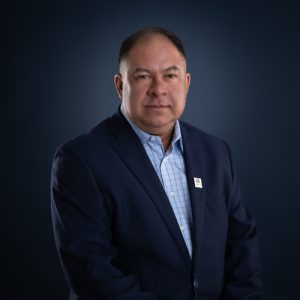
Gregory Soto
“Most of our students stay here after graduation. We have a vested interest in working together to make the best community members we can.”
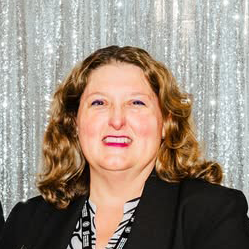
Stacey Cool
Merced College 2024-2025 Academic Year
10,570
Total full-time equivalent (FTE) enrollment (credit)
40
Number of dual enrollment course sections offered (CCAP)
28
Number of dual enrollment course sections taught by high school teachers who meet minimum qualifications (MQs)
3,734
Total number of students enrolled in dual enrollment courses (CCAP)
5,104
Total number of high school students enrolled in courses
Statistics from California Community College Chancellor’s Office Data Mart 2024-2025
Pathways: Merced College offers 11 dual enrollment pathways. In addition to CCAP, Merced College had non-CCAP high school enrollments in 175 sections.
Best Practices and High Impact Strategies
1. Pathways Counseling Program – A Unique Shared Staffing Model
A signature innovation of the partnership is a shared counselor model:
- MUHSD counselors who meet minimum qualifications also serve as adjunct college counselors after school hours.
- All counselors have dual access to Aeries (high school system) and Colleague (college system), providing seamless academic and career planning.
- There are 17 pathways counselors embedded across MUHSD high schools.
“If you’re a ninth grader interested in earning college credit, you have someone at your high school who knows both systems and can help your family plan every step.” – Gregory Soto
2. Equivalency Grid – Transparency for Families and Schools
To simplify and standardize course planning, MUHSD created a public-facing equivalency grid:
- Clearly shows how college courses count toward high school graduation and A-G requirements.
- Provides consistency across schools so that a course counts the same whether a student is at Merced High or Livingston High.
- Helps families compare dual enrollment vs. Advanced Placement course options.
“Whether a student is at Merced High or Livingston High, if they take History 17A, it counts the same way.” – Stacey Cool
3. Embedded College Staff and Supports
Merced College has placed enrollment retention specialists at each high school who:
- Assist with applications, Canvas (LMS) access, and technical needs.
- Provide high-touch support for first-generation students and families.
- Conduct outreach for transitioning seniors to ensure college enrollment readiness.
This eight-person team guarantees that students receive on-site, personalized guidance without having to travel to a college campus.
4. Math Bridge Program – Targeting Underrepresented Students
Merced College and MUHSD partnered with College Bridge to implement the Math Bridge Program, aimed at students who may not see themselves as “college material”:
- Courses focus on elementary statistics, a key barrier to degree completion.
- Designed for non-traditional students, not just high achievers.
- Includes teacher and counselor training to shift adult mindsets and reduce gatekeeping.
“We’re not looking for the 4.0 students for this program. It’s about showing every student that college is for them.” – Stacey Cool
As a result, entire math departments now participate in professional development, fostering shared responsibility for student success.

Challenges and Rural Realities
Staffing Difficulties
It is difficult to recruit faculty who meet the minimum qualifications to teach courses in pathways.
Technology Access Barriers
Technology barriers make it difficult for students to access online resources, especially in most rural parts of the district.
Transportation
Distances between colleges and remote high schools create transportation issues.
Funding Gaps
Funding and staffing gaps – Positions often depend on temporary grants, creating instability and requiring creative budget solutions.
Strategies to Overcome Obstacles
Flexible Faculty Solutions
Recruit local high school teachers with master’s degrees and use back-to-back scheduling and leveraging faculty already traveling for other programs (e.g., Rising Scholars in prisons).
Provide Mobile Hot Spots
Mobile registration units are used in areas with poor connectivity, such as rural Mariposa, where stable service is only available off campus.
Provide Faculty Stipends
Stipends are provided to compensate faculty since mileage reimbursement isn’t part of current contracts.
Hire Dedicated Staff
Hire someone (like a dedicated dual enrollment dean) who is responsible for program oversight and program sustainability.
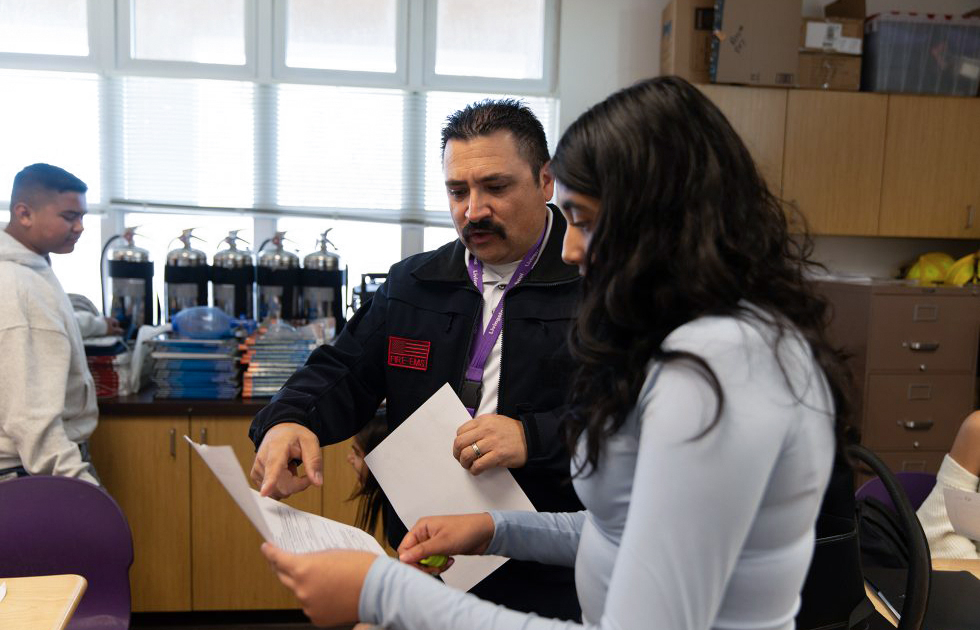
Outcomes and Impact
Students Served: Nearly 2,000 unduplicated students annually.
Success Rates: Average pass rates above 80%.
Innovative Pilots:
- 9th grade courses on well-being and conflict management.
- Summer Spanish program with nearly 300 students.
Bottom Line
The Merced College–MUHSD partnership proves that rural colleges and K-12 systems can work together to expand access and equity in dual enrollment. Through shared staffing models, transparent systems, and intentional community-centered strategies, they’ve created a scalable and sustainable model — even amid geographic and funding challenges.
“It starts with leaders who can pick up the phone, talk about pain points, and pivot quickly.”
Gregory Soto
“We have a vested interest in building strong community members who will thrive here after graduation.”
Stacey Cool
Rural Dual Enrollment in Action
LESSONS AND STRATEGIES FROM THE CENTRAL VALLEY