
“What the CV-Hec is Happening” Blog • September 10, 2026
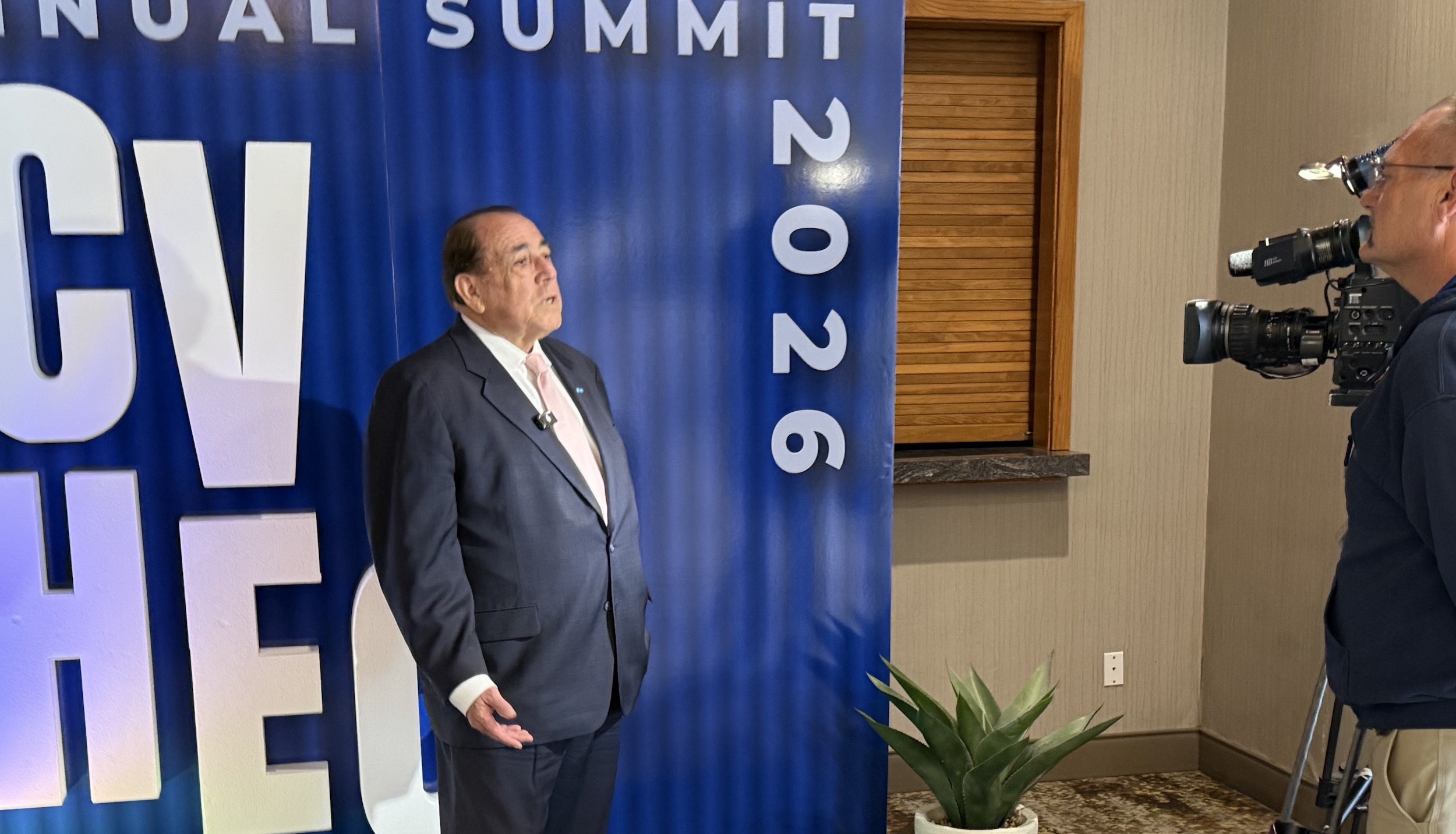
In its 25 history, the remarkable experiment incorporated by the Central Valley’s college CEOs in 2002 – known as the Central Valley Higher Education Consortium – has successfully grown under three(?) executive directors. This year, the most recent, Dr. Benjamín Durán (president-emeritus of Merced College) observes his 10th anniversary in this position. A remarkable way to spend your retirement … continuing to advocate and champion for college students here in his home valley. In this month’s What the CV-Hec is Happening” Blog, the native of Le Grand reflects on the past decade of CVHEC growth as the organization now prepares to observe its 25th anniversary next year. Dr. Duran has been a part of the consortium since that 2002 incorporation first serving as a founding board member representing Merced College when he was president/superintendent. His investment in this higher education mission provides a proud legacy.
A special celebration: 10 years of leading CVHEC
A decade of steady leadership
expanding opportunity across the Central Valley
Executive Director – Central Valley Higher Education Consortium
For a decade, I have had the privilege of helping the Central Valley Higher Education Consortium turn a regional idea into a durable force for student opportunity.
 When I accepted the call in 2015 to serve as executive director, I was not beginning a new chapter so much as continuing a life’s work. I had already completed a distinguished career at Merced College, retiring in 2012 after 22 years with the district and 14 years as superintendent/president. I had also served for three years as president of the Great Valley Center in Modesto, keeping me closely connected to the civic, educational and economic future of the San Joaquin Valley.
My appointment came at the urging of colleagues who knew both my leadership style and my commitment to regional collaboration. During my years as president of Merced College, I served as a founding member of the CVHEC Board of Directors and chaired the board twice. I understood the promise of bringing colleges and universities together across a vast region and I also understood the patience, trust and persistence that kind of collaboration requires.
CVHEC’s roots trace back to a small group of chief executive officers who believed the Valley needed a unified higher education voice. That group included Fresno State President John Welty, CSU Stanislaus President Marvalene Hughes, West Hills Community College District Chancellor Frank Gornick and me, as president of Merced College. Dr. Welty led the formal effort to create the consortium, but the shared vision was larger than any one institution: a durable regional table where leaders could work together for students across the ten-county San Joaquin Valley.
Ten years after stepping into the executive director role, I see my leadership as an affirmation of that founding vision. I brought history, relationships, hope and credibility to the position. I have used those assets to strengthen CVHEC’s mission: improving college-going, transfer, completion and attainment while advancing the social, economic and educational well-being of Valley students and communities.
A steady hand for a growing consortium
One of the defining achievements of my tenure has been the continued growth and maturation of CVHEC’s membership. The consortium now brings together a broad cross-section of community colleges, independent institutions, California State University campuses, the University of California and professional schools serving the Central Valley. The addition of medical schools is especially significant because it reflects a broader understanding of regional need: educational attainment, workforce preparation and community health are inseparable.
That growth has never been only about institutional count. I have focused on the relationships that make regional work possible. As presidents, chancellors and campus directors have joined institutions across the Valley, CVHEC has helped welcome them into a network where leaders can learn from one another, align priorities and act together on issues no single campus can solve alone.
The need for that higher ed leadership table remains urgent. Students move between high schools, community colleges and universities. Employers rely on consistent talent pipelines. Families need clear, affordable and equitable pathways to degrees and certificates. I am proud that under my leadership, CVHEC has helped keep those shared challenges visible — and has kept leaders working on them together.
Keeping equity at the center
Throughout my decade as executive director, CVHEC’s work has remained grounded in diversity, equity and inclusion. Equity has always been the umbrella under which CVHEC has thrived. For me, equity is not a slogan added after an initiative is designed; it is the lens through which the work begins. In a region serving many first-generation students, students from low-income families, rural communities, immigrant families and communities historically underserved by higher education, completion requires more than aspiration.
It requires systems designed to remove barriers and build belonging.
That commitment has shaped CVHEC’s work in transfer, dual enrollment, math pathways and college completion. It has also shaped how the consortium convenes faculty, student services professionals and institutional leaders. The central question is not simply how many students can be served, but whether the region is redesigning pathways so more students can enter, persist, transfer and complete with confidence.
Opening stronger transfer pathways
One of CVHEC’s most visible bodies of work has focused on improving transfer from Valley community colleges to regional universities. The need is clear: too many students begin at a community college intending to earn a bachelor’s degree, only to face confusing requirements, uneven advising, data gaps or unclear program maps.
CVHEC has convened community colleges and universities to align expectations, strengthen pathways and improve transparency for students. The Central Valley Transfer Pathways work reflects the consortium’s practical strength: it brings the right people together, keeps attention on students and supports solutions that can be scaled across institutions. The result is a clearer regional promise—that a student’s starting point should not limit the possibility of earning a university degree.
Advancing dual enrollment for opportunity
CVHEC has also helped advance inclusive dual enrollment efforts that build stronger bridges between high schools and community colleges. Dual enrollment is powerful because it reaches students early, often before they fully imagine themselves as college students.
When designed well, dual enrollment allows high school students to earn college credit, gain confidence, reduce future costs, and see higher education as attainable. This is an especially impactful initiative for underrepresented students in remote rural areas.
I am encouraged that we were able to frame dual enrollment as more than a program strategy. It is part of a regional opportunity agenda. By encouraging partnerships between community colleges and local high schools, CVHEC has kept attention on access, student supports and intentional pathways that serve all students — not only those already on an accelerated track. This is the kind of work that can change college-going patterns for families and communities across generations.
A decade of service, a legacy of collaboration
As CVHEC observes my 10th anniversary as executive director, the milestone is about more than my tenure. It is about celebrating a decade of convening, listening, connecting and moving institutions toward shared action. My service has helped CVHEC remain both rooted and forward-looking: rooted in the founding belief that Valley educators must collaborate, and forward-looking in its pursuit of stronger pathways for students.
Hopefully, those who urged me to accept the position in 2015 saw in me what the consortium needed: someone with institutional memory, regional credibility, humility and persistence. Over the past ten years, I have tried to answer that call through steady leadership and unwavering commitment to the Central Valley.
For me, the work has also been deeply personal. My last 25 years of involvement with this innovative organization have been among the highlights of my professional career. The last ten years as executive director have allowed me a broader scope to realize why I entered this profession and how fortunate I have been to be surrounded by such outstanding professionals. Together, we have worked to make the Central Valley a great place for our students to pursue their college education and to prepare them to contribute to all that makes the Valley a wonderful place to live and raise their families.
The result is a stronger consortium, a deeper network of regional leaders, and a clearer agenda for college access and completion. Most importantly, my work has kept CVHEC focused on the students at the heart of its mission — students whose success will shape the future of the San Joaquin Valley and the Great Central Valley of California for years to come.


