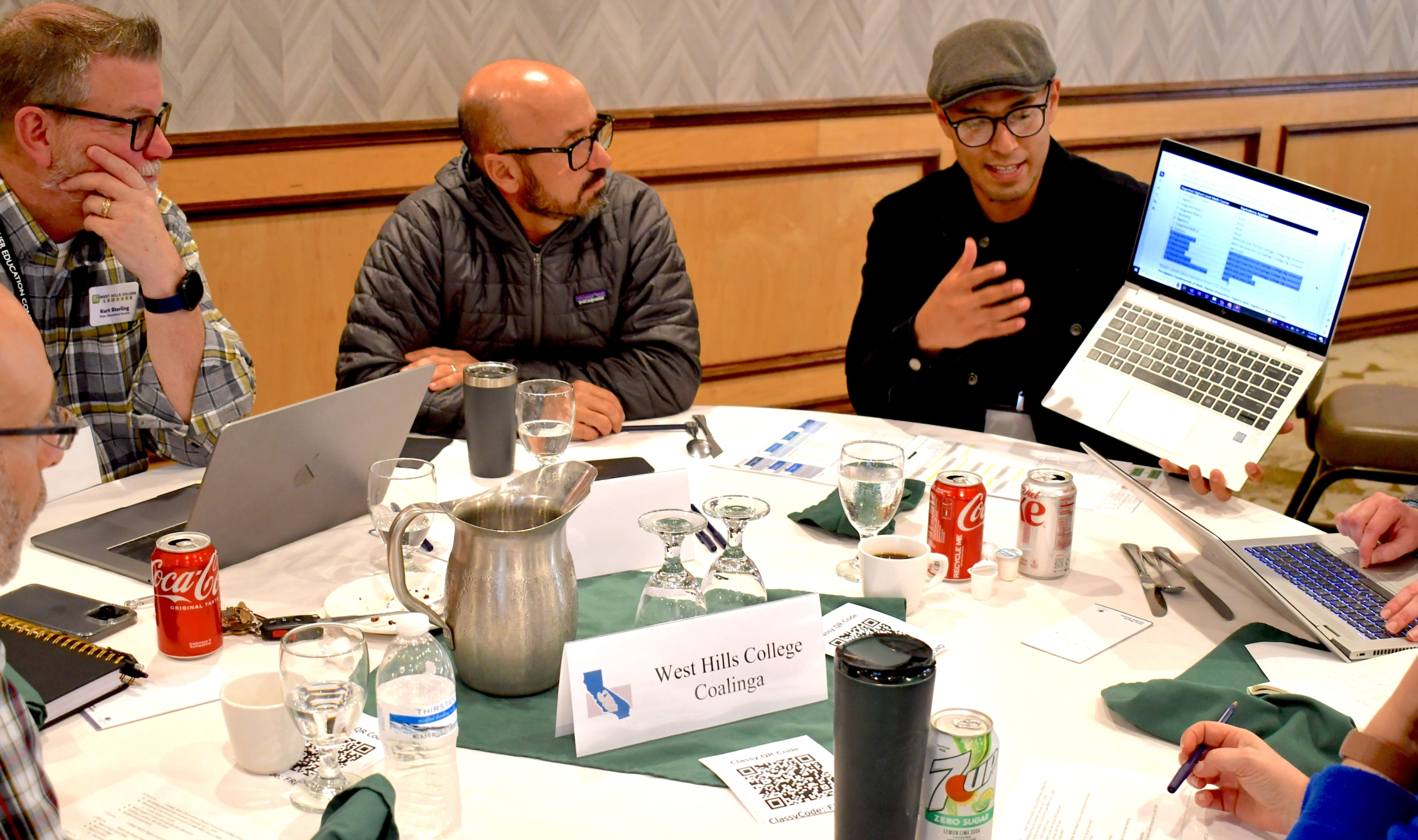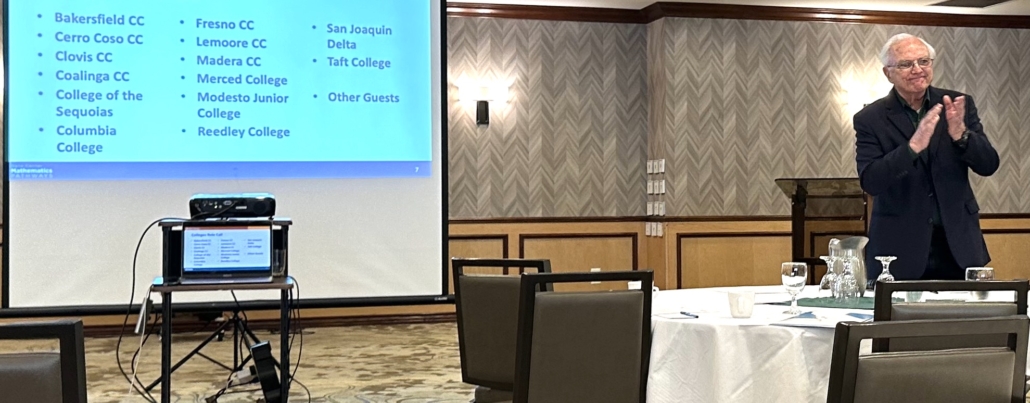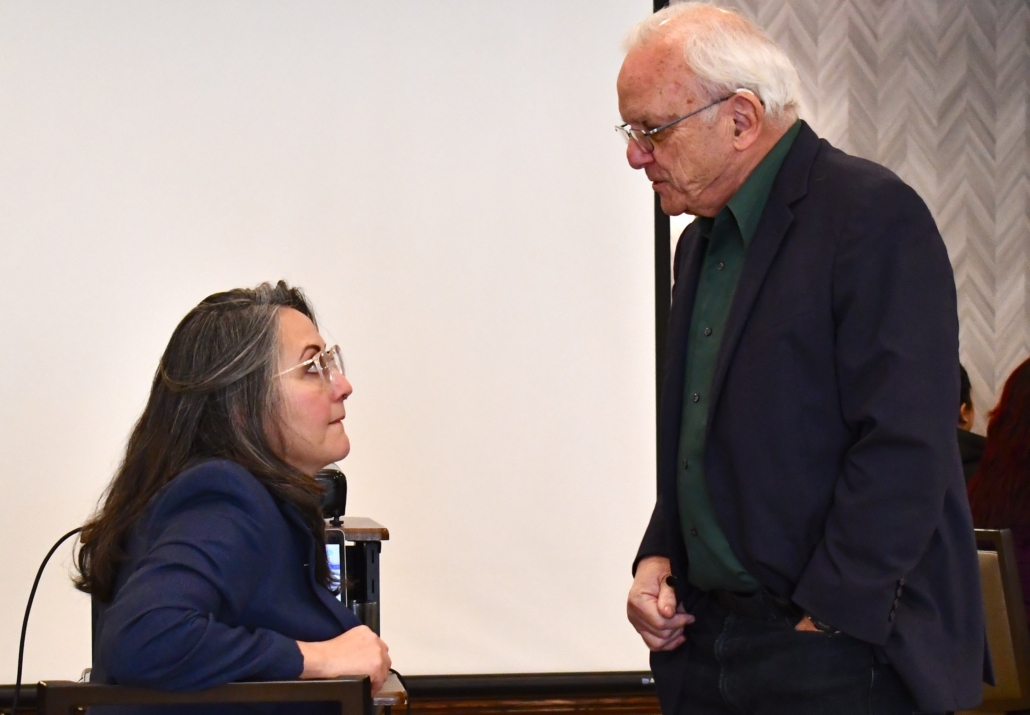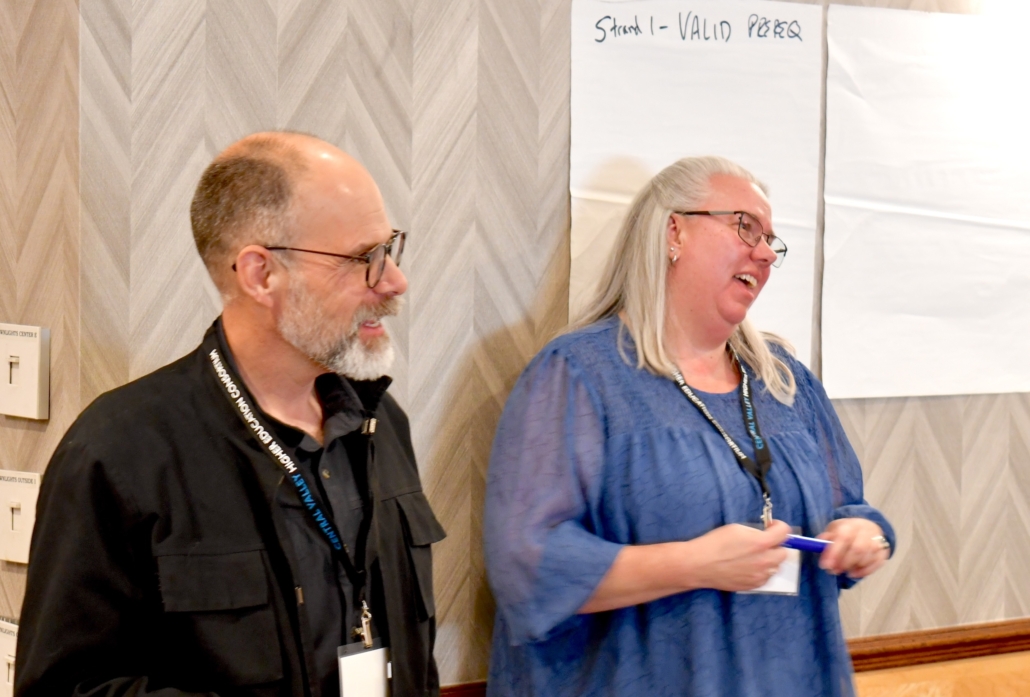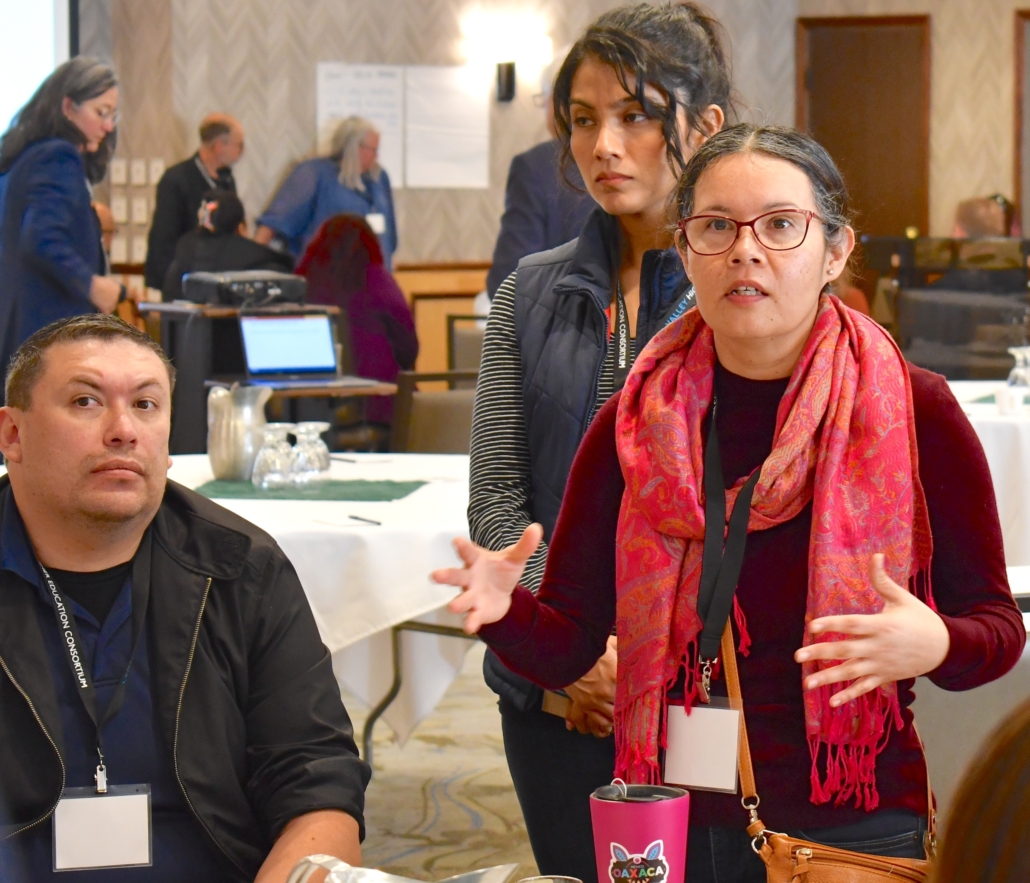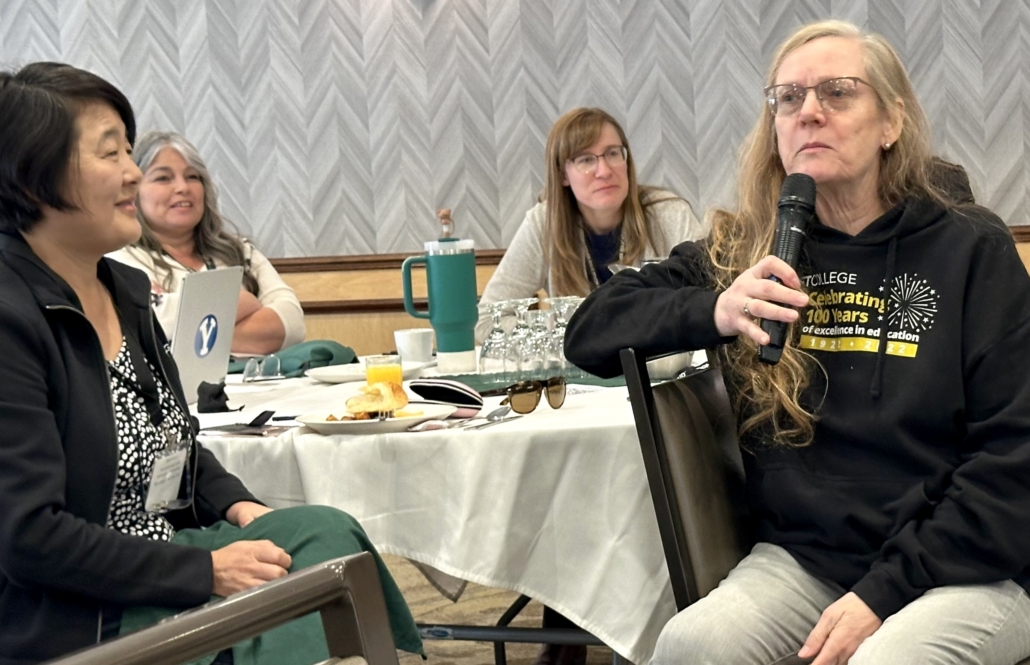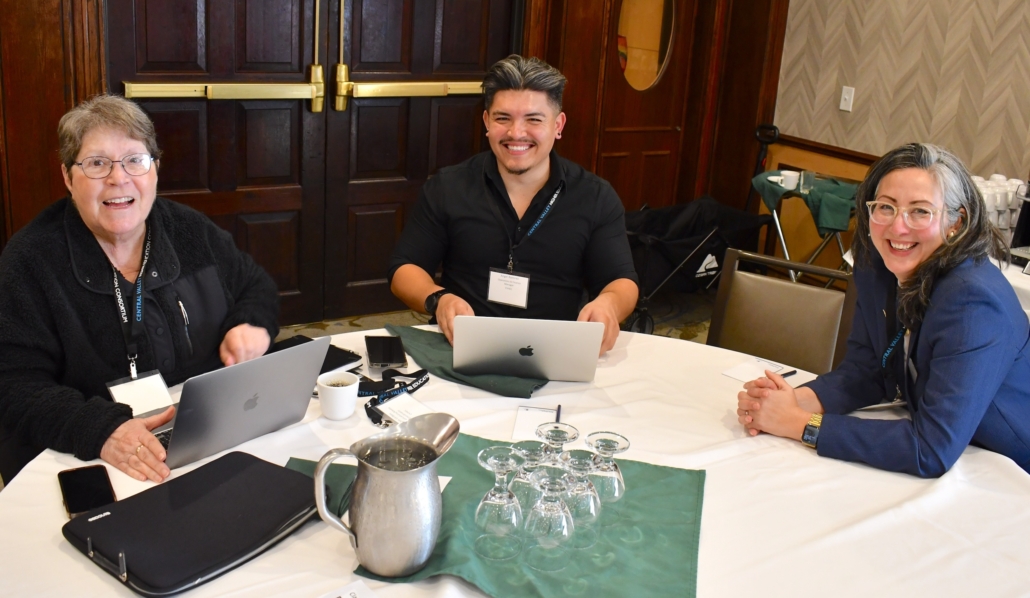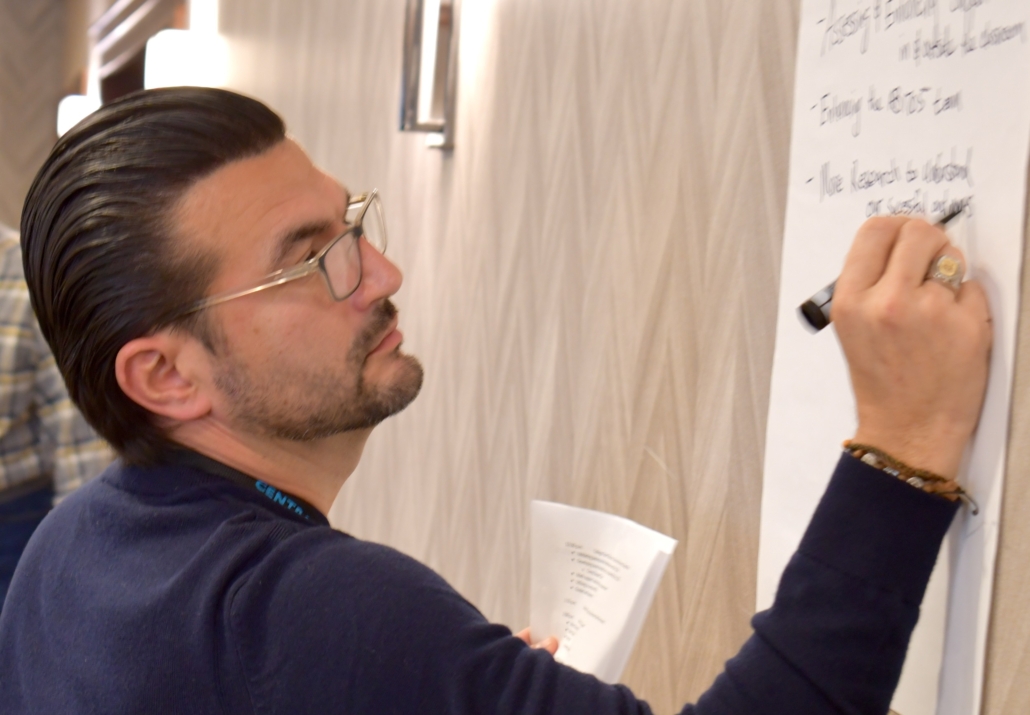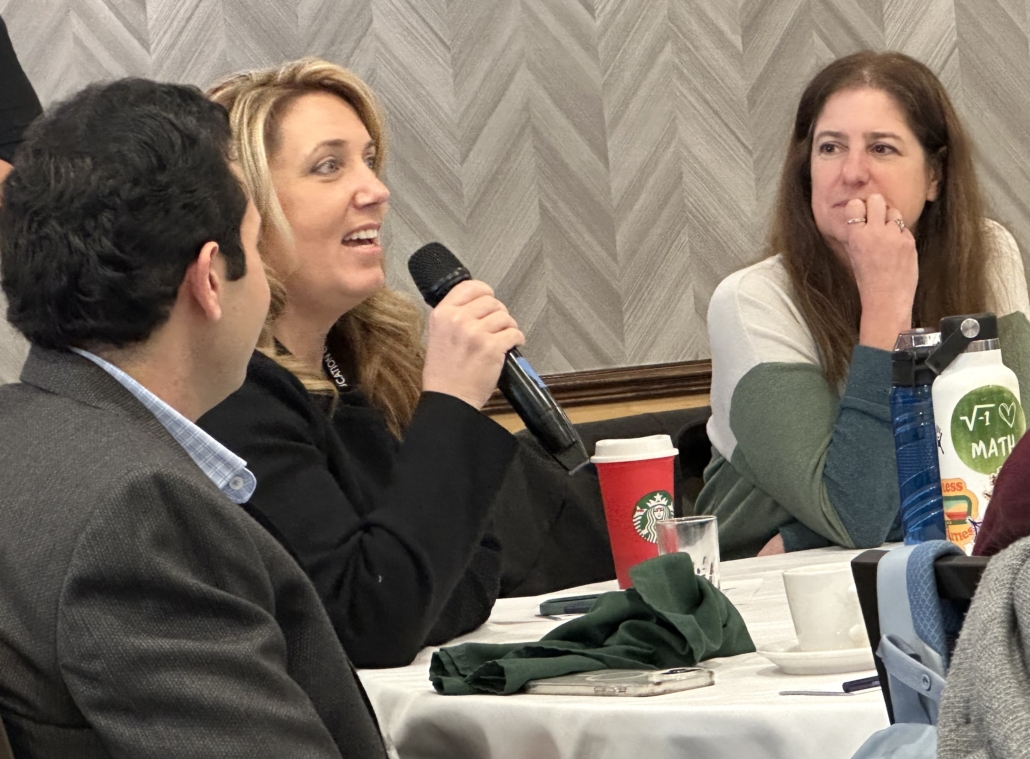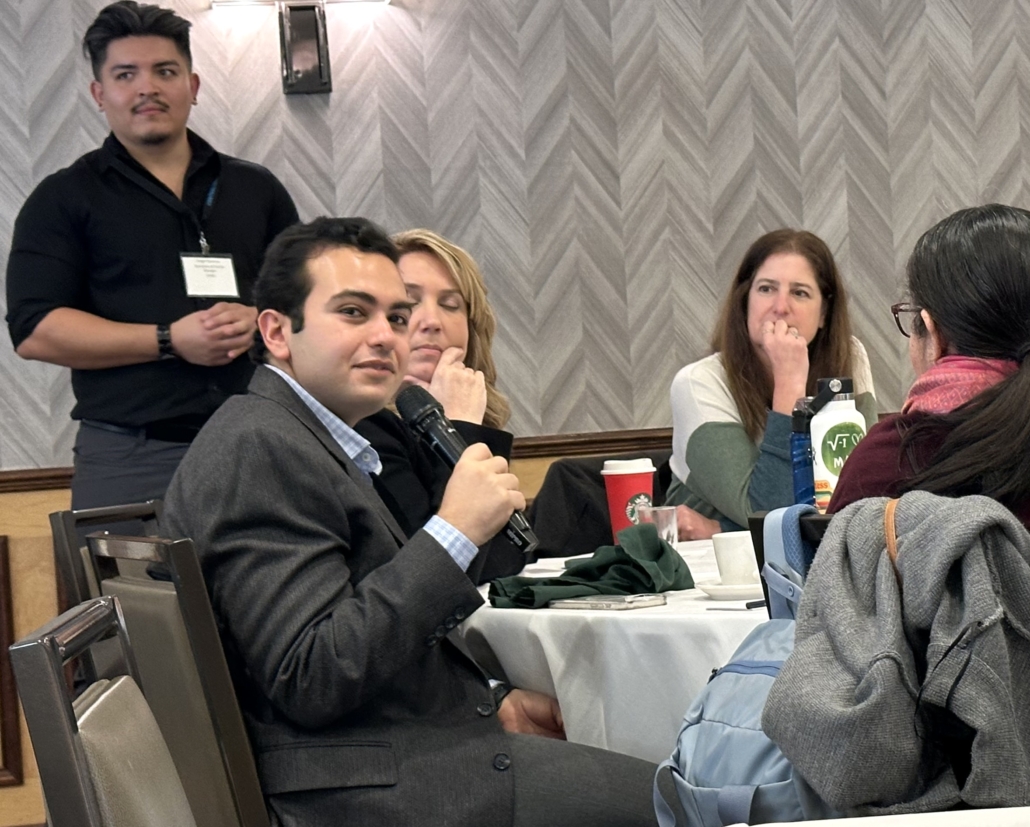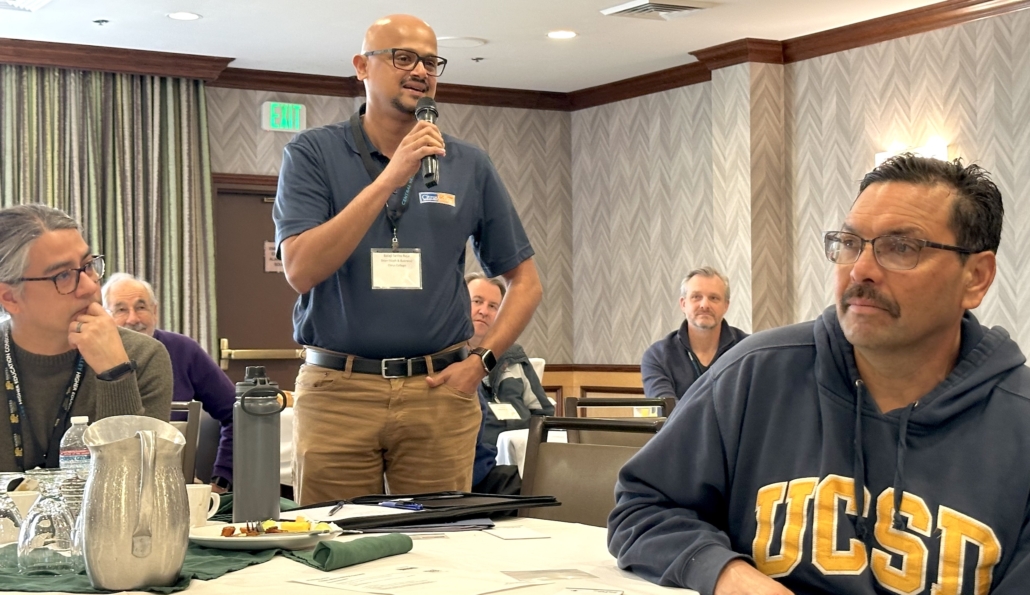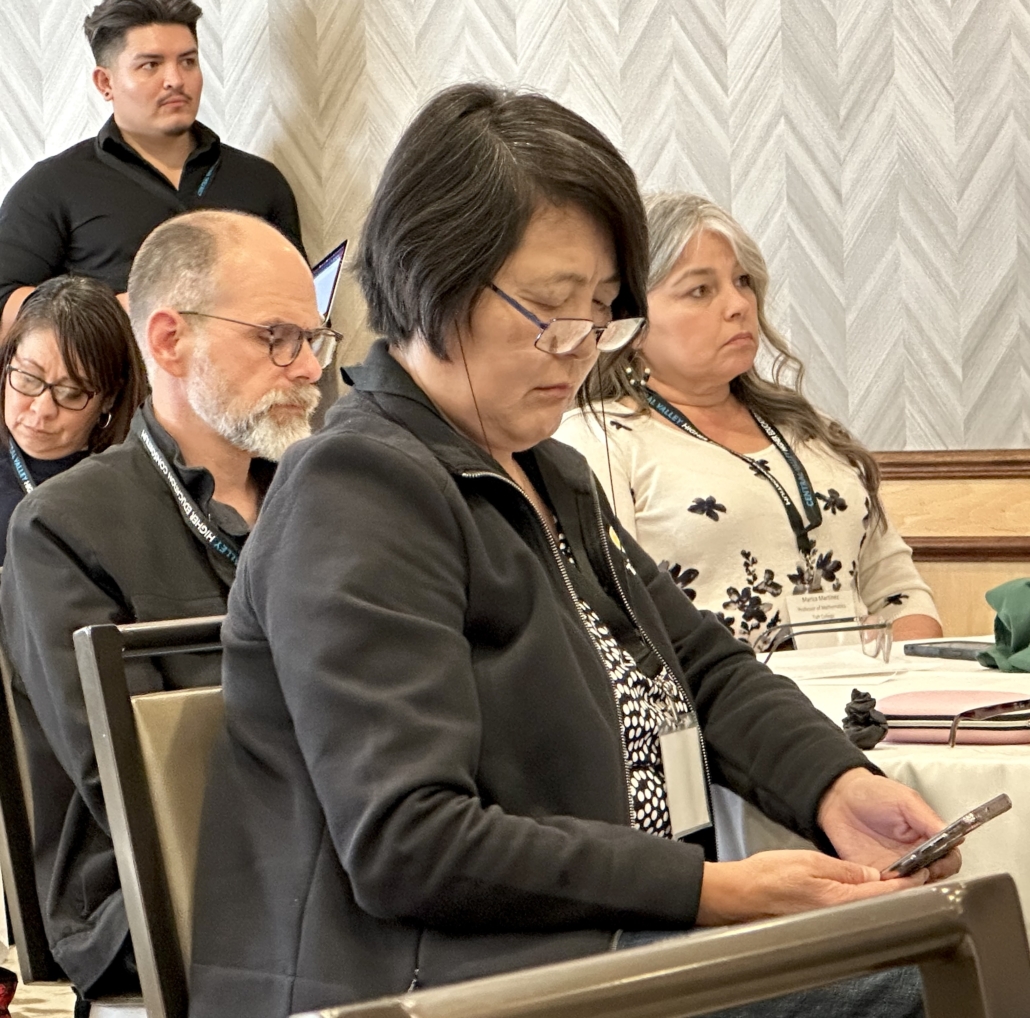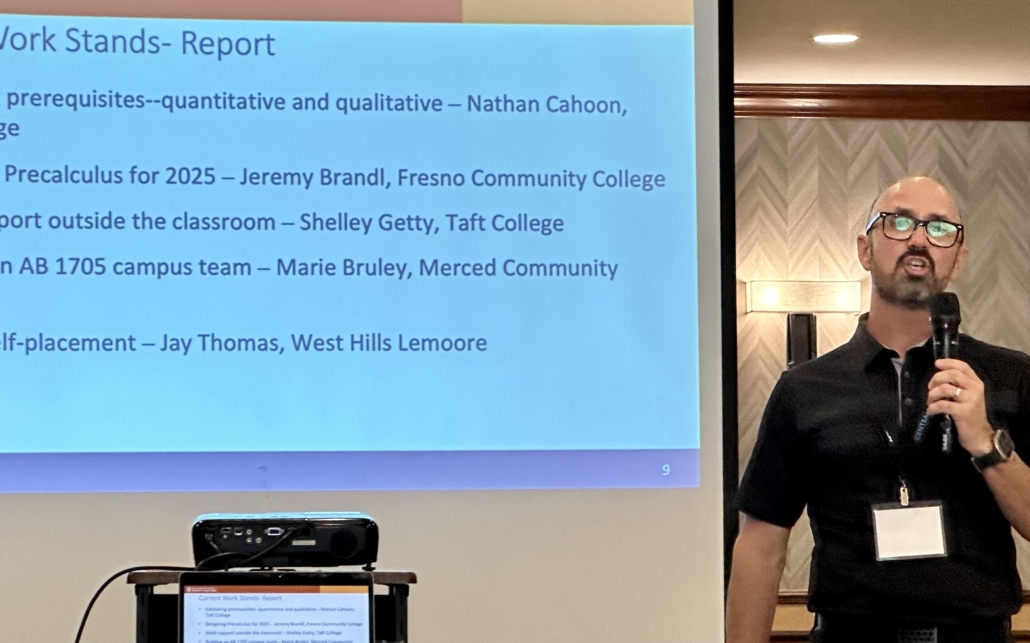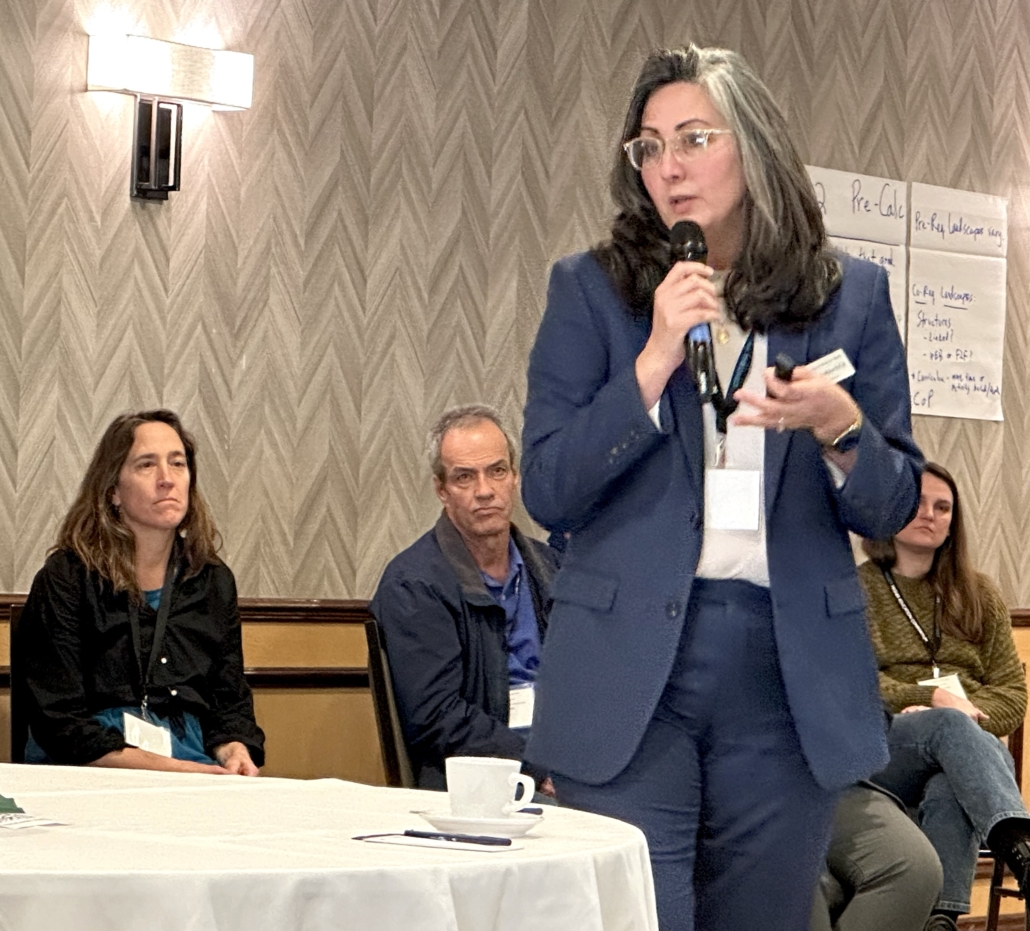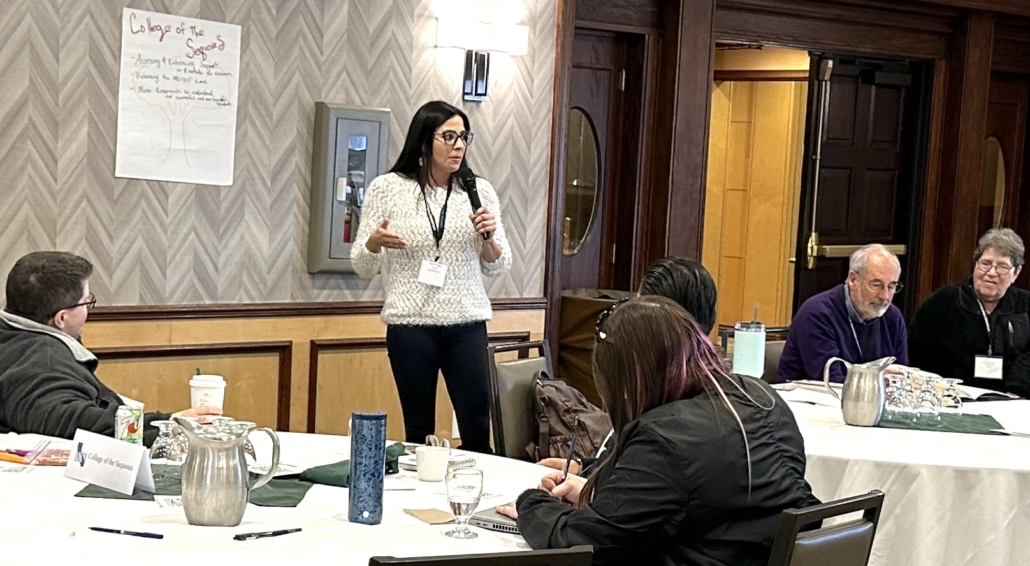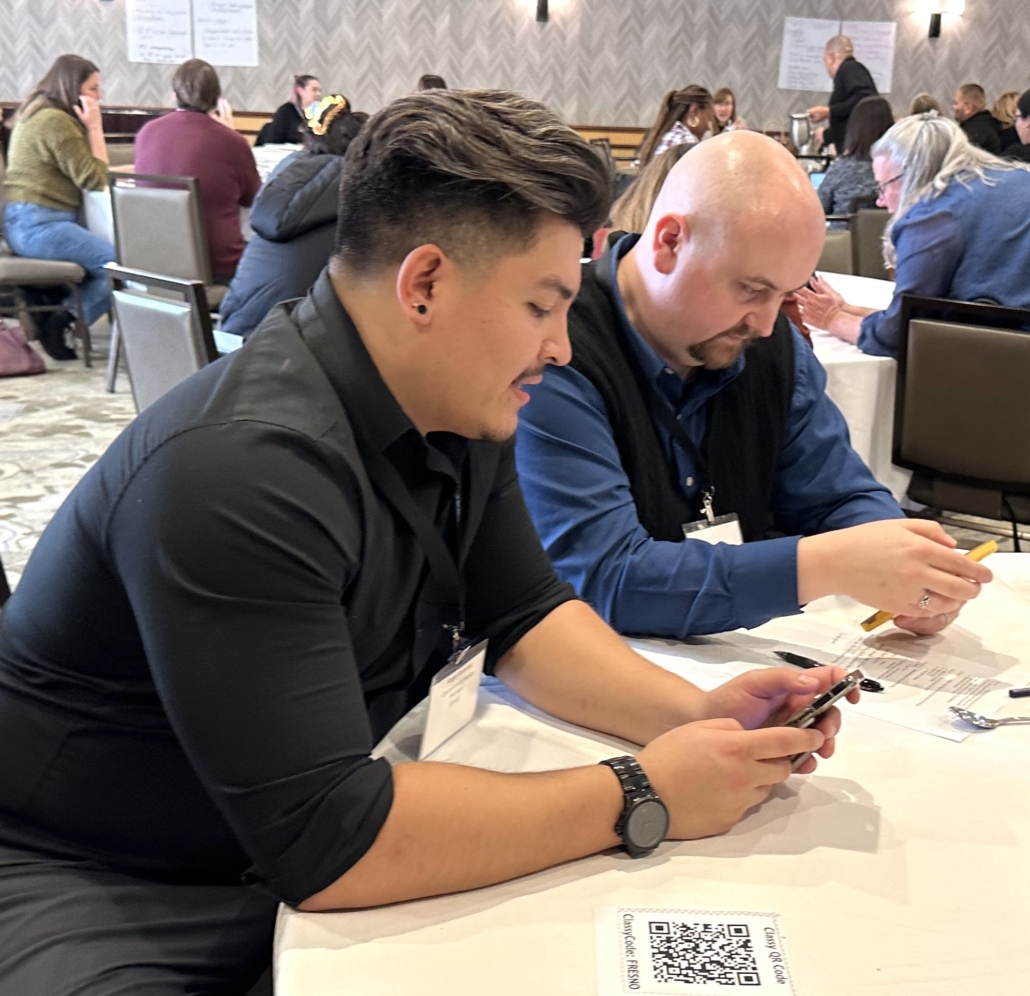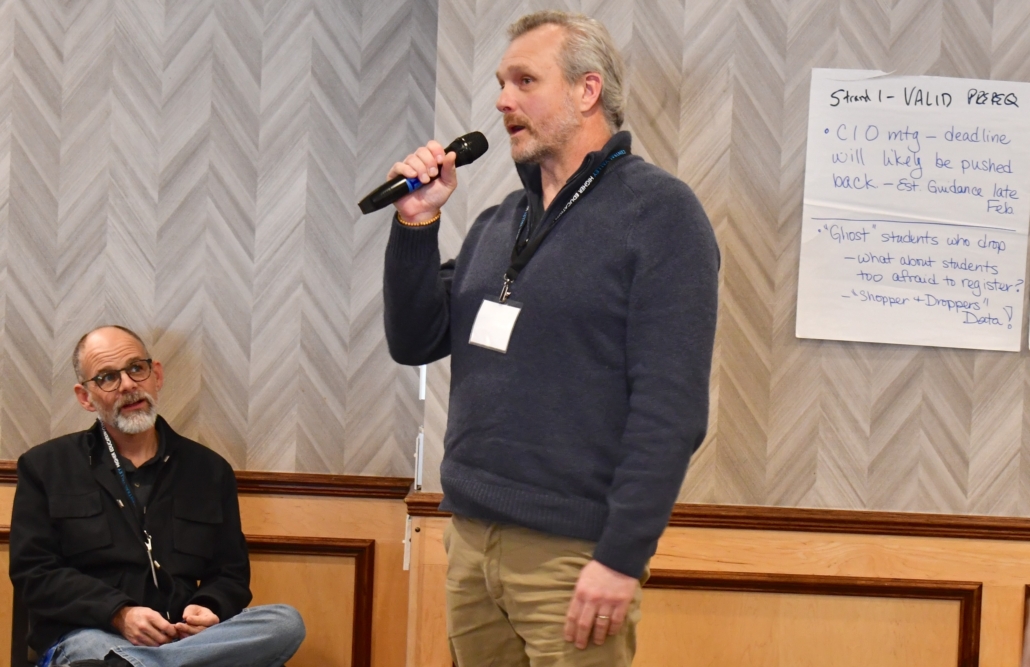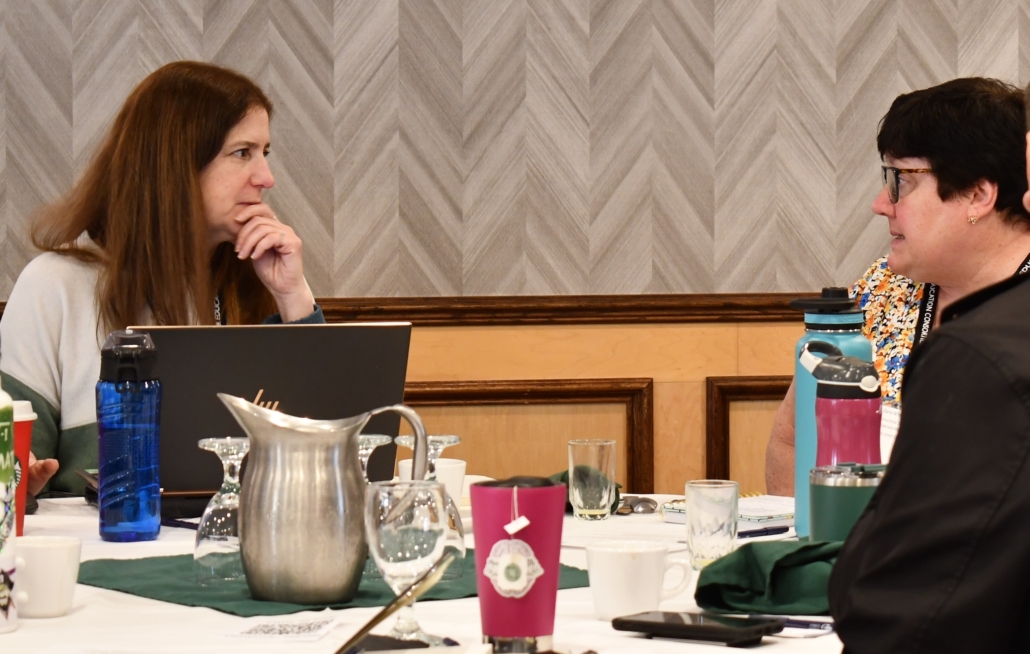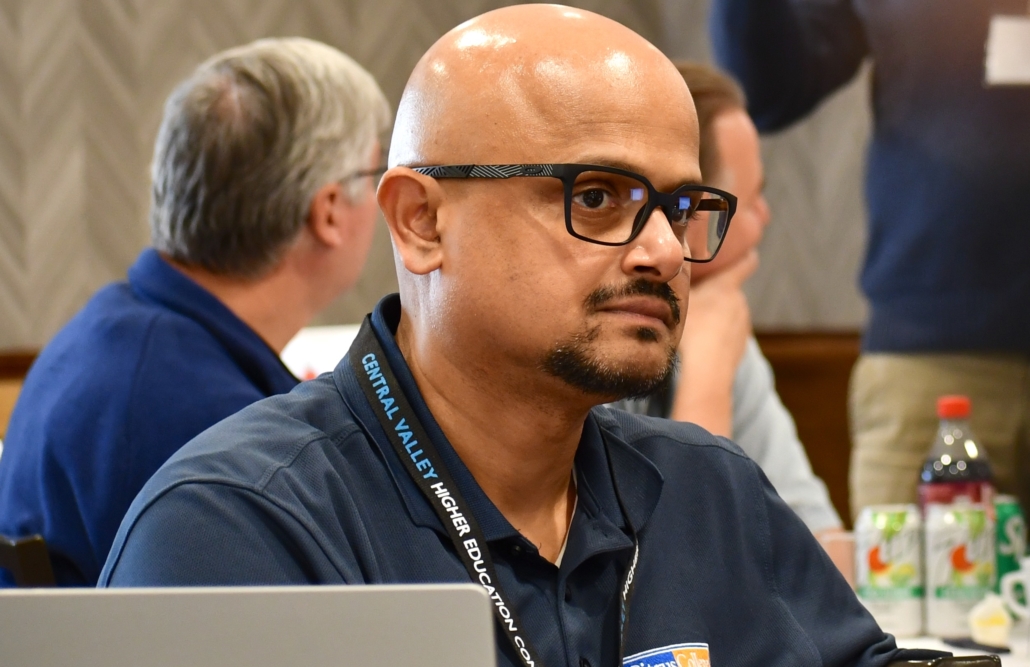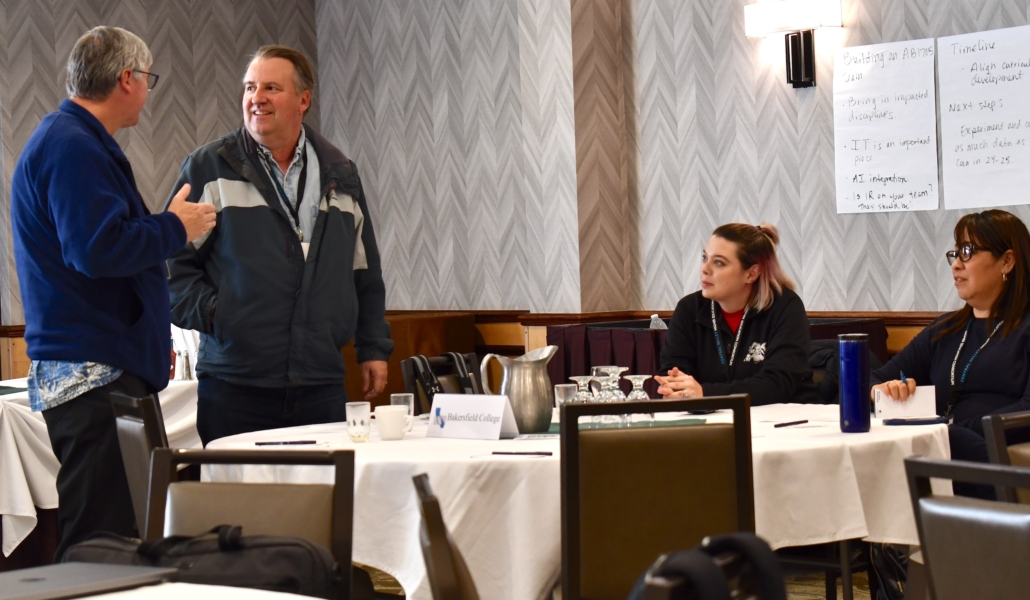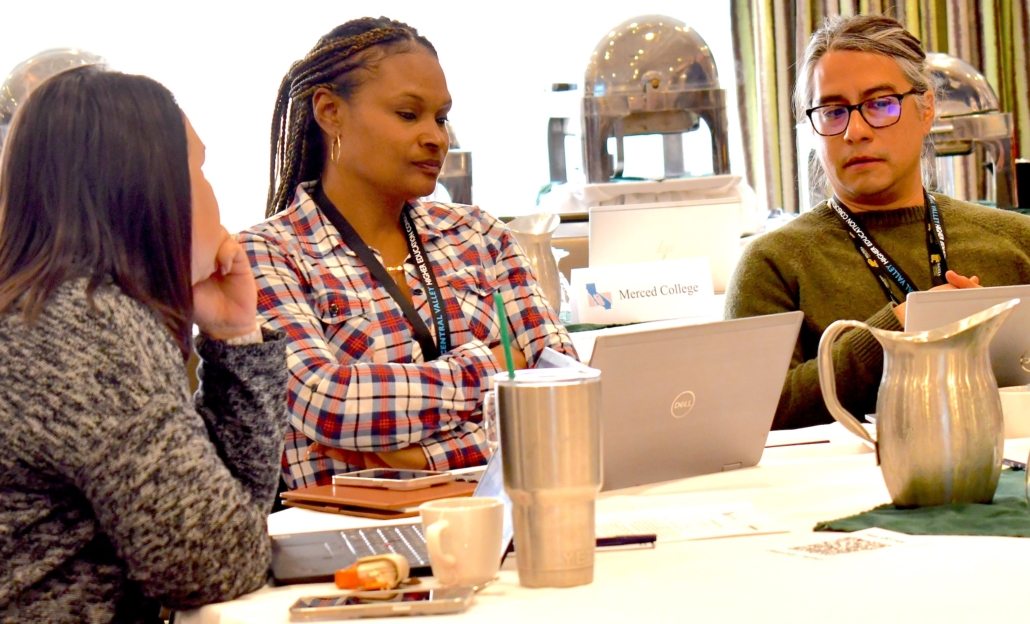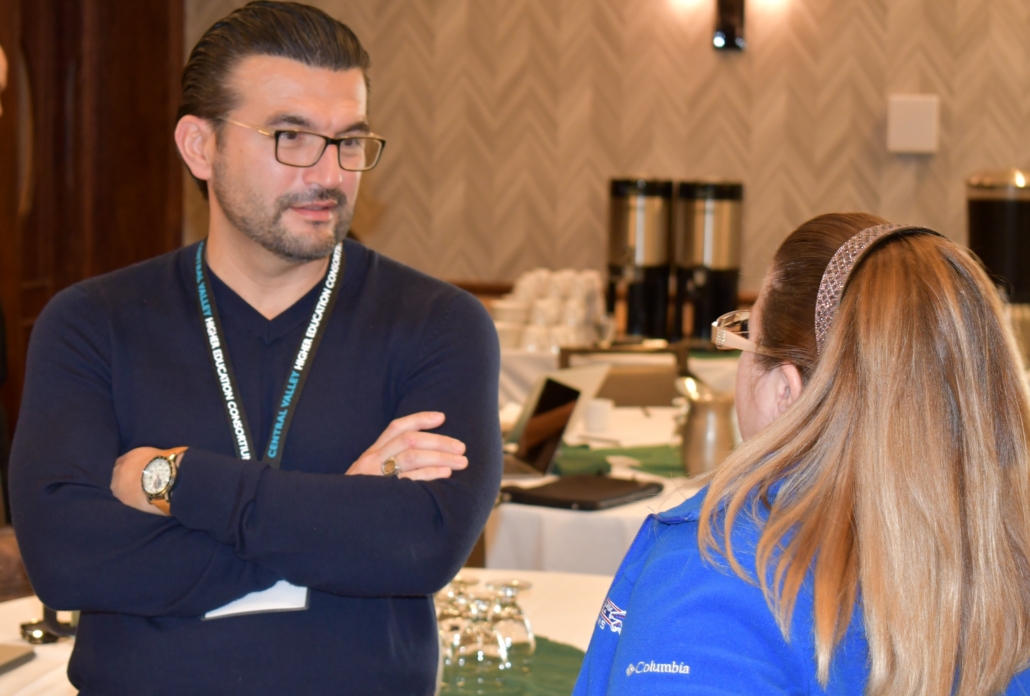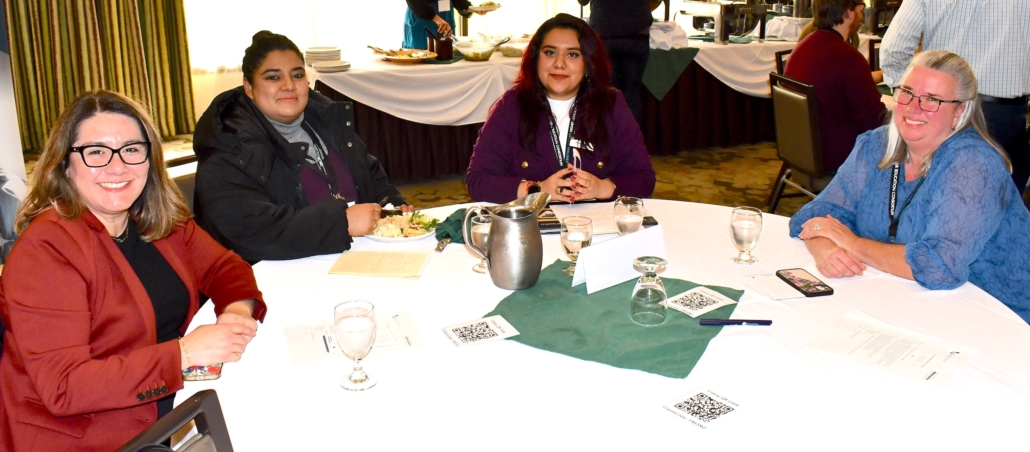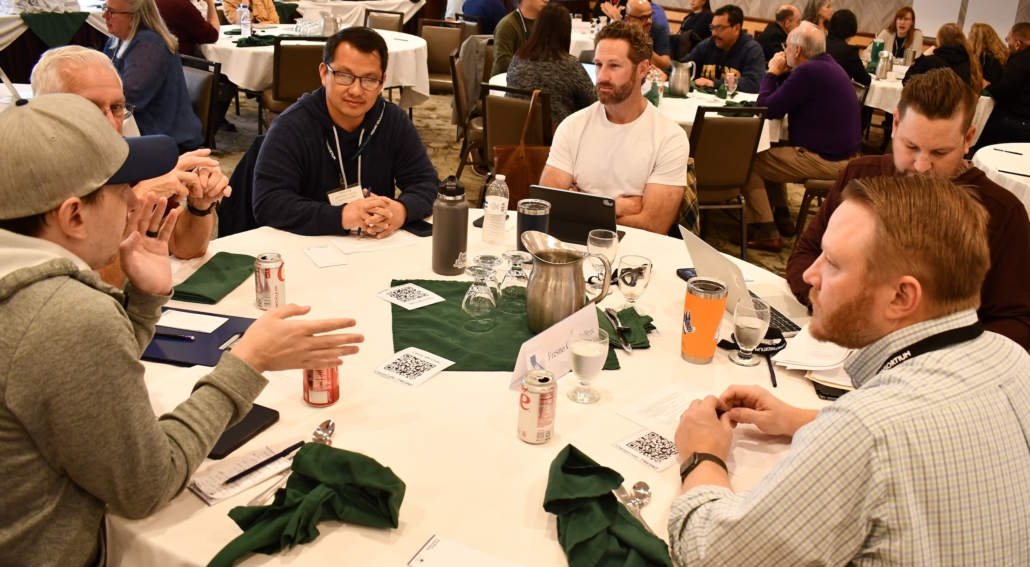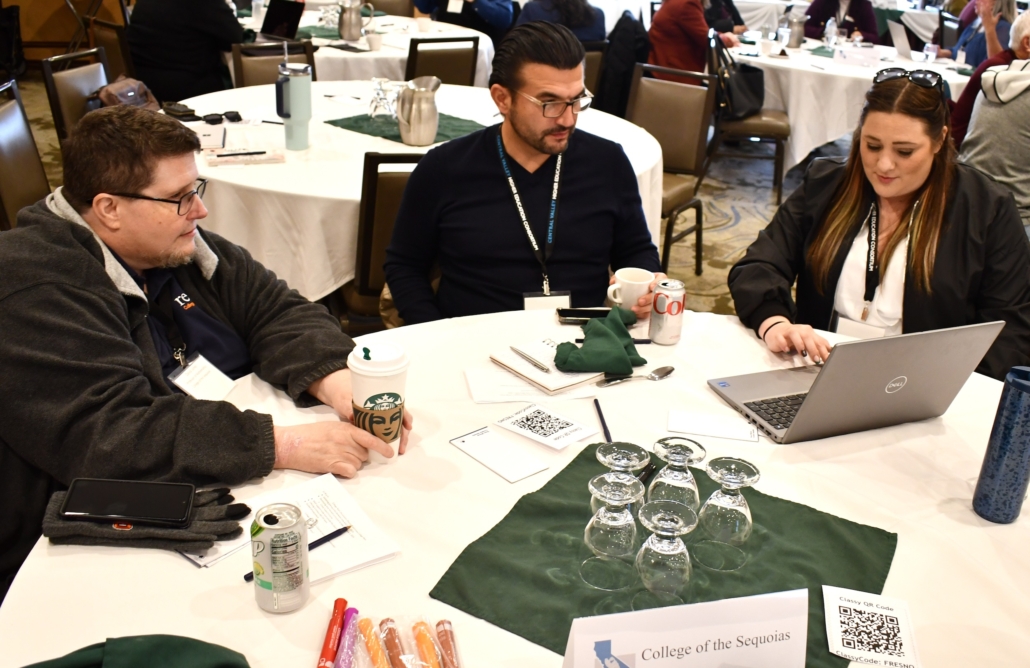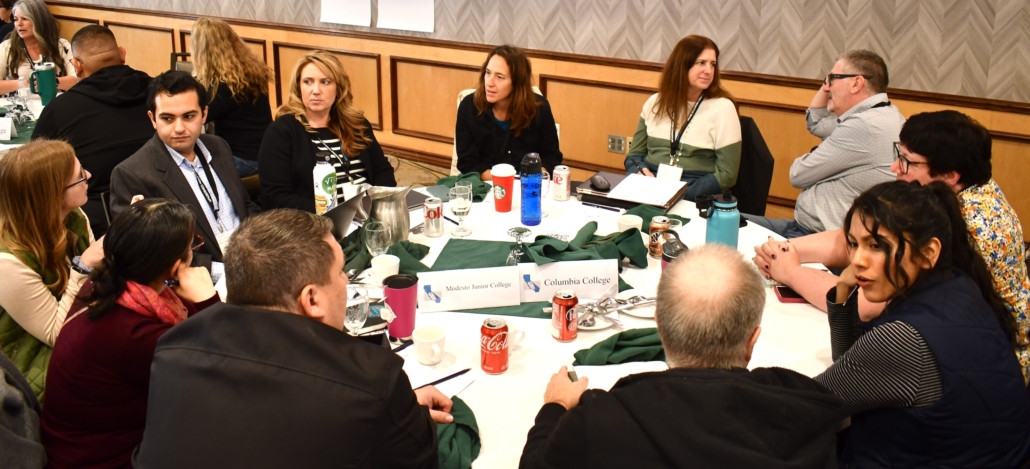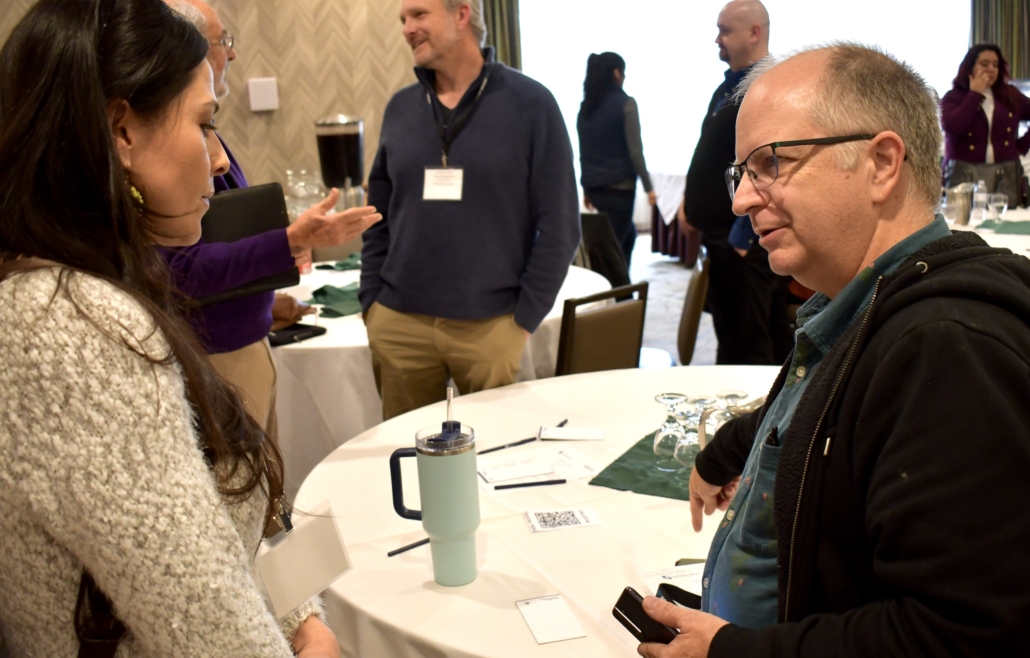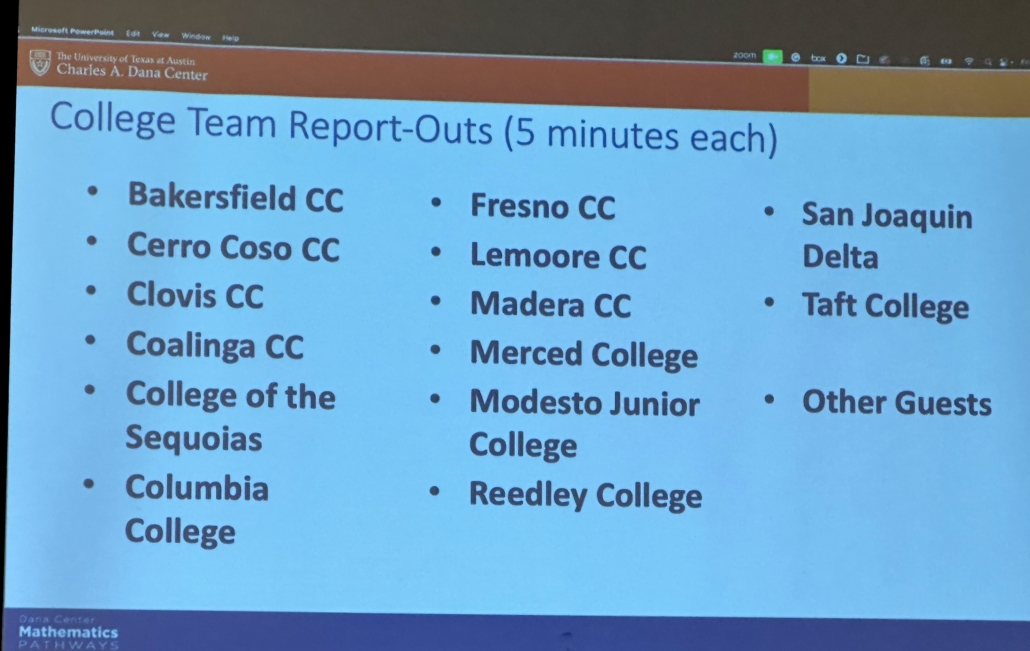
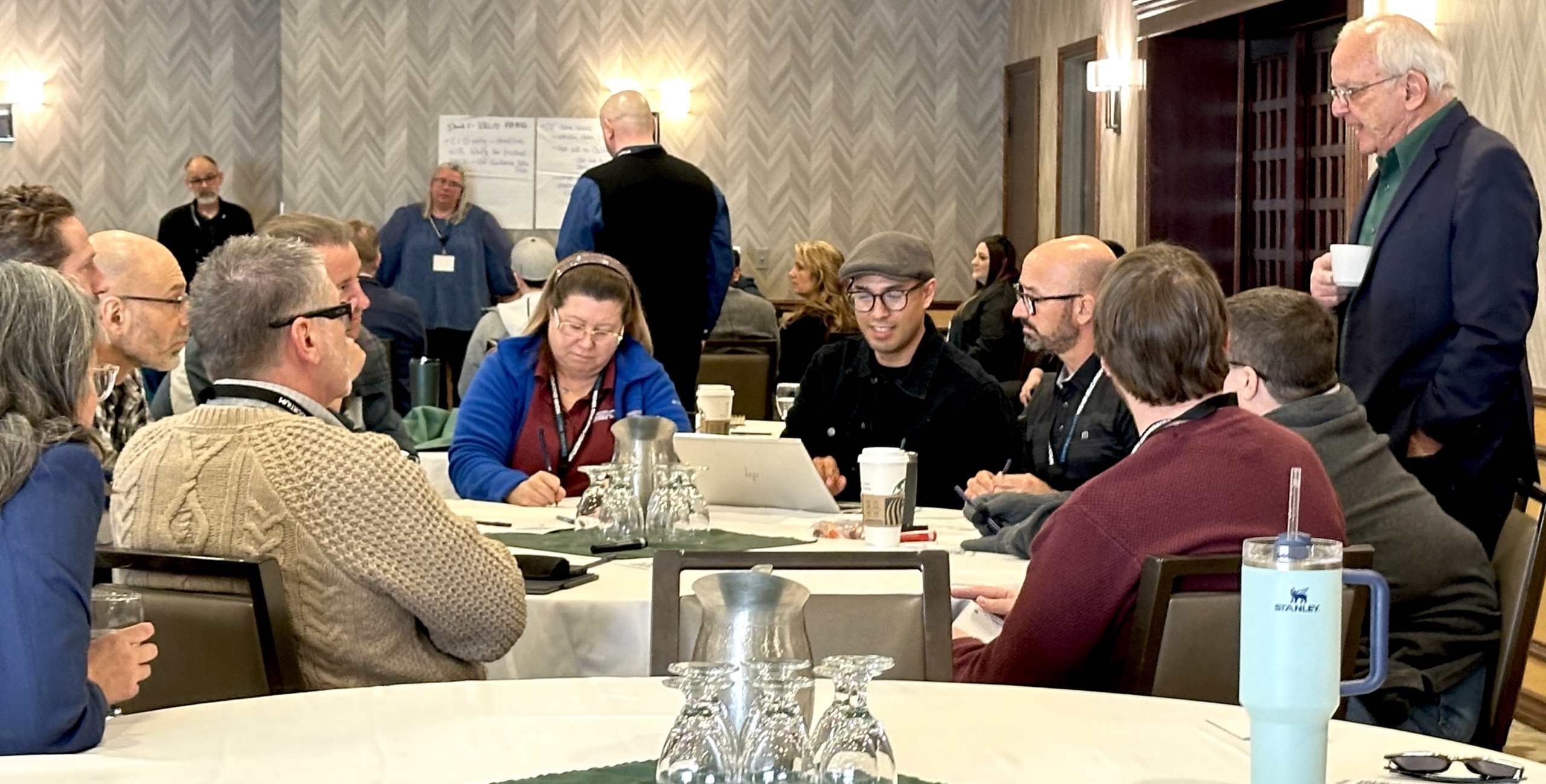
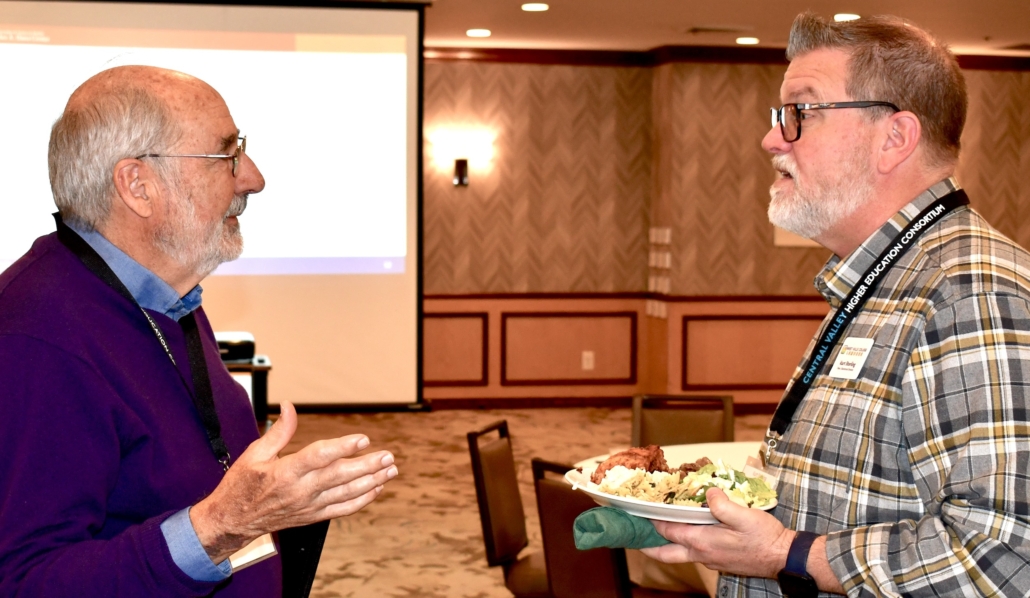
Dr. John Spevak (at right), vice president-emeritus of Merced College and currently a regional coordinator for CVHEC, was an English teacher early in his career and now coordinates the English and Math Task Forces for the consortium working directly with community college teachers in the valley’s nine-county region. Here he facilitates the Math Task Force convening in Fresno January 26. For Teacher Appreciation Week, CVHEC reposts this column Dr. Spevak wrote for the Westside Express recently. This occasion is a special time to honor the men and women who lend their passion and skills to educating our children. It’s a chance for parents, caregivers, and community members to celebrate the hard work and dedication of teachers and school staff throughout the year. 

Teaching English In A Community College:

Today Versus Yesterday


BY DR. JOHN SPEVAK
CVHEC Regional Coordinator
Vice President-Emeritus – Merced College


The other day I had a conversation with college professors who teach English to community college students (as I taught English at the Los Baños college campus many years ago).

I came away from that conversation thanking my lucky stars I taught in the 1970s and 80s — and not today.

When I taught my first English class at the Los Baños Campus of Merced College in 1971, life was good, and so was teaching. I enjoyed sharing my love of reading and writing with the students gathered in my classroom.

I appreciated the many times when the students, young and old, expressed their increased enjoyment of reading and writing as a result of being in my class. There were many lively, interpersonal interactions.

When I gave writing assignments, I knew my students were responding with their own thoughts and ideas, which often were the result of questions they asked in class. I appreciated the growth I saw as students became more proficient writers, as well as more thoughtful readers.

And I enjoyed it when students came into my office and engaged in thoughtful conversations, with questions that enabled them to explore ideas in more depth.

Today, however, for all professors in community colleges but especially those who teach English, teaching has become much harder and less interpersonal.

Today’s community college English professors have to navigate and endure six challenges I never had to face: “bot students,” having to teach online, the lingering consequences of COVID, two new state regulations and (most recently) artificial intelligence.

I don’t know how they do it. But listening to them, I realize they persist while keeping their love for English and their passion for helping students succeed.

“Bot students” was a term that was new to me. My colleagues explained these are fraudulent or fake students, names and student ID numbers of nonexistent people that show up on class lists. Bot students are the work of sophisticated cyber-scammers trying to illegally collect financial aid.

One English professor told me he noticed 30 names on his first class roll sheet, only to find that just five of them were real.

College technology administrators are doing everything they can to distinguish real students from bot or fake students, but scammers keep finding new ways for bot students to appear on class roles, especially for online classes.

This brings up another current challenge for community college professors—teaching online. Currently about 50 percent of community college students prefer taking courses online instead of in person. For a professor to keep her or his job, this almost always results in being required to teach one or more classes online.

Teaching online, something I never had to do as an English instructor, is much different from teaching in person, especially after two years of COVID, during which the only classes were online.

Good online teachers really have to work to get interactions between themselves and their students. And they have to make sure the students’ work is truly their own.

COVID also created another challenge. During the pandemic, most high schools were reluctant to give Fs to students because many students had insurmountable challenges to online access. In many cases students passed courses just by virtually showing up.

After COVID, a lingering challenge for community college professors is the “COVID” approach many students have about passing the course. They ask their professors, “You mean I have to do the work?”

For California community college English teachers there is still another challenge. A few years ago, the state legislature passed regulations which essentially eliminated remedial English classes. Overall, it was a good idea, because too many students gave up when they had to keep taking remedial courses.

This created a new challenge for English professors. How do they help students who have had limited success in writing become proficient writers in one semester? Good college English teachers have found ways, but it requires much more time and energy than I spent teaching to make this happen.

Meanwhile, recent state legislation also makes it easier for community colleges to offer college classes to high school students on their high school campuses. This was another good idea, enabling more and more students to get a head start on college.

At schools where there are few if any high school teachers with master’s degrees in English, many community college English professors needed to travel to the high schools to teach those college courses.

Finally, here comes artificial intelligence (AI), which makes it much easier for real community college students to cheat by submitting essays generated by a computer and not by their own minds.

Today’s professors, especially in English courses, have to find ways to determine whether a student’s writing is truly his or her own. This is especially challenging when teaching online courses.

Whew, I’m exhausted just listing the challenges today’s community college English professors face that I didn’t 40 years ago.

All of this makes me appreciative and proud of my current English teaching colleagues. The community college English professors I know are determined to meet all these challenges even though it takes much more time and effort to teach English today than “in my day.”

I salute my current English colleagues who continue to do such an important job, making college students better readers and writers and giving them greater opportunities to succeed in college, in careers and in life.


See the original Westside Express version (March 29, 2024 )

CVHEC blogs by Dr. John Spevak :

WHAT THE CV-HEC IS HAPPENING BLOG (September 2023): Teachers

WHAT THE CV-HEC IS HAPPENING BLOG (December 2023): The gift of math
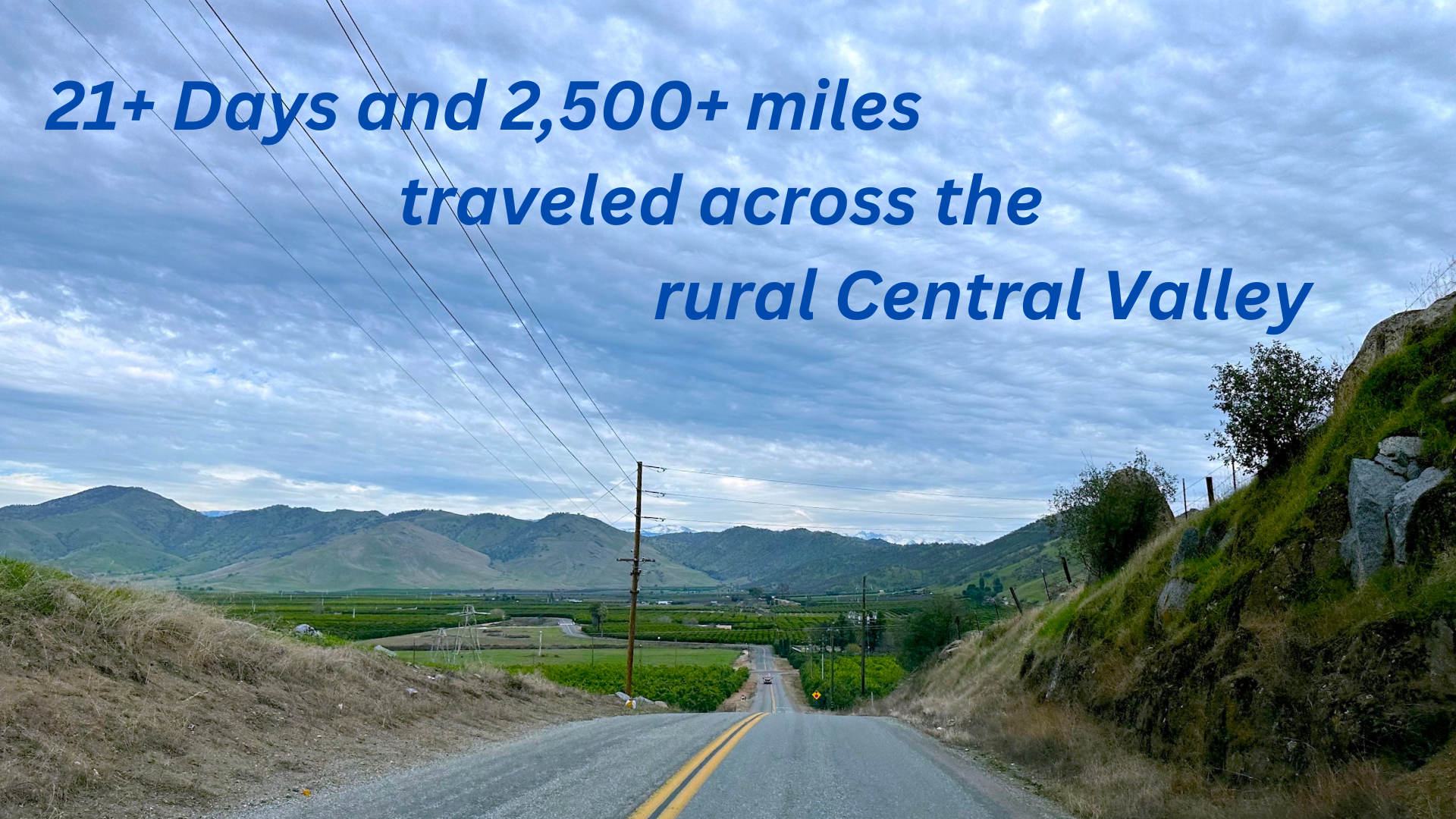
The road to Orosi, California typifies the rich rural areas of Central California where CVHEC and College Bridge are reaching
out to provide Math Bridge services that help prepare high school students for college. (Tom Uribes photo)

Math Bridge campaign identifies nearly

1,000 students for college-level math courses


BY DR. NICOLE KORGIE
Vice President of Operations – College Bridge

The Central Valley Math Bridge project is off and running as 13 committed high school partners with College Bridge and the Central Valley Higher Education Consortium are completing a student recruitment campaign that has identified nearly 1,000 students ready to take on college math and nearly half of those indicating their interest to participate.

The impact Math Bridge is having on education in the region is seen in one general characteristic of these students: they were likely NOT to have taken an advanced math course, or even math at all, in their senior year.

Now, as more high school students graduate with solid/advanced math skills though Math Bridge, more students will find success in college and career, filling vital local workforce needs.

The participating high schools stretching across the Valley’s nine-county region from Taft to Stockton are partnering with six community college members of CVHEC to offer the math dual enrollment courses at their respective campuses beginning next fall (student breakdown in parenthesis.  The community colleges and their participating feeder schools are::

DELTA COLLEGE: Stagg High School, Weber Academy;

MERCED COLLEGE: Atwater High, Buhach Colony High School, Golden Valley High School, Livingston High School, Mariposa High School;

REEDLEY COLLEGE: Dinuba High School, Orosi High School, Sanger High School, Sanger West High School;

TAFT COLLEGE: Taft High School;

WEST HILLS COLLEGE LEMOORE: Riverdale High School.


The campaign: no longer running from math!

The nearly 1,000 Central Valley students from these high schools identified as great prospects to participate in Math Bridge have solid academic GPA’s — between 2.3 – 3.4 — but have struggled in high school math.

Beginning at Taft High School in January, the prospective students were presented with information about Math Bridge and the benefits of participating such as allowing these students to complete a college level math course before they graduate from high school.

While you may think that many if not all students who fear or dislike math would run screaming if presented with the opportunity to take a college level math course, you may now re-think that: of the nearly 1,000 students identified, NEARLY HALF completed a form AFFIRMING their interest in participating in Math Bridge. They expressed a desire to take on the challenge of college level math that the Math Bridge project provides the high school including extensive support to help students pass the course.

For the upcoming academic year, all Math Bridge partner sites will offer a statistics course though their local community college. Math Bridge will be working with the college faculty and high school math teacher at each site to ensure that appropriate support services are provided to the students in the course.

We are currently following up with the 500 students who completed the interest form in the recruitment sessions to ensure that they meet with their school counselor to confirm that Math Bridge is the correct option for them for senior year and their post-secondary goals.

To date, 230 students have signed up. And we’re not done yet as Dinuba and Stagg have yet to begin their student recruitment process so even more students will be given this opportunity by the time we provide a final enrollment number in a future update.


Prepping participant high schools for Math Bridge

As this student recruitment campaign wraps up this spring, we now move into the support phase for the educators from the high school participants with a special event May 3 in Fresno to help prepare teachers for the Math Bridge project’s launch in the fall semester.

On that day, College Bridge will host our Math Bridge Instructional Planning Meeting where college and high school math instructors and their support teams (math coaches, chairs, supporting faculty) will collaborate with our project team around the who, how, when, where and what for the Math Bridge courses to be taught in Academic Year 2024-2025.

Activities for the day will include reviewing curriculum, assessments and commonalities between college courses and any necessary local differences. We will also review the requirements for instructors to earn the project stipend as well as calendaring all future planning and collaboration times per college service area.

It is understandable that some feel the slight mention of math is enough to squash any conversation but the groundbreaking role these Central Valley high schools and their community college partners are taking on with College Bridge and CVHEC is a new level of excitement for educators seeking to arm their students for a successful higher education experience.


BACKGROUND:  College Bridge’s mission is to identify and eliminate barriers that prevent underrepresented students from progressing to and through college specifically focusing on Black, Latino, low-income and rural students. One of its two objectives is to expand strategic dual enrollment partnerships to serve low-income, rural and Latino students in California’s Central Valley. In December 2022, College Bridge was awarded a five-year $4 million US Department of Education grant for the Dual Enrollment Math Bridge Project so six CVHEC community colleges could provide college-level math classes that will improve and support college readiness for underprepared students in the colleges’ respective service areas. In April 2023, the project received a $1,075,340 award from the California Regional K-16 Education Collaboratives Grant Program through two Central Valley K-16 programs – the Fresno-Madera K-16 Collaborative and the Tulare-Kings College & Career Collaborative. Then in December 2023,  a $2,196,928 federal grant was awarded for expansion of the College Transition Bridge project that, among other features, will advance collaboration with CVHEC’s Central Valley Transfer Project and its college course-planning software, Program Pathway Mapper, as well as with consortium member colleges.


‘Continuing the CVHEC Way

to AB 1705 Success’ – Part II

Math Task Force resumes AB1705 curriculum planning April 19 with
a look at chancellor options, adding high school principals voices to the convo


Many of the best math minds in the Central Valley will resume their Assembly Bill 1705 compliance deliberations April 19 for the latest Central Valley Higher Education Consortium (CVHEC) Math Task Force convening,  “Continuing the CVHEC Way to AB 1705 Success – Part II” from 9 a.m. to 3 p.m. at the DoubleTree by Hilton Hotel Fresno Convention Center.

The agenda released last week includes a look at recent guidance from the California Community College Chancellors Office (CCCCO) and introduction of a new Principal’s Strand to the ongoing discussions as they work towards compliance with the final stage of AB1705 by July 1: validation of equitable placement, support and completion practices for STEM programs.

Participants are encouraged to register for the free event by the April 17 deadline said John Spevak, CVHEC regional coordinator who oversees the consortium’s Math Task Force.

About 85 community college math educators, administrators and institutional researchers are expected to re-convene for the day long CVHEC event co-facilitated by the Charles A. Dana Center (University of Texas at Austin), following up two virtual sessions in the fall and two in-person meetings.

This third in-person event on the topic is drawing many new faces with four principals and five other K-12 representatives registered to attend for input regarding what impact AB1705 will have at the high school level and how to work together to align math efforts.

Secondary education leaders registered to attend are:

  • Lisa Castillo – Cutler-Orosi Joint Unified School District director
  • Matt Gehrett – Dinuba Unified School District director
  • Christine Johnson – Dinuba Unified School District math coach
  • Celeste Azevedo – Mariposa County High School principal
  • Marlena Celaya – Orosi High School principal
  • Stasha Tiller – Riverdale High School principal
  • Beu Her – Sanger High School deputy principal
  • Christina Rubalcava – Stanislaus County Office of Education Math Project coordinator
  • Brett Toliver – Stockton Unified School District principal


In addition to college administrators and institutional research participants, registration has also been received from representatives of the California State University Chancellors Office, the California Academic Partnership Program, the Fresno State Department of Curriculum & Instruction and the College Readiness Program, Citrus College (Glendora CA), MESA, STEM counselors and college articulation officers.

“Once again, this is an agenda which is engaging and interactive and enables the best math minds in the Central Valley to determine the best path forward to math success for Central Valley students in light of AB 1705 and in light of the recent memo from the Chancellor’s Office,” said Spevak, who is also a vice president-emeritus of Merced College.

He encouraged CVHEC community college members not yet involved to send a delegation of its math educators as well as administrators and institutional researchers to continue collaboration on curriculum discussion that would lead to fulfilling the last phase of the state law signed into law in 2022.

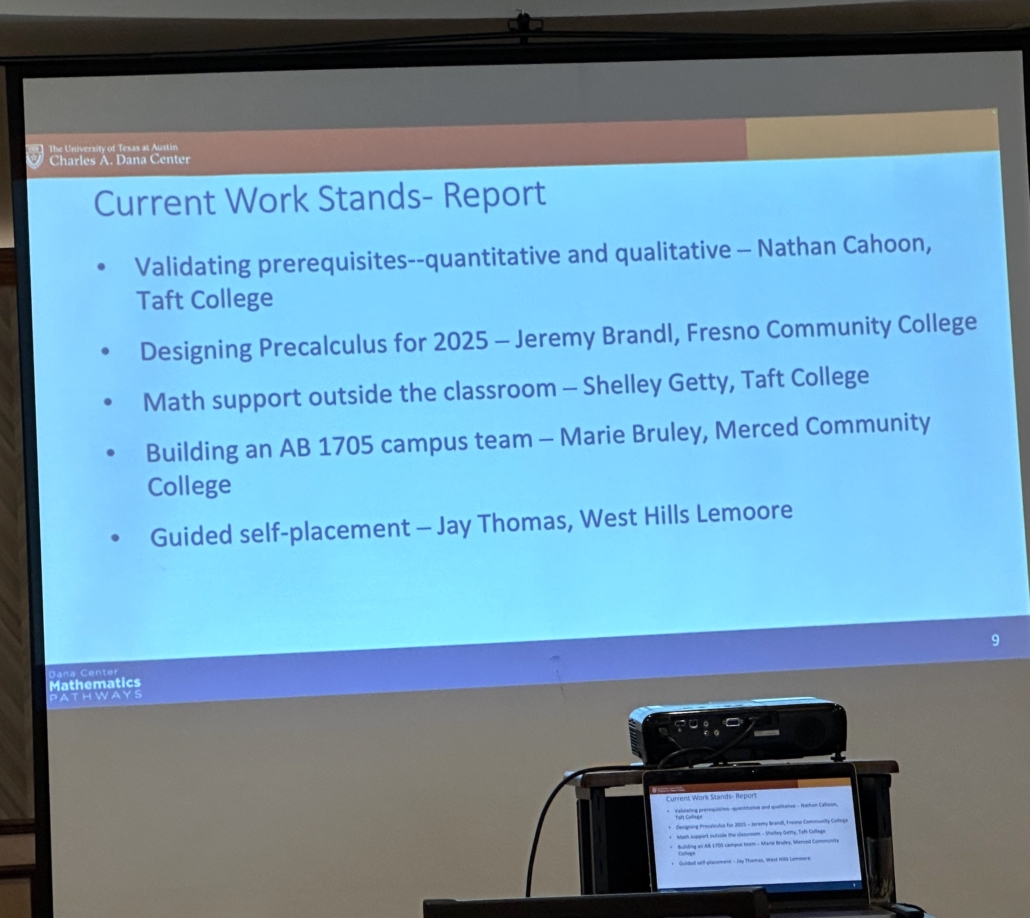
In what has been dubbed “the Central Valley Way,” the Math Task Force and convening participants have gathered to explore five strands of curriculum planning:

  • Validating Prerequisites;
  • Designing Precalculus for 2025;
  • Math Support Outside and Inside the Classroom;
  • Building an AB 1705 Campus Team; and
  • Guided Self-Placement.

In a Dana Center analysis for CVHEC of the CCCCO memo issued Feb. 27 outlining options for the colleges to consider, Joan Zoellner noted that while the memo provides direction on the validation process for transfer­ level math placement and enrollment practices for STEM programs, it severely restricts the options for the number of transfer-level prerequisite courses that shall be offered prior to calculus.

“The options for that prerequisite course are limited by the memo and validation options as well”, said Zoellner, who is the Dana Center’s Launch Years Initiative lead.

Consortium community colleges were asked to review the chancellor’s office memo and some of the findings presented to determine how it affects their respective campus for discussion at the upcoming session including working with campus IR department to confirm the numbers and results prior to the April 19 convening.

To open the April 19 event, Spevak will be joined by Dana Center representatives Tammi Perez-Rice, Frank Savina, and Cassidy Kist in welcoming the participants.

Perez-Rice will provide of an overview of AB1705 and the Dana Center analysis of the CCCCO Memo sent to community colleges Feb. 27 to clarify and discuss options available for compliance. (See the What the CV-HEC is Happening Blog in this issue).

The group will then break out into these one-hour planning sessions:

  • Option A planning – the Central Valley Calc 1 coreq
  • Option D planning – the Central Valley Calc 1 prereq
  • Options B and C – validating prerequisites
  • High School Principals

Lynn Cevallos, College Bridge president, introduces a new Principals Strand which will feature high school leaders who currently work with the Central Valley Math Bridge Project.

“In our last session, at the behest of the only principal in attendance, Marlene Celaya of Orosi High, we realized the value of including K-12 voices at the table so we reached out to schools participating in our Math Bridge program with College Bridge,” Spevak said. “We appreciate the leadership of Marlene and Lynn Cevallos to expand our reach. We invite any other interested Central Valley K-12 officials to join us April 19.”

Following her session will be “Reports from Strand Leads:”

  • NATHAN CAHOON, Taft College: Validating Prerequisites: Quantitative And Qualitative;
  • JEREMY BRANDL, Fresno City College: Designing Precalculus for 2025 (designing calculus with support in 2025);
  • Holistic Student Support
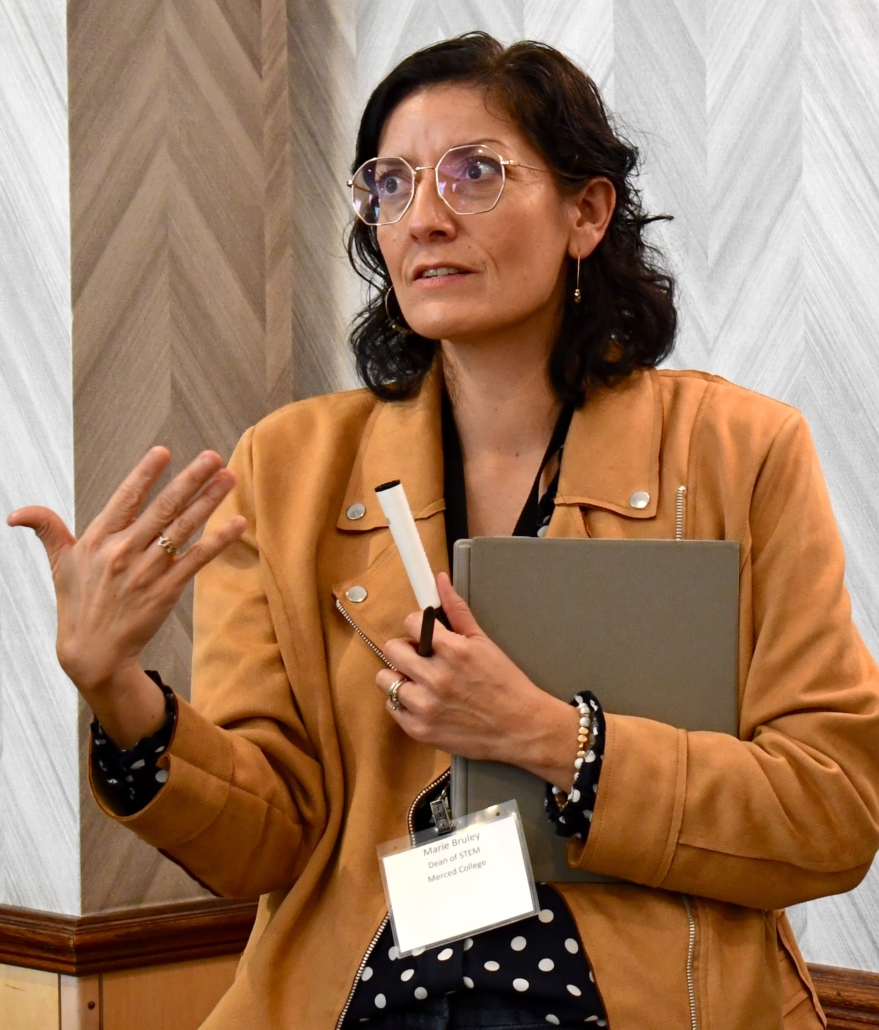
    • MARIE BRULEY, Merced College: Building an AB 1705 Campus Team;
    • JAY THOMAS, Lemoore College: Guided Self-placement and Registration Process;
    • TINA AKERS, Modesto Junior College: Math Support Outside the Classroom —

Prior to the lunch break, Spevak will provide a preview of the afternoon breakout sessions which begins with follow up breakouts by strand.

For the final session of the day, college teams will meet to “Set Next Steps and Goals” under these topics: planning curriculum committee process; planning eval/validation; and planning how to set up registration process; and “Continuing the Central Valley Way — More than Just Compliance.”

In a closing 15-minute activity, college teams will each provide a report out.

“We appreciate the immense work by our regional community colleges in collaboration with CVHEC partners the Charles A. Dana Center from the University of Texas at Austin as well as College Bridge,” said Dr. Benjamín Durán, CVHEC executive director and president-emeritus of Merced College. “They are building pathways and eliminating barriers for our students looking to navigate the challenge of completing their gateway courses in college math.”

See:

AGENDA – The CVHEC Way to AB 1705 Success Part 2

CCCCO Validation Memo (Feb. 27, 2024)

What the CV-HEC is Happening Blog

This month’s “What The CV-HEC Is Happening” Blog takes a unique look at an unprecedented wave of leadership at five major Kern County education institutions:  California State University, Bakersfield; Kern […]

Secondary education voices invited to join discussion Discussions to improve calculus pathways for STEM students amidst a pending deadline this summer continues with the third “Central Valley Way to AB1705 […]

CVHEC joins dual enrollment partners

in statewide digital campaign

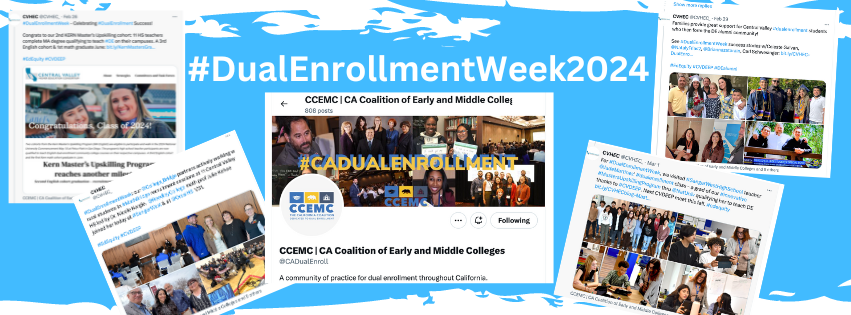
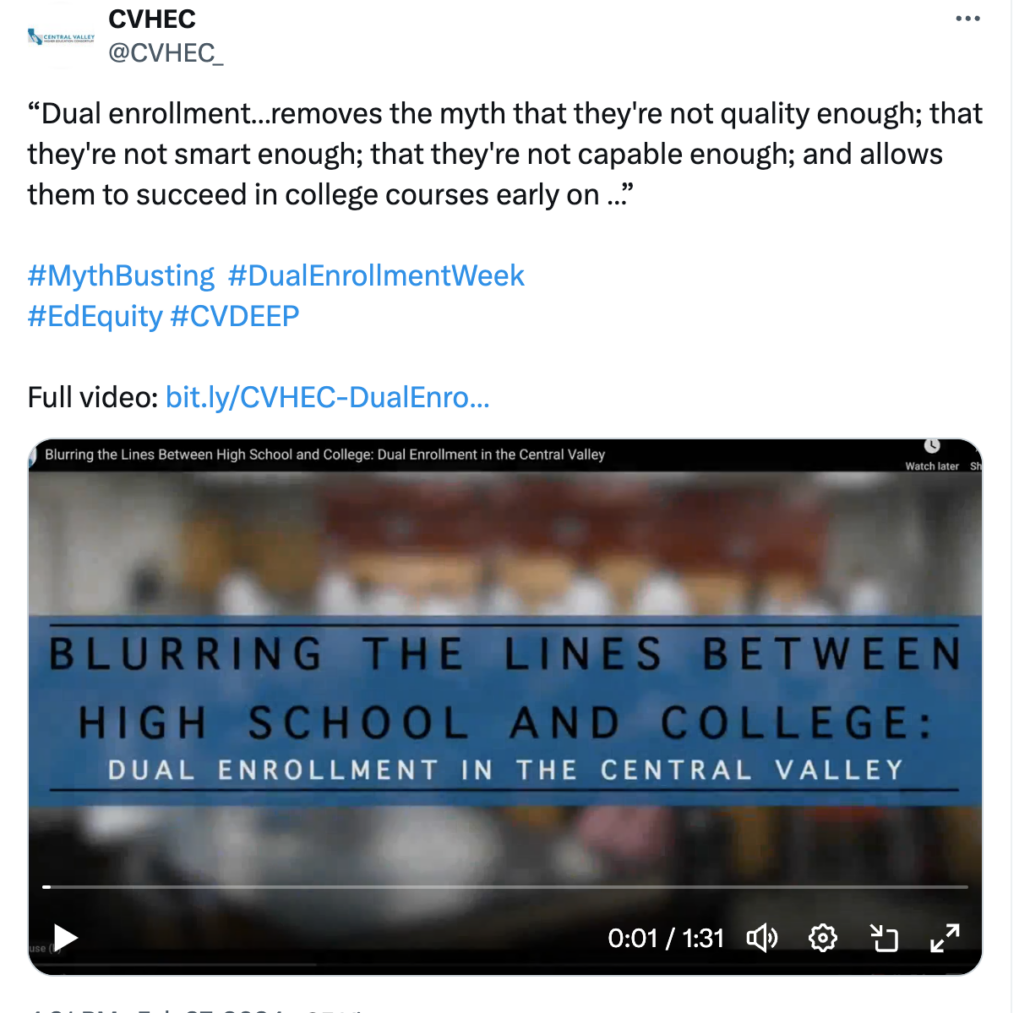
The Central Valley Higher Education Consortium participated in the Digital Dual Enrollment Week social media campaign conducted statewide Feb 26-March 1 by the California Alliance of Dual Enrollment Partnerships (CADEP).

The weeklong campaign followed the 2nd Annual California Dual Enrollment Equity Conference held Feb. 20-23 in Long Beach presented by CADEP, Career Ladders Project, and The Education Trust–West with fiscal agent the Foundation for Los Angeles Community Colleges.

The California Alliance of Dual Enrollment Partnerships is an affiliated chapter of the National Alliance of Concurrent Enrollment Partnerships (NACEP), is a unified coalition committed to the advancement of equity, student success and quality in dual enrollment programs in California.

Its vision is to unite individuals, state agencies and organizations committed to dual enrollment in California to promote and advance quality dual enrollment programming across the state.

For the social media campaign, dual enrollment partners were asked to promote a specific theme each day:

MONDAY – Feb. 26: Celebrate Dual Enrollment Success

TUESDAY – Feb. 27: Dual Enrollment Myth Busting

WEDNESDAY – Feb. 28: Dual Enrollment is an Equity Strategy – Widening the Front Door to College

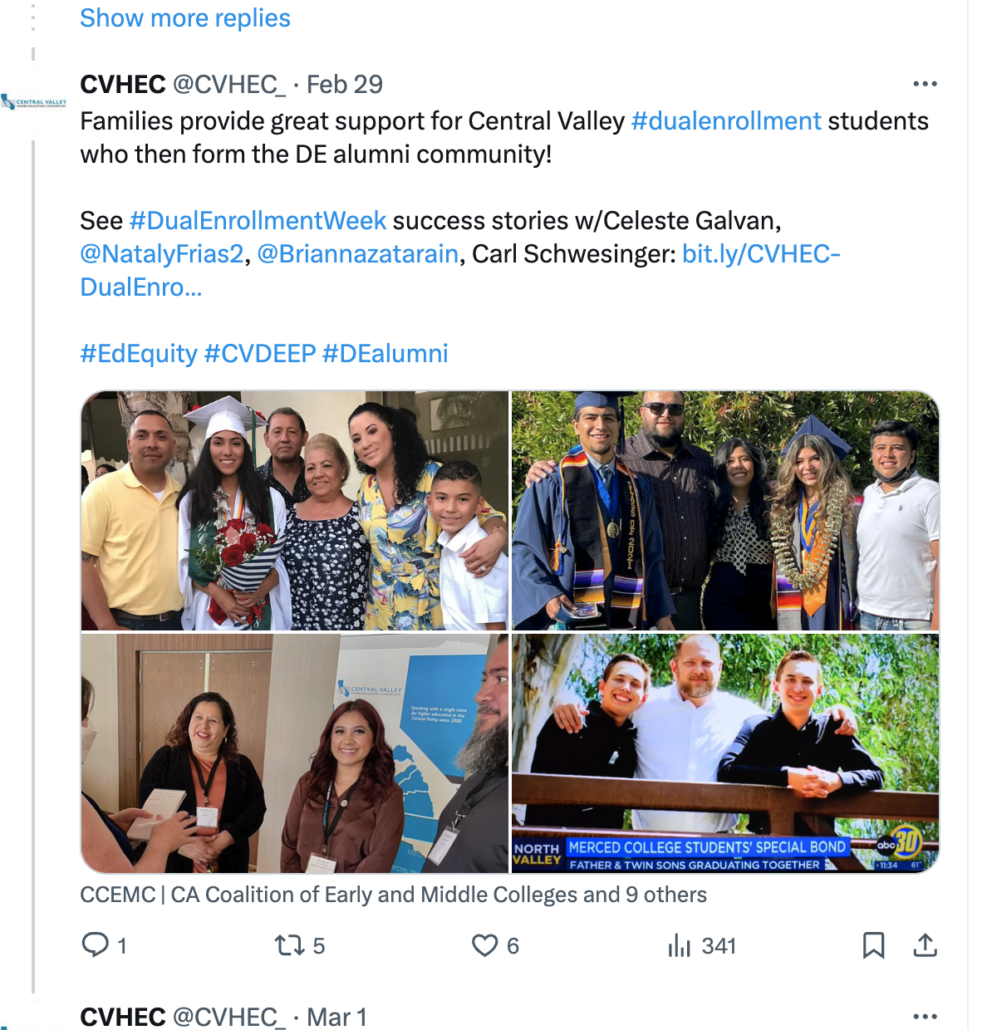
THURSDAY – Feb. 29: Families, Communities and Dual Enrollment

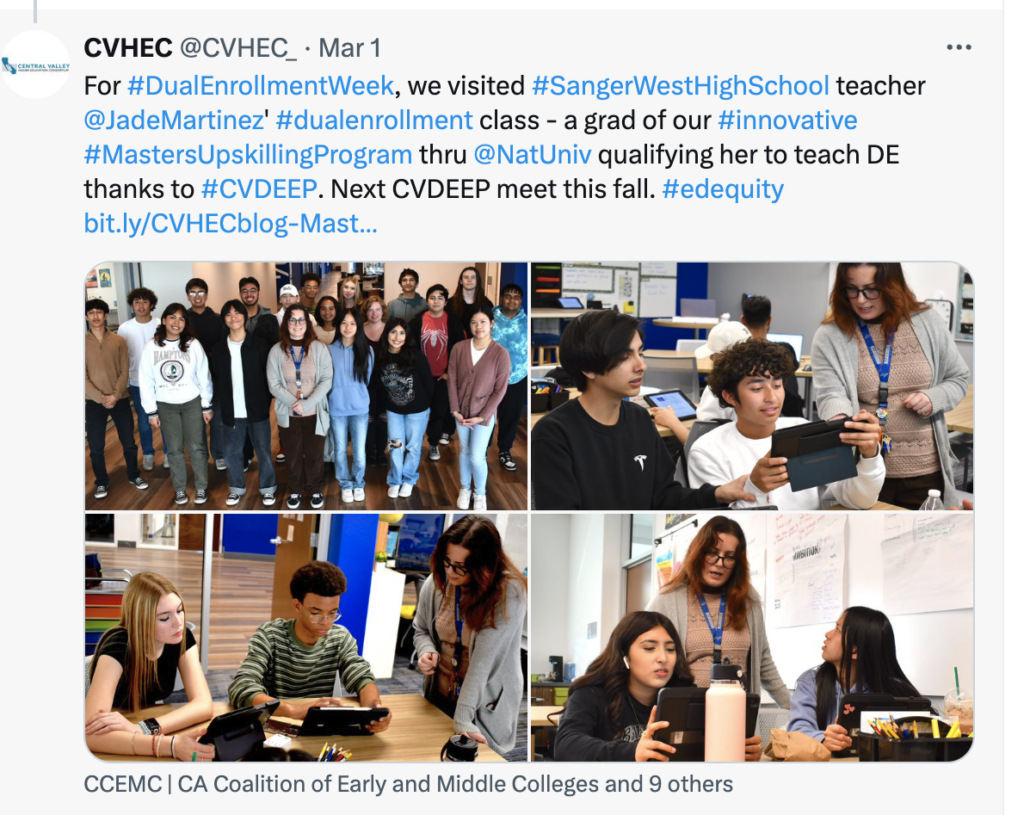
FRIDAY – March 1: Innovations in Dual Enrollment

“We were able to incorporate several of our projects and dual enrolment student interactions over the past few years into the social media campaign,” said Tom Uribes, CVHEC communications/media coordinator.

CVHEC featured its Central Valley Dual Enrollment for Equity and Prosperity (CVDEEP) Projects and outcomes: Master’s Upskilling Project recent graduates; the consortium’s dual enrollment video; the Math Bridge project in collaboration with College Bridge; students who participated in the video and at CVHEC convenings sharing their success stories as well as their families; and visiting the dual enrollment classroom of Jade Martinez, a Sanger West High School English teacher  who completed the innovative Master’s Upskilling Project that qualified her to teach the community college courses at her high school.

CVDEEP is now looking ahead to its annual convening that will be held in the fall this year. Details will be forthcoming in future CVHEC newsletters.

For more info on CVHEC Dual enrollment work please visit. https://cvhec.org/dual-enrollment-in-the-central-valley/

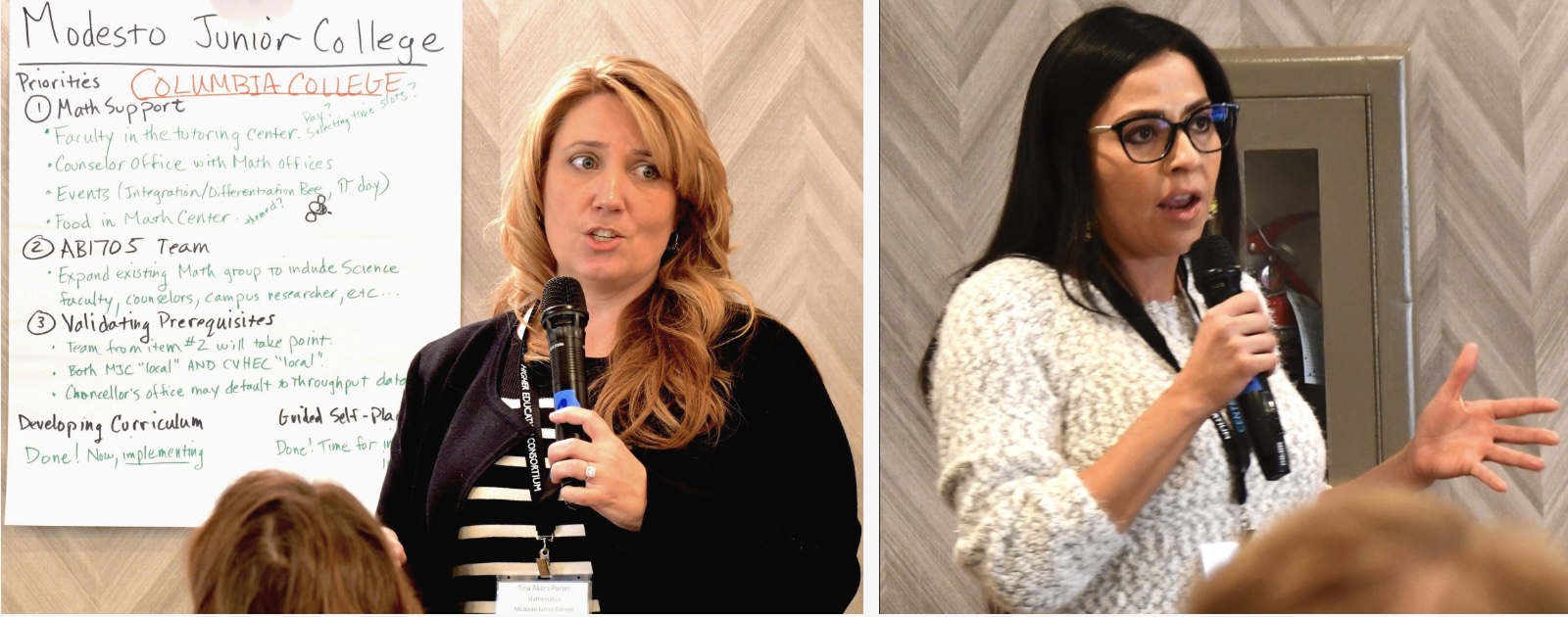
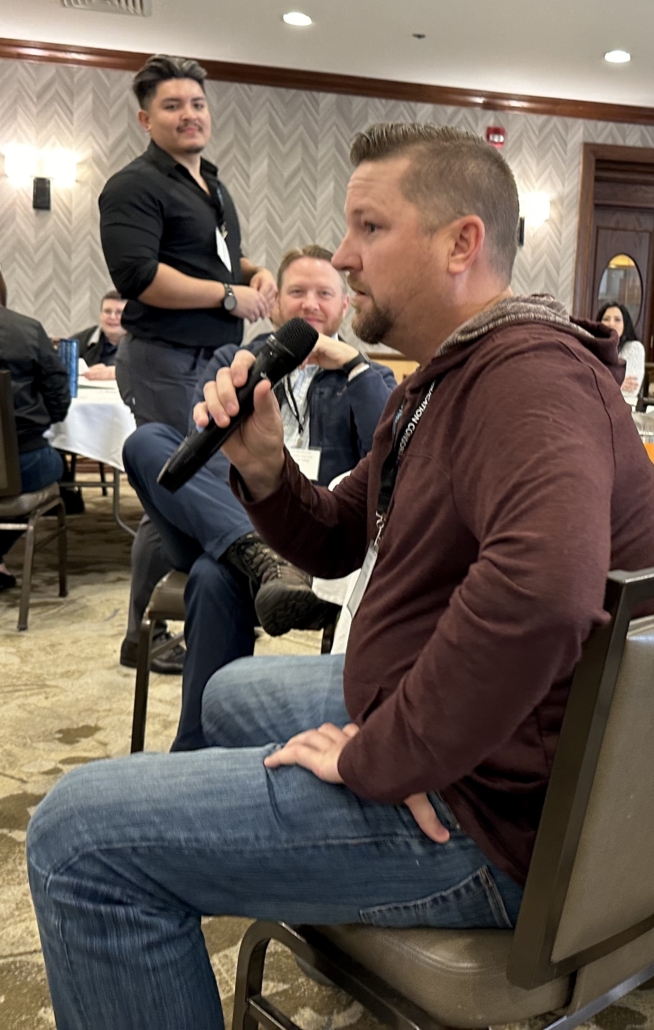
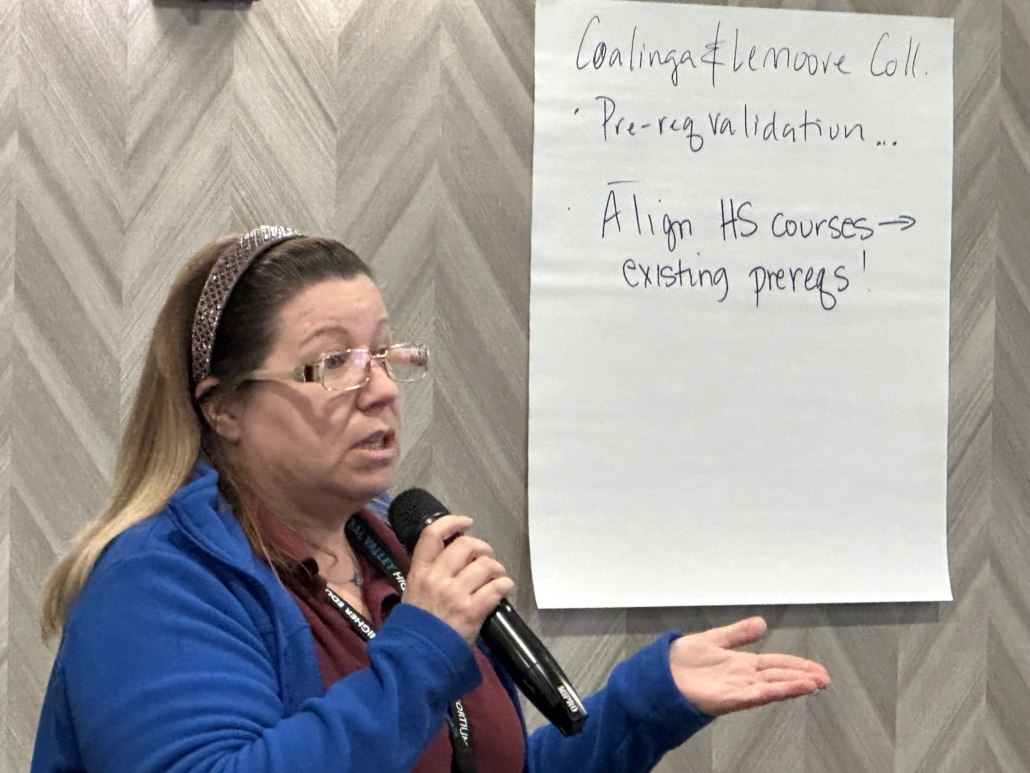
Modesto Junior College math professor Tina Akers-Porter discusses her strand group’s deliberations at “The Central Valley Way to AB1705 Success” Convening Jan. 26 where a call for a “principals task force” by Orosi High School Principal Marlena Celaya would bring more secondary education voices to the table.

‘Something extraordinary is happening in math in California’s Central Valley’

Math Task Force latest AB1705 session leads to calls

for more data, high school input, re-convene April 19

BY TOM URIBES
CVHEC Media/Communications Coordinator

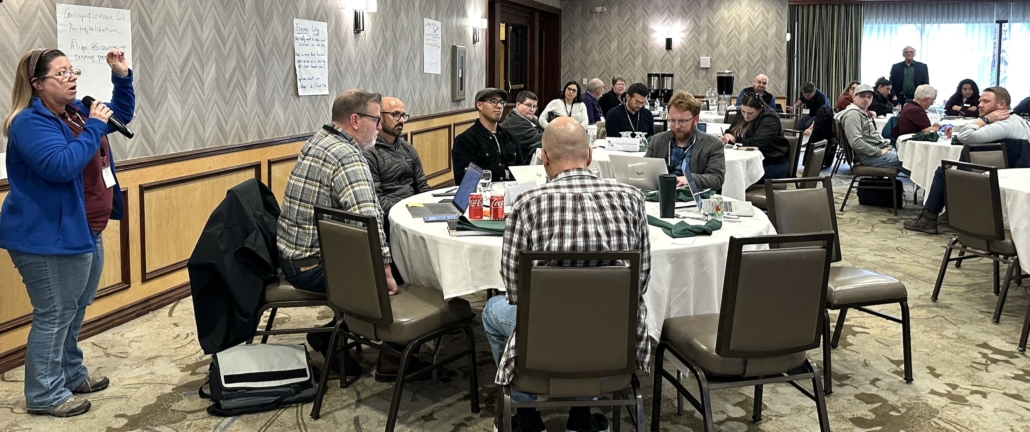
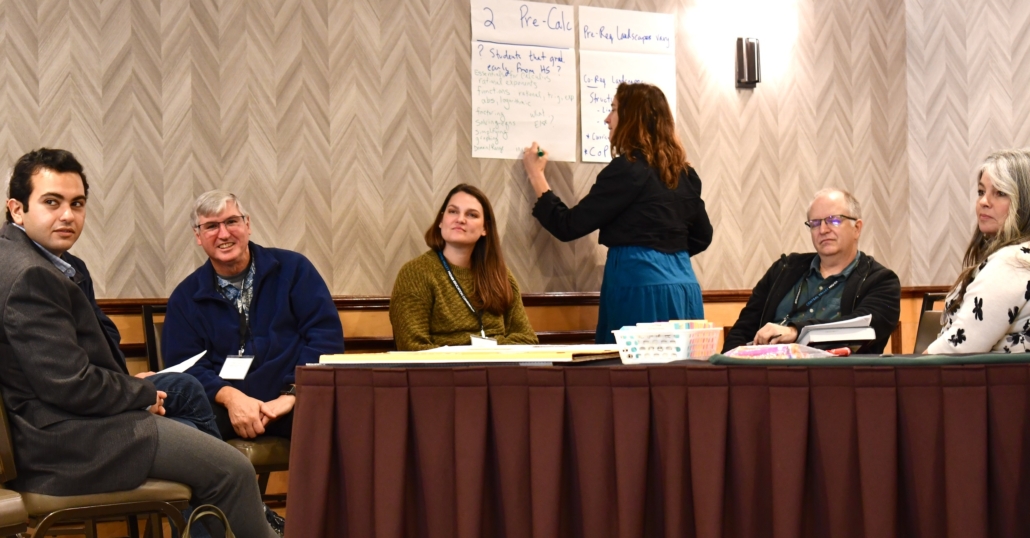
Realizing that state guidance surrounding Assembly Bill 1705 remains elusive, valley community college math educators and officials forged ahead at “The Central Valley Way to AB1705 Success” convening Jan. 26 in Fresno with a determined and unified mindset to develop implementation plans that will serve the best interests of their students including a follow-up session set for April.

In addition, the Central Valley Higher Education Consortium (CVHEC) Math Task Force discussion centered around five strands of curriculum planning for implementation before the law goes into effect July 1, two aspects emerged at the lively day-long work session: the increased participation of institutional researchers for pertinent data-collecting and a call for a “principal’s task force” to bring upper secondary education voices to the table.

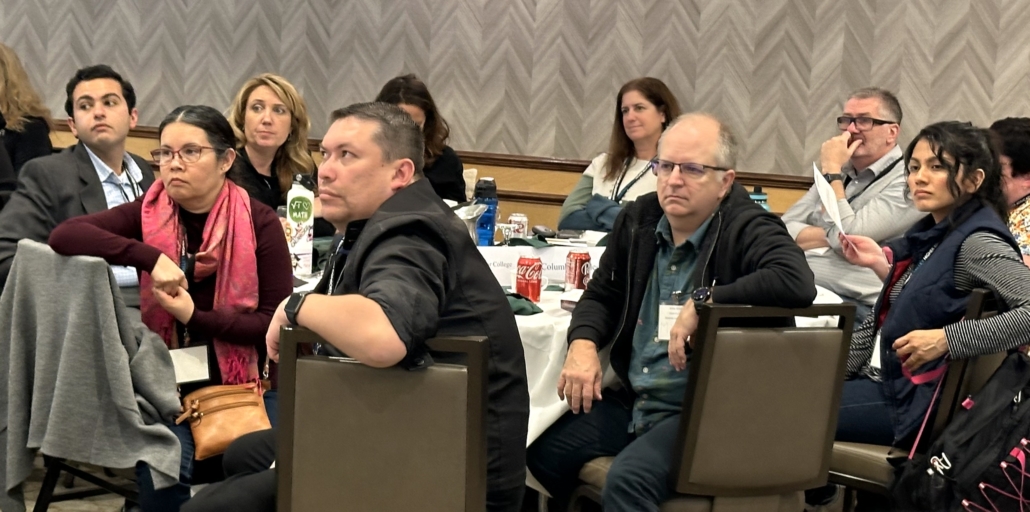
Presented by CVHEC, the convening — the latest in a series of deliberations since fall — was attended by 82 representatives from the consortium’s 19-member community colleges, one high school principal and campus research professionals.

They agreed to reconvene April 19 for reports on follow-up work that will occur as a result of this most recent event. Registration for that event will open next month with additional details forthcoming.

Facilitated by the Charles A. Dana Center at the University of Texas at Austin, the session last month reviewed five strands of curriculum planning: Validating Prerequisites; Designing Precalculus for 2025; Math Support Outside and Inside the Classroom; Building an AB 1705 Campus Team; and Guided Self-Placement.

“With tensions high and little guidance surrounding AB1705, the 19 community colleges and districts that comprise the CVHEC nine-county region are rolling up their sleeves and getting to work on this math movement the ‘Central Valley Way’,” summarized Tammi Perez-Rice of the Dana Center.

Perez-Rice, who co-facilitated the event, said the convening was solely dedicated to working and planning at a regional and institutional level in two parts. The first part was dedicated to expanding the five work groups that emerged from the Nov. 17 webinar and creating a plan to move forward.  The second half of the convening was devoted to institutional planning.

“The fruits produced from these convenings are already being felt around the region,” Perez-Rice said.  “The plans and implementations emerging from these convenings are more than just a response to AB705 and AB1705; they cultivate systemic reforms that will benefit all students in the CVHEC region and beyond.”

John Spevak, CVHEC regional coordinator who oversees the consortium’s Math Task Force and co-facilitator of the Jan. 26 gathering, said in the short-term, the five strands work groups will continue to communicate and provide updates in preparation for the April 19 convening. The strand leads are preparing summaries of their Jan. 26 breakout discussions and member college teams are preparing summaries of the tentative plans they developed in the afternoon breakout sessions for oral reports in April.

“In the longer term, our Math Task Force will continue to monitor what the California Community College Chancellor’s Office says, while mainly going forward with our own Central Valley approach to the five strands.”

That “Central Valley Way” stems from the work undertaken by the CVHEC Math task Force, first formed in 2019, in the past year that was intensified with four work sessions beginning Oct. 6 in a virtual convening with CCC vice-chancellor Eric Cooper. The first in-person session followed Oct. 13 in Fresno and another virtual session was held in two parts Nov. 17 before the Jan. 26 session.

These sessions may represent the only concerted effort by a region’s community college math community actively meeting to collaborate across campus boundaries for ways to unite as one voice and determine a curriculum course of action that meets the law’s intent, Spevak said.

“We at CVHEC, along with the Dana Center representatives and our College Bridge partners in the Math Bridge Program, feel that something extraordinary is happening in math in the Central Valley of California,” Spevak said.

After the Jan. 26 session ended, Perez-Rice reiterated a point she made the first time she visited Fresno for the first in-person convening last fall:

“This collaboration today was amazing. As I travel and talk to math faculty all over the country, what I see pulsating from the CVHEC community here in Central California is just compassion; caring about their students; putting their students first; understanding what their students need; and more importantly collaborating with each other working across institutions to make things happen.”

Inviting secondary ed voices to ‘align syllabi’

A key development of the convening was the assertion and agreement that a crucial next step is “to involve high schools in the discussion and determine how to breakdown barriers between systems for a cohesive collaborative effort to put students first across the state of California,” a message delivered by Marlena Celaya, principal of Orosi High School who was the only secondary education official in attendance.

Celaya’s comments, first in a strand session and later in general comments before the assembled group, resonated with the community college professionals as she offered to lead a task force of principals/administrators who would unify with the CVHEC community college math educators for implementation strategy — to listen and hear what the needs are and how to meet those needs.

“I’m willing to lead this work because I don’t want people to go through the wars I went through teaching algebra and volunteering all my time,” said Celaya, a former math teacher at Dinuba High School. “We would want to  hear from community colleges and say to them ‘what do you need?’

“We heard something from you today: ‘I want to know what courses are offered at the high school and what does that course description look like?’ Aligning syllabi is what I’d like to do,” Celaya said. “Mathematics is my passion.”

Perez-Rice said the April 19 convening promises more high school representation, with over twelve principals who are part of the Math Bridge Program by CVHEC and College Bridge being invited. Other secondary education officials from throughout the valley are welcome she said.  

Participant feedback: ‘great to see we’re not alone in this …’

After the event, several participants shared their assessment of the Jan. 26 convening.

“The conversations were amazing and we really appreciated being here,” said Joshua Lewis, chair of the Bakersfield College Mathematics Dept.

“There have been so many legislative changes and so many unknowns it’s nice to see the work that other campuses are doing and realize that we’re not alone, that we have shared values; that we have shared emphasis on student learning and really care about doing right by all of our students,” he added.

Nathan Cahoon, Taft college math professor, felt that the efforts of CVHEC’s Math Task Force as exhibited at the convening is strengthening the voice of the valley’s math community which will have an impact.

“It was amazing to work with incredible professionals who have some really amazing ideas,” he said. “I know I took many good notes about ideas to implement at our college.  The connections we are building here with each other will be powerful down the road as we build a cohesive effort to get some good research together that we can send to the state as one voice from all the colleges.”

Modesto Junior College math professor Marina Hernandez said coming together within the region is relished because when attending other statewide or national conferences, the focus is not as localized.

“It was very helpful to learn what other colleges in the Central Valley are doing because we share similar student population and resources characteristics and their best practices are applicable to us here in our region,” Hernandez said.

Tina Akers-Porter, Modesto Junior College math professor, said the Math Task Force work has helped her better understand what AB1705 is and what it means for her students.

“I feel like I have a better understanding of some of the challenges of the legislation and what others are worried about,” she said.  “We share some of those worries but it’s great to hear different points of view on that. A byproduct of this is we are seeing how we need to support underprepared students more, inside and outside the classroom, and sharing ideas to do that.”

Shelly Getty, Taft college math faculty and a strand leader, echoed Akers-Porter: “We left knowing we are going to start some specific tutoring and targeting students for tutoring. We will try to advertise it better and recruit so students get more access to the services we already provide which will greatly impact them.  We shared some good ideas on how to do that effectively.”

Marissa Martinez, Taft college math professor, said, “We have our work cut out for us. There’s a lot of things that we have to address with a lot of moving parts. Everything keeps changing but it was great to be able to see that we’re not alone in this, that we’re working together to better serve our students.”

She said this intercollegial collaboration and the feedback from the colleges helps “so we don’t have to reinvent the wheel — what worked, what didn’t work.”

Next steps? Data research

“I would say the next step is collecting our data to see how the numbers show where we are so we can prove that these courses are important for our student success,” Martinez said.

This data aspect was also a key part of the convening as institutional research professionals were invited and directly participated such as Arooj Rizvi, research analyst in the Office of Institutional research and Effectiveness at San Joaquin Delta College.

“Researchers have a monumental role in the implementation of AB 1705 because policymakers are going to depend a lot on what we are able to produce as a group or even as an institution,” Rizvi said. “Being a part of these conversations helps us to see the bigger picture, the context and the requirements of what exactly it is that we are looking for in the data.”

She said it was exciting to hear at the convening what area colleges are going through.

“I realized how similar our challenges are from institution to institution, “she said.  “Working through that together and being solution-oriented is something that’s going to take all of us towards a beneficial direction. Seeing us all here today was a defining moment in history.”

Owynn Lancaster, vice president of academic strategy for CVHEC partner College Bridge, said the event was “a huge success seeing folks come together from math to talk about math and really pool their resources to address actual challenges.

“The most powerful focus of change in education is always the educator,” Lancaster said. “I know everything’s heaped on them but in a lot of ways they have the greatest power of the greatest agency for this.”

For more info: centralvalleyhec@gmail.com

For CVHEC media inquiries: Tom Uribes – cvheccommunications@mail.fresnostate.edu (or text 559.348.3278).

See also:

Math Task Force

https://bit.ly/MTFconveneKSEE24

Valley’s math ed experts unite to address AB 1705 challenge for student success

The CVHEC Way to Math Success — Implementing AB1705

Math Task Force begins discussion of AB1705 implementation – Nov. 17 next
CVHEC Math Task Force meets in-person Oct. 13 for AB 1705 follow-up

NEWS RELEASE – CVHEC Math Task Force: Impactful legislation (AB 1705) Convenings Oct. 6 & 13

CVHEC Website Feature: Math Task Force Page

PHOTO GALLERY  

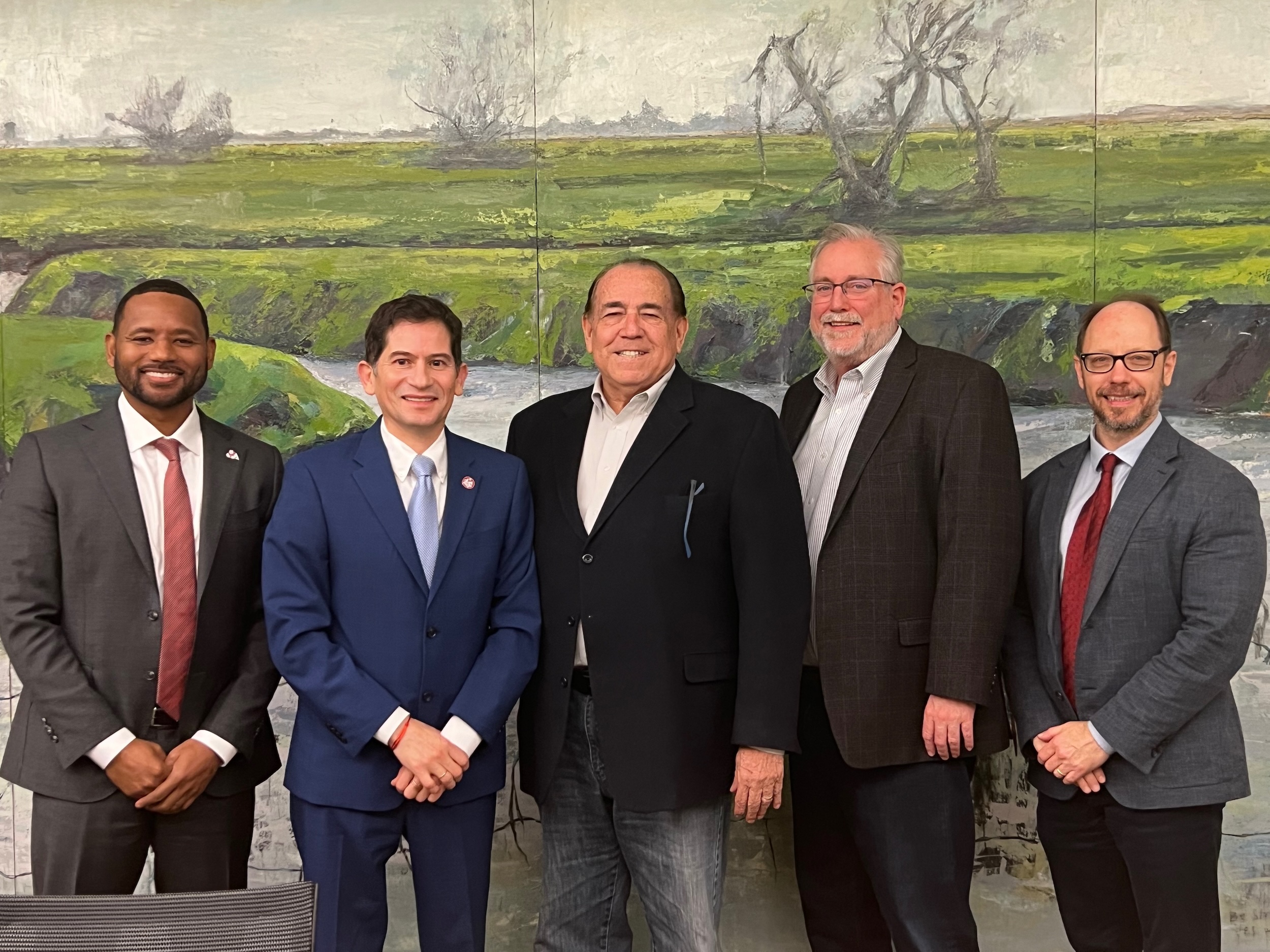
Fresno State, a founding CVHEC member, joined CVHEC’s historic Central Valley Transfer Project in January with (from left): Dr. Kent Willis, vice president of Fresno State Student Affairs and Enrollment Management; University President Saúl Jiménez-Sandoval; Dr. Benjamin Duran, CVHEC executive director; Tom Burke, CVHEC regional coordinator; and Dr. Sergio La Porta, associate dean of the Fresno State College of Arts and Humanities.

Fresno State joins in transfer ‘centerpiece’ with

11 CVHEC community colleges, 3 CSUs, UCMerced

 The Central Valley Transfer Project is now partnered with the region’s three California State University campuses after Fresno State signed on in January joining Bakersfield and Stanislaus in the historic Central Valley Higher Education Consortium initiative designed to open new doors for students’ successful transfer from community college.

Along with founding partner University of California, Merced, this means the valley’s four public institutions of higher education are working in unison with 8 community colleges currently through CVHEC’s project using the groundbreaking Program Pathways Mapper software. The project has also gained the full support of the California Community College Chancellor’s Office.

The community colleges already in the CVTP, with several more expected to sign on this year, are: Bakersfield College, Clovis Community College, Madera Community College, Merced College, Porterville College, Reedley College, West Hills College-Coalinga and West Hills College-Lemoore.

The Transfer Project is also expanding participation in the north end of the Central Valley with Modesto Junior College, Columbia College and San Joaquin Delta College scheduled to begin onboard this spring for a total of 11 community college partners said Stan Carrizosa, CVHEC regional coordinator and consortium lead for the project.

All Transfer Project partners are members of the consortium with their respective chancellors and presidents serving on the CVHEC Board of Directors.

“The Transfer Project is now a centerpiece for students to both enter and transfer from community college to their four-year universities,” said Dr. Benjamín Durán, CVHEC executive director. “We are excited to share this latest progress of the project which has been featured statewide and nationally at conferences such as the Community College League of California and Complete College America.”

He added, “This innovative approach is the only one in the state that includes a University of California campus collaborating with partner California State University and community colleges in establishing transfer pathways for Central Valley students to get them to and through college in a timely manner.”

Dr. Saúl Jiménez-Sandoval, Fresno State president and CVHEC board member, said,  “I’m proud that Fresno State will be a dynamic partner in the Central Valley Transfer Project, as this pathway will empower community college students to become visionary Bulldogs.”

The Fresno State agreement was finalized Jan. 17 between Durán and President Jiménez-Sandoval, with Tom Burke, CVHEC regional coordinator and Transfer Project team member; Dr. Kent Willis, vice president of Enrollment Services; and Dr. Sergio LaPorta, associate dean of the College of Arts and Humanities.

At CVHEC’s Higher Education Summit last fall, CCC Chancellor Sonya Christian announced that the statewide system has designated the Transfer Project as a demonstration project as set forth in her Vision 2030 for all California community colleges. The Transfer Project’s participating community colleges are serving as the pilot campuses with plans to implement statewide.

Carrizosa said the state budget continues to support and fund the onboarding costs for all community colleges to subscribe to the Program Pathways Mapper.

Established in 2021 with UC Merced, Merced College and Bakersfield College, the project is designed to open new doors for students to successfully transfer from community college with its Program Pathways Mapper, Carrizosa said.

He said the Program Pathways Mapper — a public facing, internet-based app that can be downloaded and accessed by the public software platform — provides unprecedented ease of access for students, counselors, advisors and parents much more so than other existing platforms.

“There are no typical requirements for access to PPM such as other internal college systems like Degree Works, Assist.Org and the CSU Transfer Planner,” he said. “These are all course tracking systems but in order to use them, students need to be successfully enrolled in college and have a student email address or other form of login to try and plan. Through PPM students simply upload the public PPM app to their devices and have immediate access.”

Carrizosa said the PPM helps simplify the transfer planning process which can be the most difficult task for many students.

“In much of our Central Valley region, as many as seven out of 10 incoming college freshmen will be first generation students to attend college,” he said. “Research shows that the most difficult task for them is often the application process itself and completing the required steps for enrollment. Systems like Degree Works and others do nothing to remove this common barrier because these systems cannot be accessed until a student successfully enrolls.”

He explained that a high school student can start the Transfer Project journey as a junior or senior by enrolling in college dual enrollment courses enabling them to complete their transfer level English and Math courses while still in high school. These units roll up with them as they enter community college and track the completion of their lower division requirements for their Associate Degree for Transfer in their chosen major via PPM.

“Students can easily select a community college they wish to attend and a major they want to pursue and the lower division courses required are sequentially laid out for them through the Program Pathways Mapper software.”

In addition, the PPM then links those lower division courses to an upper division institution of the student’s choice and shows a clear sequence of upper division courses needed to complete the degree, Carrizosa added.

“The PPM contains clear and accurate information directly from course catalogues from all participating colleges,” Carrizosa said.  “The Central Valley Transfer Project is becoming an alternative continuum of courses to the traditional high school A-G or Career Technical Education continuums and is unprecedented in the state’s community college system. We call it ‘The Central Valley Way!’”

“Through the use of PPM, students complete exactly what is required of them to successfully transfer to their four-year university and they follow PPM through their last two years to degree/certificate completion,” Carrizosa said.

Baseline data results also demonstrate the promise that PPM delivers in the Transfer Project.

In a sample of 5,000 incoming freshmen to Bakersfield College in 2022 the students using the PPM increased their “percentage of on-path course completion” to over 80 percent which also closed the equity gap in this statistic for ethnic minority students when compared to their white counterparts, Carrizosa said.

“The same sample showed students using the PPM reduced the ‘number of units-to-degree’ from an average of 87 down to 67,” he added.

The project is now gearing up to expand the partnership with the College Bridge Math Project and to onboard community colleges from the northern region of the Central Valley.

For more information about the CVTP, contact Carrizosa at centralvalleyhec@gmail.com.


CVHEC media inquiries: Tom Uribes – cvheccommunications@mail.fresnostate.edu or text 559.348.3278.

Fresno State media inquiries: PIO Lisa Bell – lbell@csufresno.edu.

See:

·  Pilot CVHEC/UC Merced Transfer Project improves process for students  

·  CVHEC Web Site Feature: Transfer Project

·  Historic Transfer Project spurs statewide movement to increase transfer rates

·  WHAT THE CV-HEC IS HAPPENING BLOG (January 2024): CVHEC 2023 — surging forward for Central Valley students

·  HIGHER ED NEWS: College Bridge to expand Math Bridge; CVHEC Transfer Project

•  A-G

·   Career Technical Education

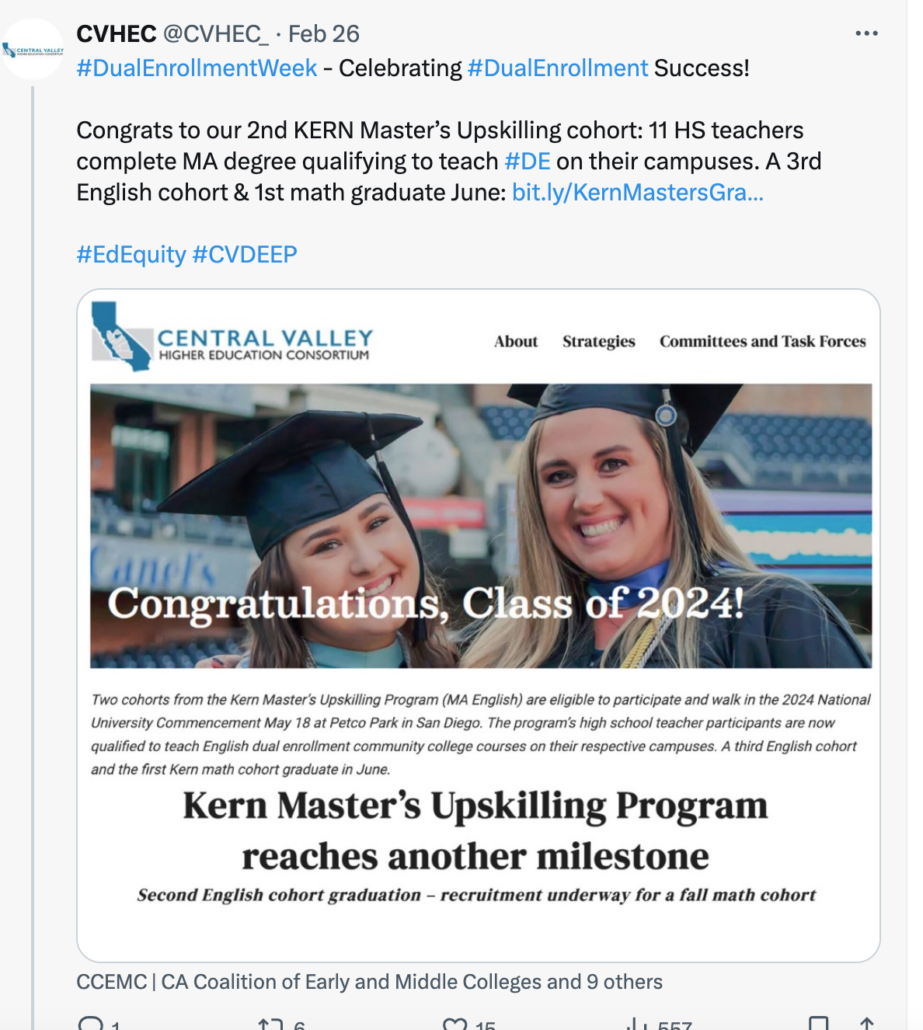
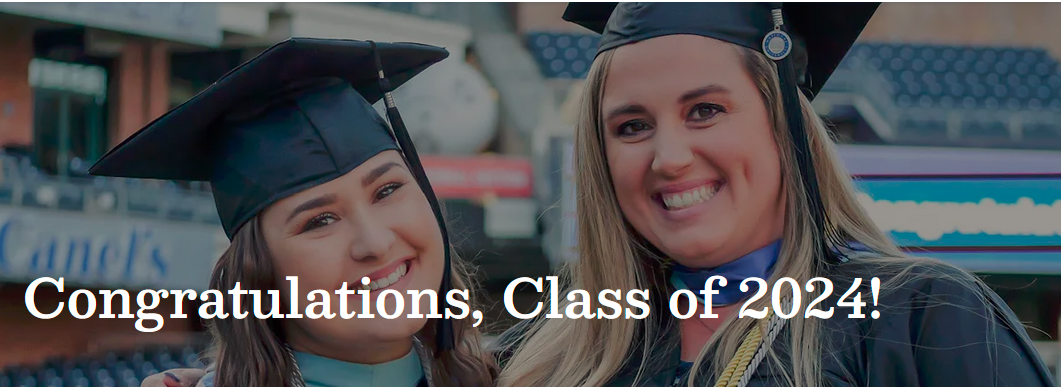
Two cohorts from the Kern Master’s Upskilling Program (MA English) are eligible to participate and walk in the 2024 National University Commencement May 18 at Petco Park in San Diego. The program’s high school teacher participants are now qualified to teach English dual enrollment community college courses on their respective campuses. A third English cohort and the first Kern math cohort graduate in June.

Kern Master’s Upskilling Program

reaches another milestone

Second English cohort graduation – recruitment underway for a fall math cohort

The Kern Master’s Upskilling Program for high school teachers seeking a master’s degree in English or Math that qualifies them to teach dual enrollment courses at their respective campuses reached its second milestone last month when 11 participants completed post-baccalaureate requirements in English through National University.

Formally known as the Dual Enrollment Teacher Upskilling Pathway for English and Mathematics, the Central Valley Higher Education Consortium initiative is in partnership with the Kern Regional K-16 Education Collaborative that was funded as part of an $18 million statewide competitive grant in June 2022 to improve student progress from high school to postsecondary education and ultimately into the workforce.

The program also announced recruitment is underway for a third math cohort of 21 students to begin this fall for completion in spring 2026 though Fresno Pacific University in concert with the Kern County Superintendent of Schools (KCSOS), which serves as the administrative agent for the Kern K-16 Collaborative.

Informational meetings are set for March 21 and April 11 at 4:30 p.m.

A potential fourth English cohort pilot through CSU, Bakersfield with seven students is also in the works said Tom Burke, CVHEC’s Kern Masters Upskilling Program lead who reports that the program progress “has been very good” since it was funded two years ago.

“With the first two cohorts of English graduates to be joined by our first cohort of math graduates this summer, we are well on the way to significantly increasing the number of faculty in Kern County eligible to teach dual enrollment or community college courses in math and English,” Burke said.
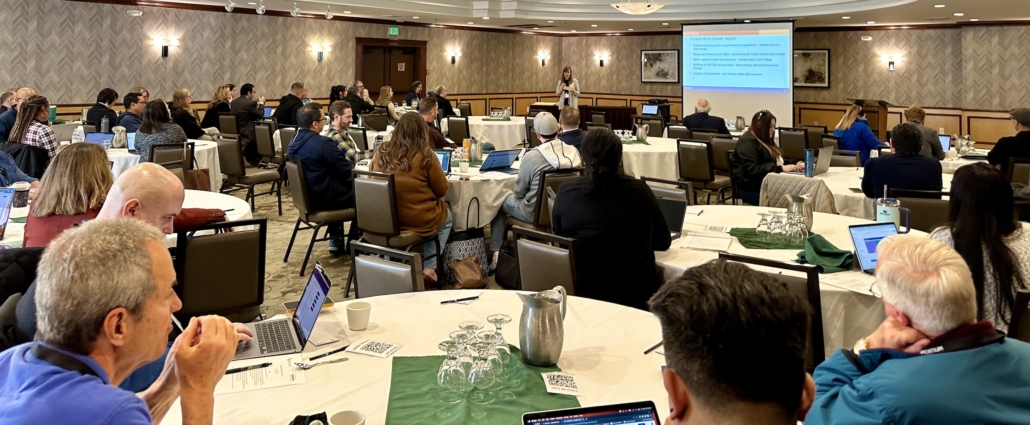
The January graduation follows the first cohort of 11 English students who graduated in September for the innovative state-funded CVHEC initiative that helps reduce the cost of tuition for high school teachers to pursue a master’s degree, a state requirement to teach community college dual enrollment courses.

Each NU cohort group of students is eligible to participate and walk in the 2024 Commencement services set for Saturday, May 18, at Petco Park in San Diego, said Jessica Gladney, senior director for Partnership Development/ Workforce Education Solutions for National University,

The first Kern Master’s Upskilling Program cohort — MA, English with a specialization in Rhetoric — began in January 2023 with 13 out of 15 students completing their program in November 2023 (nine of the 13 will graduate with honors with a grade point average of 3.85 and above).

The two remaining students are currently in the process of completing their capstone, which is the culminating course of the master’s program, Gladney  said.

The second Kern Master’s Upskilling Program cohort of MA, English with a specialization in Rhetoric, began in March 2023, and 10 out of 15 students completed their program in January 2024. The remaining students are currently in the process of completing their capstone course, Gladney reports.

She said each NU cohort group of students is eligible to participate and walk in the 2024 Commencement services set for Saturday, May 18, at Petco Park in San Diego.

“We are proud of these candidates and we are excited to assist with building a qualified candidate pool of eligible dual-enrollment English teachers to meet the workforce demands in the Central Valley,” Gladney said.

CVHEC, made up of 28 institutions of higher education in the valley’s nine-county region from San Joaquin to Kern counties, is one of several partners in the Kern Collaborative.

South Valley CVHEC members include California State University, Bakersfield; Kern Community College District; Bakersfield College; Cerro Coso College; Taft College; Porterville College; Fresno Pacific University; and National University.

The project also includes the CVHEC Mentor Program that pairs the master’s candidates with a community college mentor to support them along the way and help them navigate the process to becoming an adjunct community college faculty member.

Under coordinators Dr. Liz Rozell (math) and Dr. Vikash Lakhani (English), the program is still accepting community college professors to serve as mentors, Burke said.

For more details about the fall 2024 math cohort through Fresno Pacific, potential students can contact:
  • Manjula Joseph, program director – manjula.joseph@fresno.edu or 559.453.2096
  • Nathan Lyness, senior Outreach & Admissions representative – nathan.lyness@fresno.edu or 559.453.7183

See: