


CVHEC’s Math and English Task Forces will resume meeting this fall in virtual sessions.
BY DR. JOHN SPEVAK
CVHEC Project Lead – Merced College Vice President-emeritus
As the fall 2025 semester unfolds, the Central Valley Higher Education Consortium (CVHEC) is once again turning its attention to two of the most persistent hurdles in student success: mathematics and English through two task forces established in the past seven years.
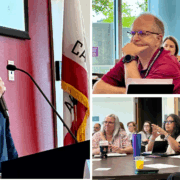
Beginning later this month, CVHEC’s Math Task Force and English Task Force — both consisting of at least one English and one math professor from each of the 15 CVHEC member community colleges in the 28-member consortium — will re-convene educators from across the Central Valley’s 10-county region in a new round of virtual meetings this fall, bringing renewed energy to collaborative solutions that help students succeed in gateway courses.
The Math Task Force, which started as 15 members and has expanded to more than 75 participants, will meet in a series of three Zoom convenings related to implementation of AB 1705 and the 15-member English Task Force is planning one meeting devoted to artificial intelligence.
The task forces, by sharing concerns and best practices, have helped Central Valley community colleges make a significant transition in pedagogy, shifting from a focus on student weaknesses to one on student strengths. The upcoming gatherings will continue a tradition of faculty-led innovation that has become a hallmark of the consortium’s work in recent years.
For the English Task Force, one Zoom meeting, “The Challenges and Opportunities of AI for English Professors in the Central Valley,” is scheduled for Wednesday, Oct. 29, from 3 to 4:30 p.m.
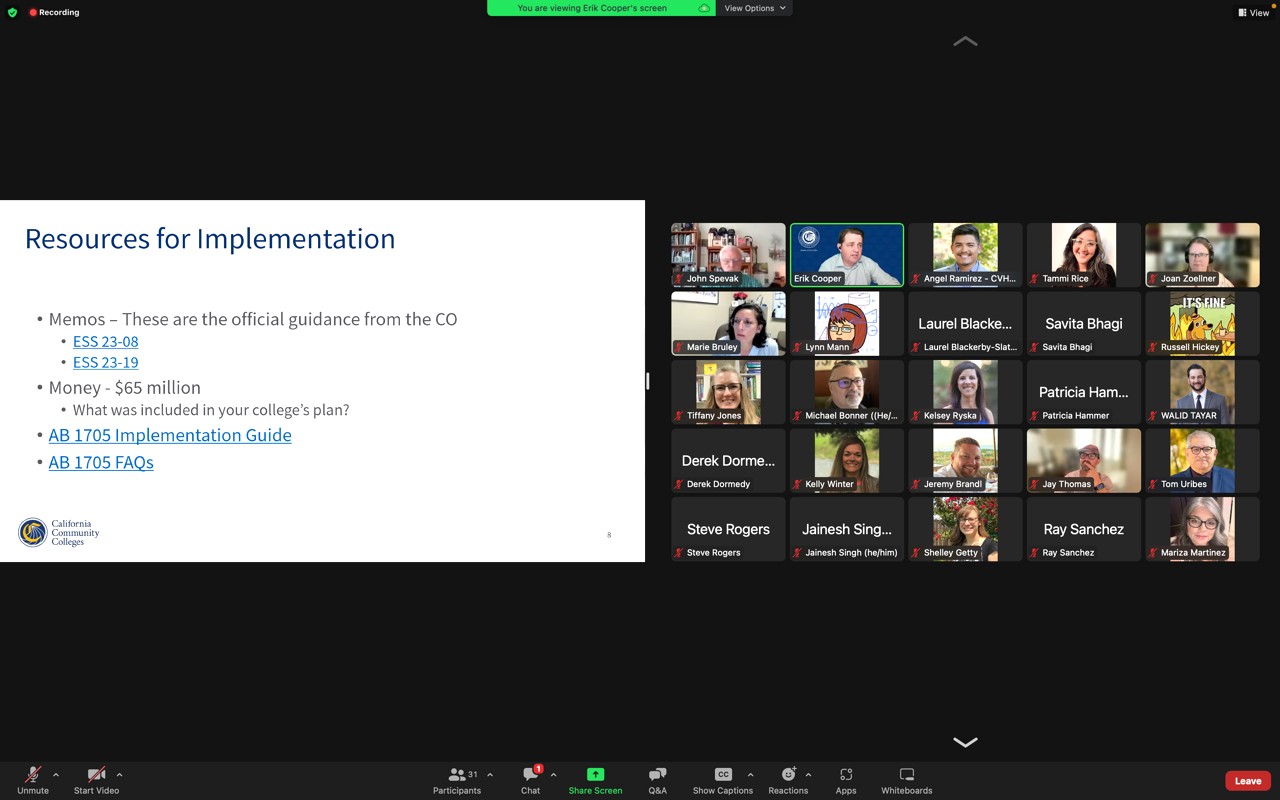
At the three Math Task Force sessions, Central Valley math professors will share their progress following two-plus years of discussing implementation of the state law in hybrid convenings that were entitled “The Central Valley Way for AB 1705” which included college research and data experts, deans and academic leaders from higher ed as well as from K-16 school districts with support from the Charles A. Dana Center at the University of Texas at Austin. The 2025-26 academic year is the first year AB 1705 must be implemented.
Each MTF virtual session is from 10 a.m. to noon:
Professor Cahoon broke down his group’s focus further, noting that a central tenet of AB 1705 and 705 has been to expand student choice.
“As we enter the validation phase for the one- and two-semester calculus precursors, it is essential to review the standards established by the Chancellor’s office,” Prof. Cahoon said.
He explains that the pass rate for students in the precursor classes and in the lowest tier must meet or exceed 50 percent, whereas the pass rate for direct placement, lowest-tier calculus students is 15 percent.
“The goal of this group is to ensure that the data collected and analyzed by the state is accurate,” he said. “There is still concern over previous research conducted by the RP group, and we look to validate the data they collected. A central tenet of AB 1705 and 705 has been to expand student choice. We hope to maintain student choice by preserving the option to take precursors to calculus as they choose.”
CVHEC formed the two groups soon after the passage of California Assembly Bill 705 in 2017 which mandated the elimination of remedial English courses and allowed students to go directly into transferable English courses.
That legislation also increased the options of transferable math courses students could take; mandated the elimination of remedial math courses for entrance into statistics and similar courses; and allowed students to go directly into transferable statistics and similar courses.
And it encouraged increased support for students, including corequisite courses.
The more recent passage of AB 1705, an amplification of AB 705, affected math more than English by expanding AB 705 to include STEM math courses. The Math Task Force continues to work, through sharing and collaboration, toward finding ways to allow the largest numbers of students to go into transferable calculus courses and, when necessary, pre-calculus courses.
AB 1705 went into effect this fall 2025 semester and gives community colleges two years to implement new math courses, including Calculus I with a corequisite and, for each college, one innovative pre-calculus course. At the end of those two years, the California Community College Chancellor’s office will determine if each college has submitted sufficient data to verify the effectiveness of the new courses.
Meanwhile, the English Task Force continues to work, also through sharing and collaboration, toward continuous improvement in teaching and learning in English courses. In ETF meetings during the last two years, much time was spent talking about artificial intelligence.
Discussions like this about AI have been happening across all disciplines, but they are especially important for English professors, since they work at having students not only read and think critically on their own but also write in their own personal voice.
The CVHEC Math and English Task Forces represent one of the consortium’s most impactful strategies: creating faculty-led communities of practice that span institutions and sectors; serving as a collaborative space for faculty to discuss curriculum alignment, address equity gaps and share best practices.
For CVHEC Executive Director Dr. Benjamín Durán, the task forces underscore the consortium’s methodology of collective problem-solving across the Valley – a region-wide commitment to what the consortium calls “The Central Valley Way” towards achieving its mission of enhancing a college-going culture in the region.
“When faculty come together across campuses, they create solutions that no single institution could achieve alone,” Dr. Durán said. “That’s what makes these task forces so powerful for our region and, most importantly, for our students across the Central Valley. For them, the results of this work may mean not only passing a math or English class but truly unlocking the path to transfer, degree attainment and career success.”
Dr. Durán adds that CVHEC has been pleased to convene the task forces and to help facilitate meetings “because the consortium believes in the talent of Central Valley Math and English Task Force professors and their ability to respond to challenges and opportunities effectively as they create a positive ‘Central Valley Way to Student Success’ for their math and English students.”
Also see:
Wrap up: CVHEC Math Task Force Convening Mar. 28
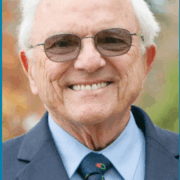
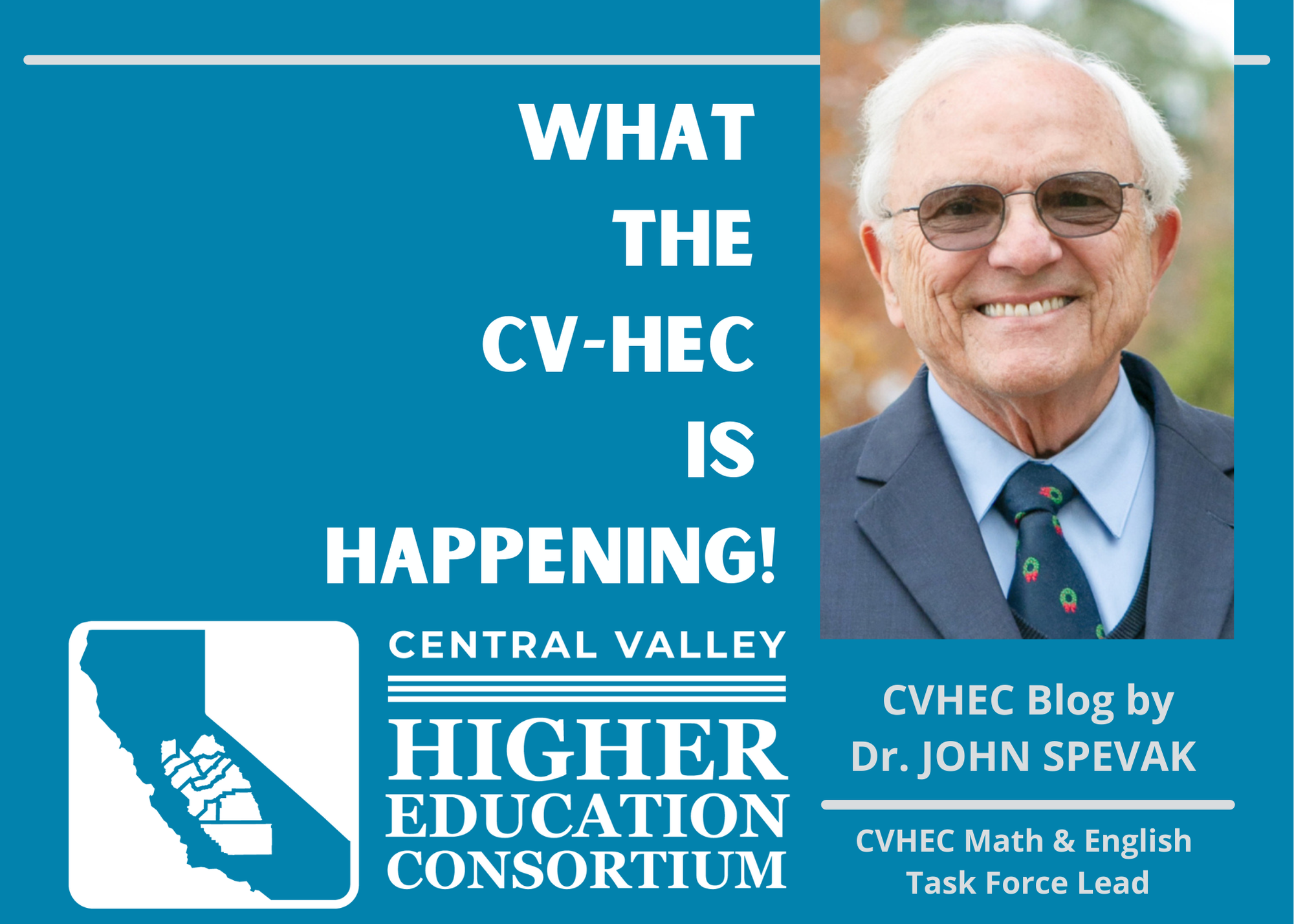 In the “What the CV-HEC is Happening” Blog for our September 2025, Dr. John Spevak presents an adaptation of a column he wrote for the August 6 issue of The Westside Express touting the effectiveness of higher education, its impact on students and the return on investment (ROI). Dr. Spevak, who is a vice president-emeritus of Merced College and currently a CVHEC lead, coordinates the English and Math Task Forces for the consortium. We welcome feedback as well as ideas for future blog topics: cvheccommunications@mail.fresnostate.edu.
BY DR. JOHN SPEVAK
CVHEC Math & English Task Force Lead
Vice President-Emeritus – Merced College
It seems these days that there is a war on education, especially on college education.
One national commentator wrote that college is an “overpriced scam.” Another stated that “many college degrees are useless.” I could cite dozens more, but I think most of my readers have heard some pundit say or write something similar.
These commentators believe that college isn’t worthwhile and that it’s too expensive. That may be true in some cases, but community colleges in California, like the college campuses on the Westside of the Central Valley in Los Banos and Firebaugh, prove these statements wrong.
Besides these two campuses, I have visited almost all of the other community colleges in California. They are friendly and welcoming to all students and accept 100% of all students who apply.
I have a long history with the Merced College campus in Los Banos. Over the past 50 years, I have heard hundreds and hundreds of students who attended that campus tell me the education they received there improved their lives significantly without hurting them financially.
I personally know many of these people. They have improved the quality of life in this community. Los Banos Campus alumni and alumnae are successful businesspersons, farmers, teachers, nurses, radiologists, sonographers and on and on. The same could be said for every California city which includes a community college campus.
People who claim that young people should not bother going to college always have a narrow definition of what a college is. College is not limited to four-year universities and abstract majors. “College” also includes community colleges, with programs that include education in what over the years has been called “vocational education,” “the trades” and “career technical education.”
The career tech programs on the Westside of the Central Valley include welding, agriculture, computer technology and emergency medical technician (EMT).
The main campuses of their colleges, in Merced and Coalinga, offer even more, including licensed vocational and registered nursing, mechanized agriculture and automotive technology. I would bet the complete list of career tech programs in California community colleges would list more than 100 vocational programs.
All of these programs provide the education and training that enables a person to earn a decent salary on a path to earn enough money for individuals to support themselves and their families. Any employer who has hired these students will tell you that their community college education was an important factor in hiring them.
But wait! There’s more! California community colleges, like the campuses in Los Banos and Firebaugh, also offer a wide variety of transfer programs that enable students to complete their first two years toward a four-year degree and then transfer to a university at very little or no cost.
These transfer students enter the universities as juniors and are well on their way to bachelor’s degrees in the sciences, business, advanced computer technology, and other fields that will enable them to earn a very significant income.
What I find ironic about people who say a college education isn’t worthwhile is that they themselves have a college education and they want their children to have a college education. These people feel, however, that OTHER parents’ children don’t need it.
They want their own children to have a college education because they know the facts. Studies show that a college education, two-year or four-year – significantly increases the earning capacity of graduates.
Over their entire working life, according to the Hamilton Project, the typical high school graduate will earn $580,000, the typical associate’s degree graduate will earn $855,000, and the typical bachelor’s degree graduate will earn $1.19 million in today’s dollars.
The key word in these statistics is “typical.” There are some cases of students with just a high school diploma earning more than a college graduate, but they are not typical. Another way of putting it is “What are the odds of earning a good income?” Smart parents, including those who declaim against a college education, know that the odds are with students with degrees.
When I talk with young people wondering if college is worth it, I suggest they go to something called “Program Pathways Mapper.” It’s an online site that’s free to all and doesn’t require a password. One way to get to the Mapper is to Google “Merced College Program Pathways Mapper.”
Once on the Mapper site, they can select one of the many career fields, like “Agriculture and Industrial Technology,” and scroll down to “Career Explorer.” There they can see the jobs available in that field, the average salary of that job and the education required, whether bachelor’s degree, associate’s degree, or high school diploma. For many it’s an eye-opening experience.
I also tell young people that a college education is no guarantee of a high-paying job. They need to have initiative and a work ethic and a willingness to adjust to the working world and its demands, as well.
My parents didn’t have a college education. In fact, they didn’t have a high school diploma. But they encouraged their children to get a college education, and for that I will be ever grateful.
I, in turn, encouraged my three children to get a college education, and they all did, including attending the Los Banos Campus of Merced College. That, and a strong work ethic, enabled them to go into careers that paid a good salary and enabled them eventually to own their own homes—all without significant student loan debt.
For anyone who has doubts about what I have written, I encourage you to look at a recent study done by College Futures Foundation (CCF): “Golden Returns: A Regional Look at the Return on Investment (ROI) of California’s Community and Career Colleges.”
As the CCF website puts it, “This new analysis ranks 327 community colleges and certificate-granting institutions—including 121 public, 186 for-profit, and 20 private non-profit—located within the state across 12 of California’s economic regions by how long it takes learners to recoup their educational costs.”
As the brief summary on the website states: “Forty percent of public two-year colleges enable students to recoup their costs in under a year, compared to just 5% of private non-profit and for-profit institutions.”
Anyone can go to the website, find their closest community college, and see how quickly students there recover their costs. Seeing the positive ROI is another way of pointing out to people who argue against a “college education” that they are way off base.
So before you believe anyone who tells you that a college education isn’t worth it, explore the issue on your own. And if you end up agreeing with me, encourage young people you know to attend their local public community college campuses.
There’s no better time to start than now.
John Spevak’s email is john.spevak@gmail.com.