Tag Archive for: media

A mission of math continues in the Central Valley


Greetings CVHEC friends and colleagues!

Welcome to our April newsletter as we are a month or so to closing out another academic year in the Central Valley. We are particularly pleased to shine a spotlight on our community college board members for National Community College Month. Our Central Valley community college leaders are dedicated to serving our students with great pride.

You will note that this issue focuses on mathematics education activity in the Central Valley.  Our CVHEC partners — College Bridge and the Charles A. Dana Center from the University of Texas at Austin — have been working with our regional partner community colleges and high schools to build pathways and eliminate barriers for our students looking to navigate the challenge of completing their gateway courses in college math.

You will get a glimpse of the work that the Central Valley Math Task Force members will be undertaking at their April 19 convening.  Also, an update by Dr. Nicole Korgie highlights the progress College Bridge has made with implementing the Math Bridge project to enroll high school students in college level dual enrollment classes.

But our big news on the math mission front is the awarding of two grants to CVHEC from the Regional K-16 Education Collaboratives Grant Programs by the WE Will! K-16 Collaborative that will expand our Math Bridge and Master’s Upskilling projects into the north valley. Congrats CVHEC-members: University of California, Merced (WE Will’s lead agency); Merced College; Modesto Junior College; San Joaquin Delta College; and California State University, Stanislaus for your leadership.

And in our News section, we welcome new presidents to two of our CVHEC member institutions:

  • Britt Rios-Ellis was named by the California State University Board of Trustees as the new president at CSU Stanislaus effective July 1.
  • Dr. Rafe E. Trickey will begin his tenure as superintendent/president of Taft College May 3 after his appointment by the West Kern Community College District.

We look forward to having President-select Rios-Ellis and President-select Trickey join us on the CVHEC Board of Directors.

Thank you all, I hope you enjoy this April issue.

The winds of a prospering education scene

Greetings CVHEC friends and colleagues!

Welcome to spring 2024 and our March e-newsletter.

This issue carries some interesting articles beginning with a very unique situation in the South Valley where our regional lead, Tom Burke, provides a perspective from his role as chancellor-emeritus of the Kern Community College District regarding the unprecedented winds of change in five major Kern County education institutions in the past year alone.

In previous issues, we have noted the appointments of Kern Community College District’s new chancellor, Dr. Steven Bloomberg, and Bakersfield College’s new president, Jerry Filger. Now we welcome them as both began their respective terms this month as well as their terms on the CVHEC Board of Directors. They are part of that transitioning educational leadership in Kern County that Chancellor-emeritus Burke presents in this month’s “What the CV-HEC is Happening” Blog.

Also, you will see our participation in the recent Digital Dual Enrollment Week campaign by the Dual Enrollment Coalition of California. We highlighted our Master’s Upskilling programs and recent graduates; one of the alumna of that program now teaching dual enrollment at Sanger West, Mrs. Jade Martinez and her students; our dual enrollment video with student success stories; and the work of our Math Bridge Program with partner College Bridge as they conduct student recruitment this spring.

We  also congratulate and welcome two new members of the California Community Colleges Board of Governors who make their homes in the Central Valley and are associated with two of our CVHEC member colleges: congratulations Cirian Villavicencio of San Joaquin Delta College in the North Valley, and Kern Community College District trustee Nan Gomez-Heitzeberg in the southern San Joaquin Valley.

The latter represents the first South Valley representation on the highest governing body in California’s community college system that advocates for nearly 2 million students at 116 colleges across the state, including our 15 CVHEC community college members. We thank them for the service they will be performing for this community.

And last but not least, we bid “farewell” to a cherished team member, Ms. Pricila Villanueva, our administrative coordinator since 2018 who moves into a fulltime position with Equitable Bank Standards, Beneficial State Foundation where she will continue her work as a champion for equity. Pricila, we wish your and your family all the success in the world!

As you can see, there is so much more in this issue as our e-newsletter continues to grow and provide a communications platform for the great higher education work underway in the Central Valley.  Please enjoy!

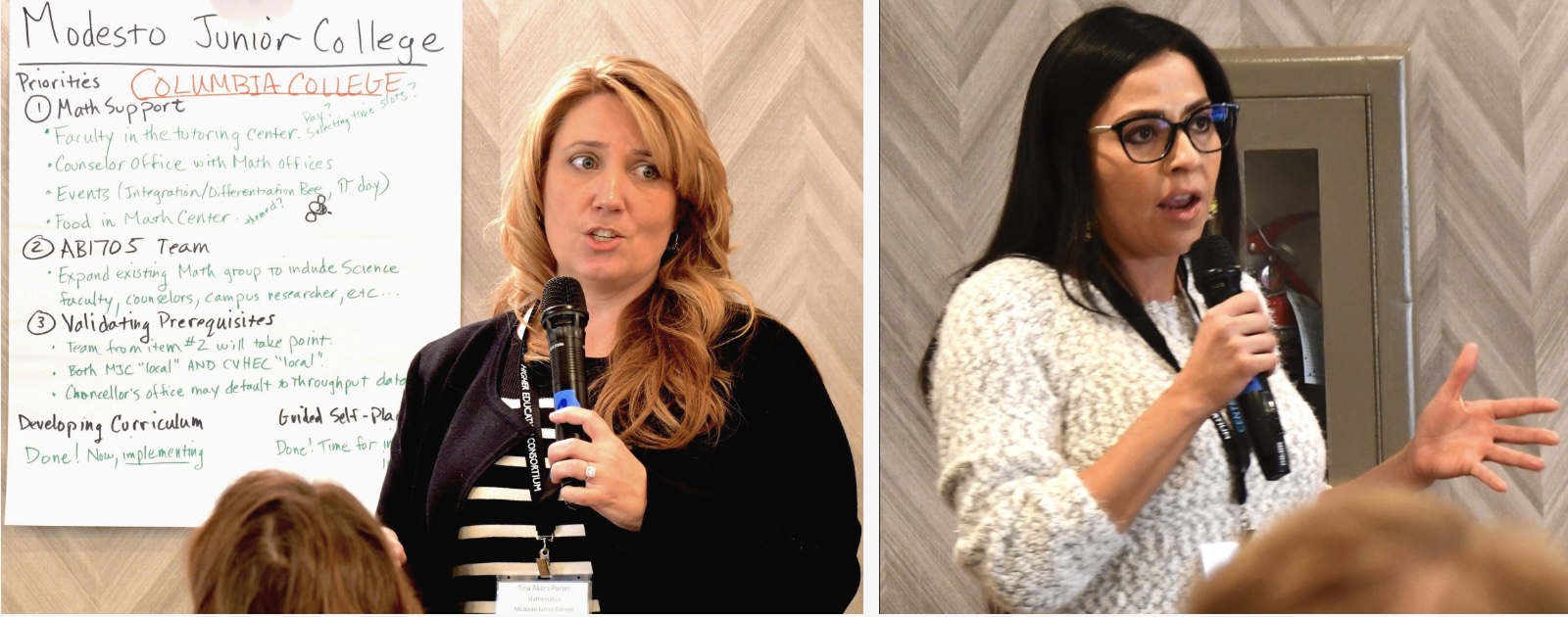
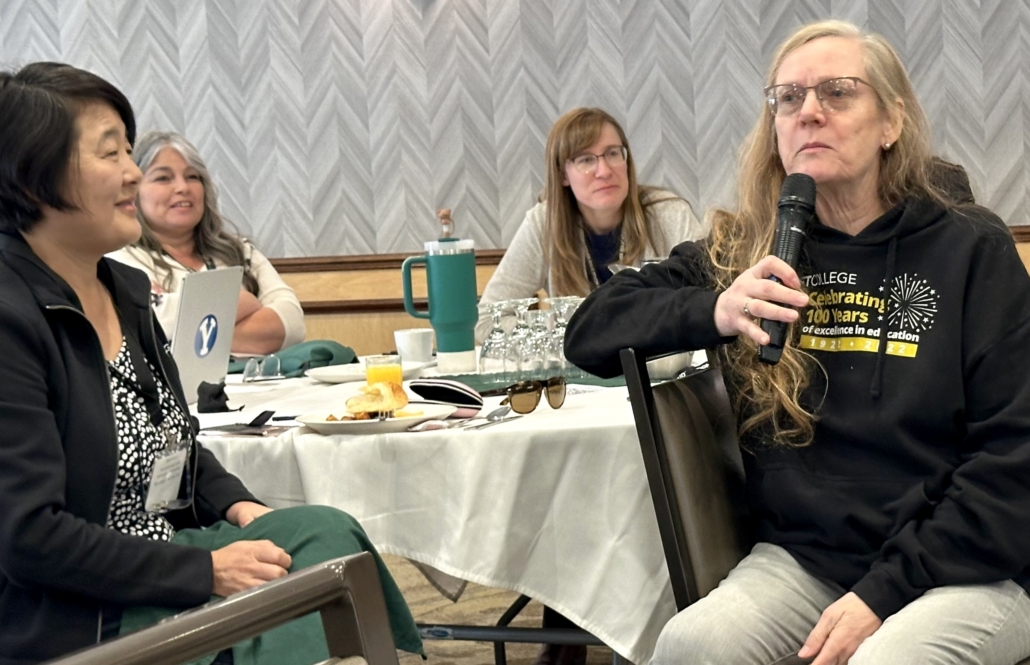
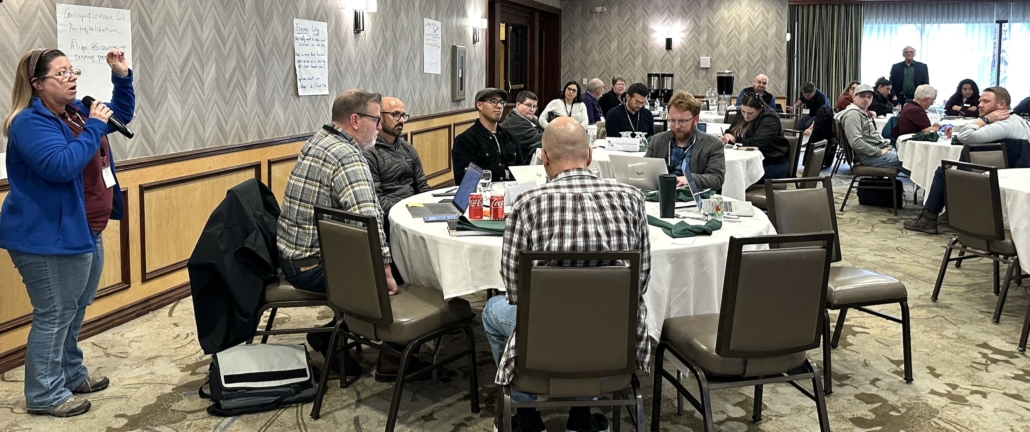
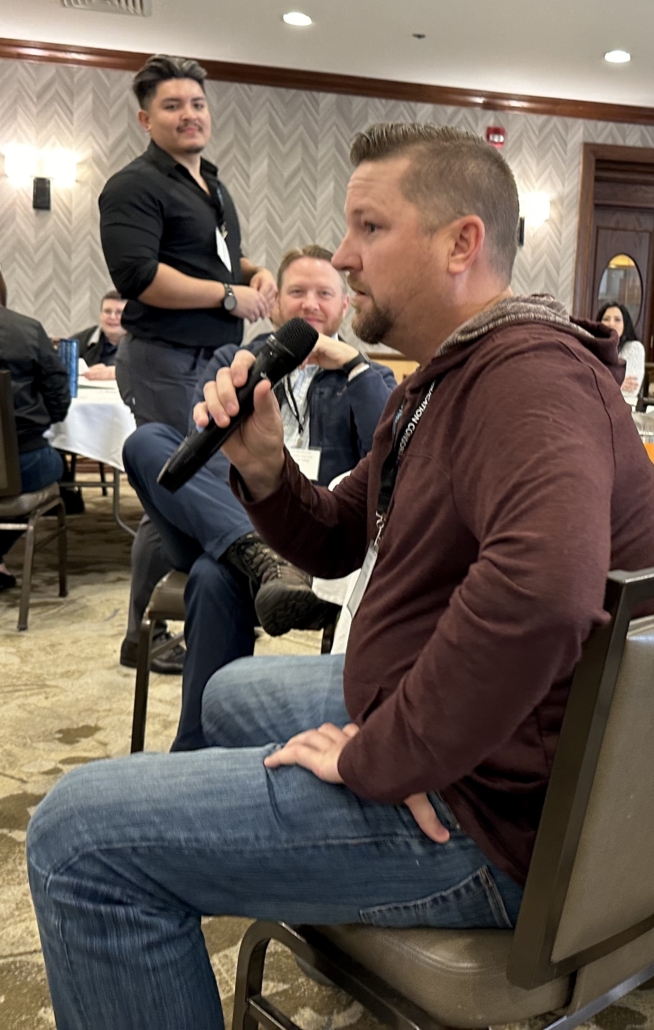
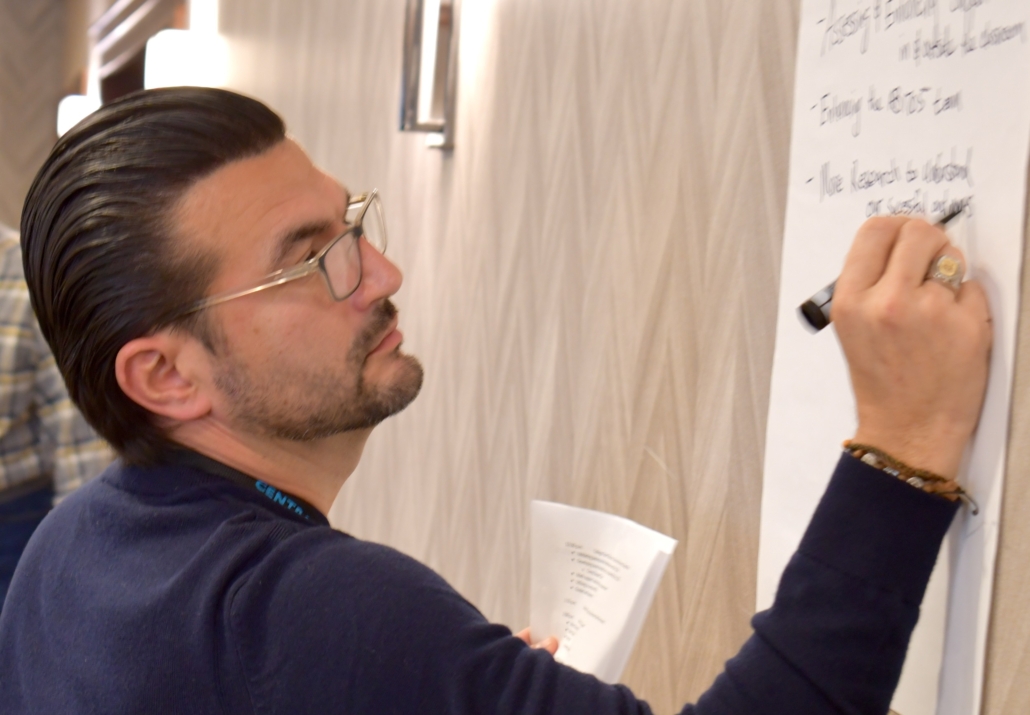
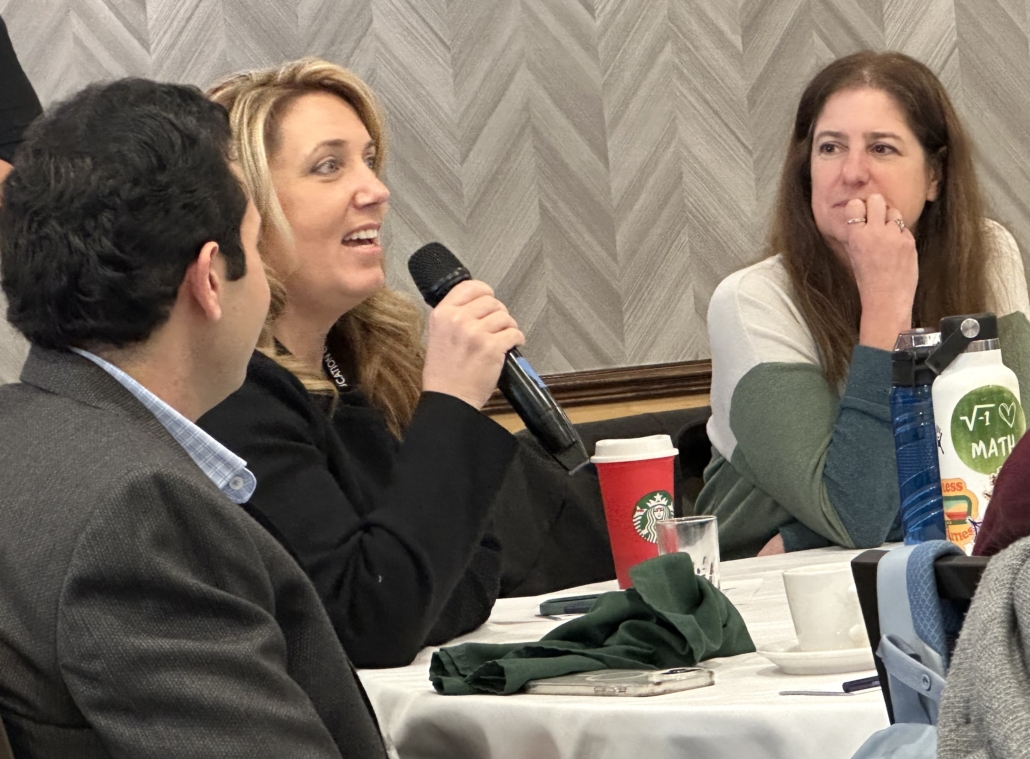
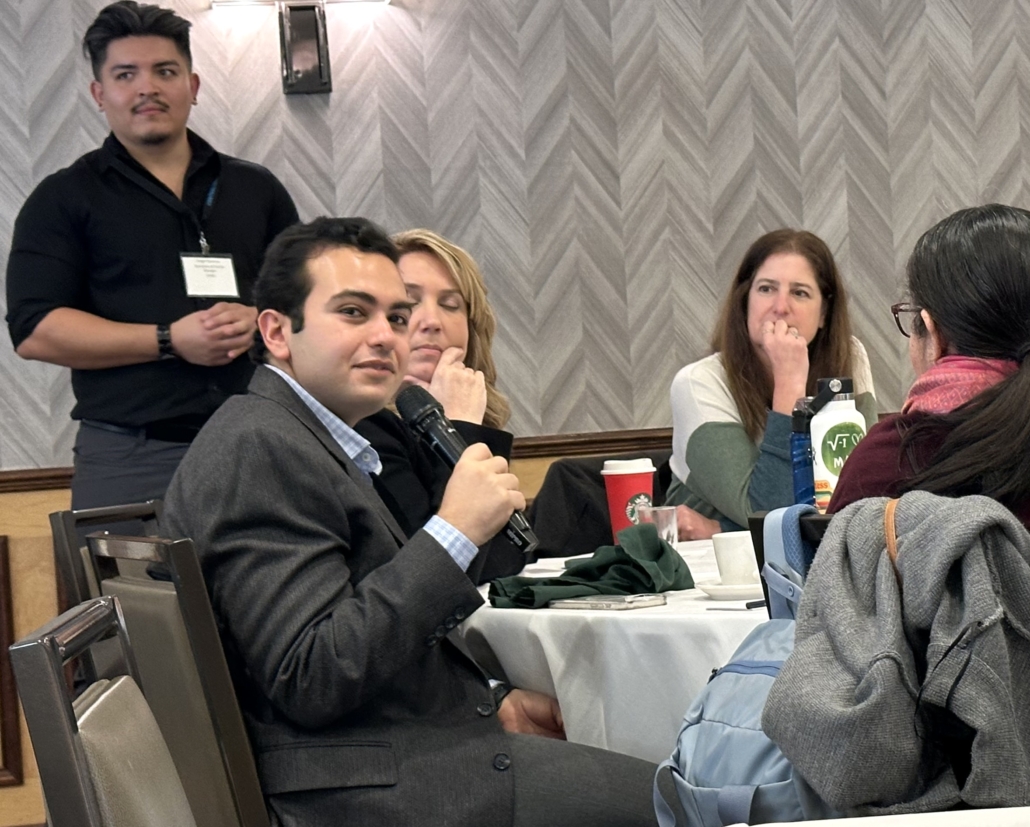
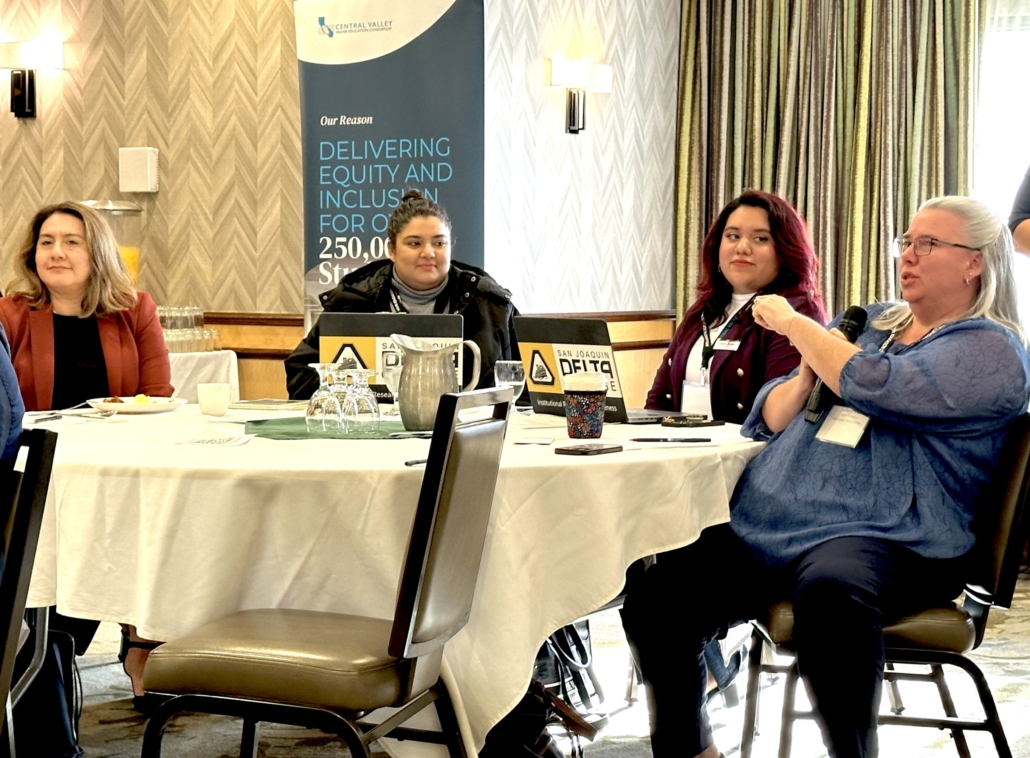
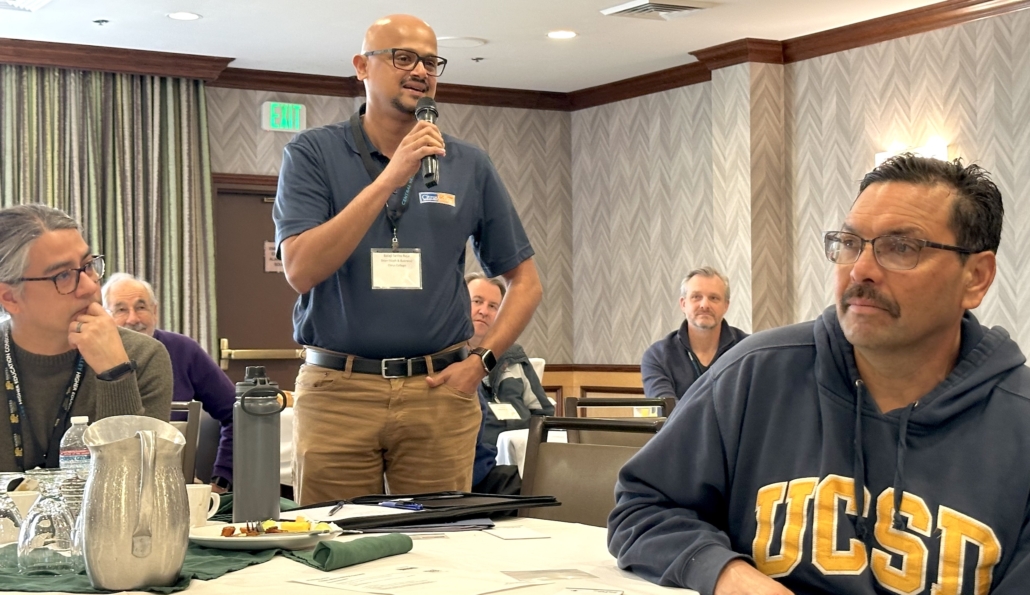
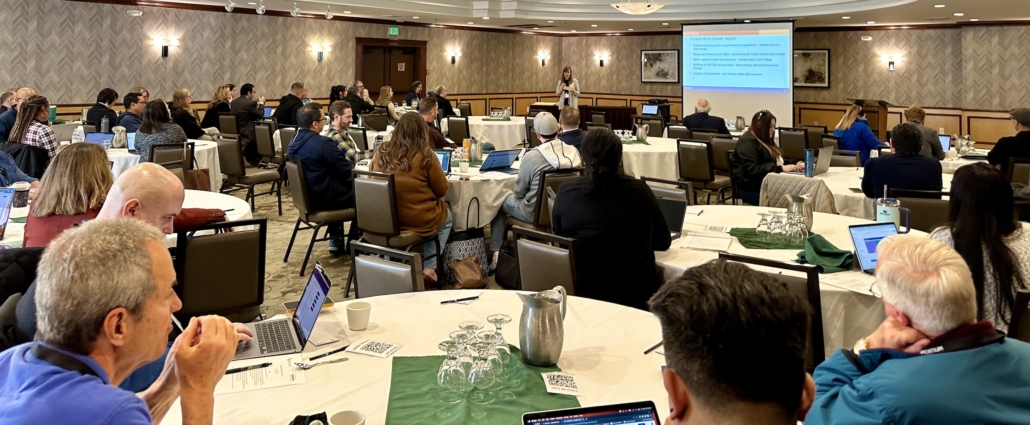
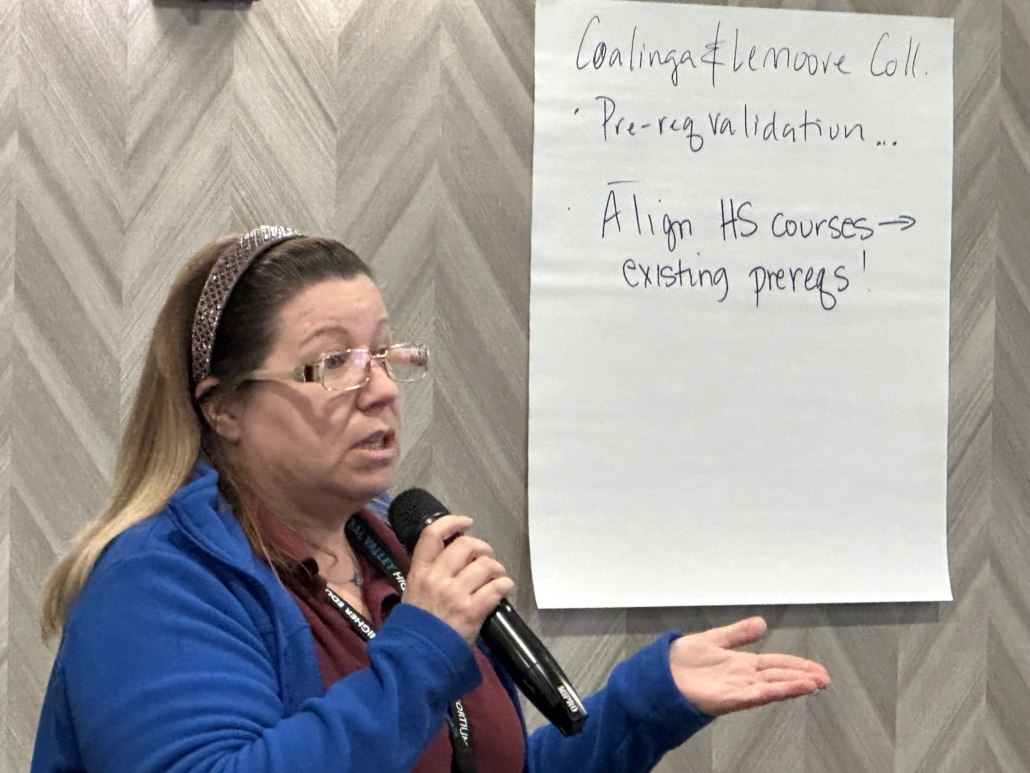
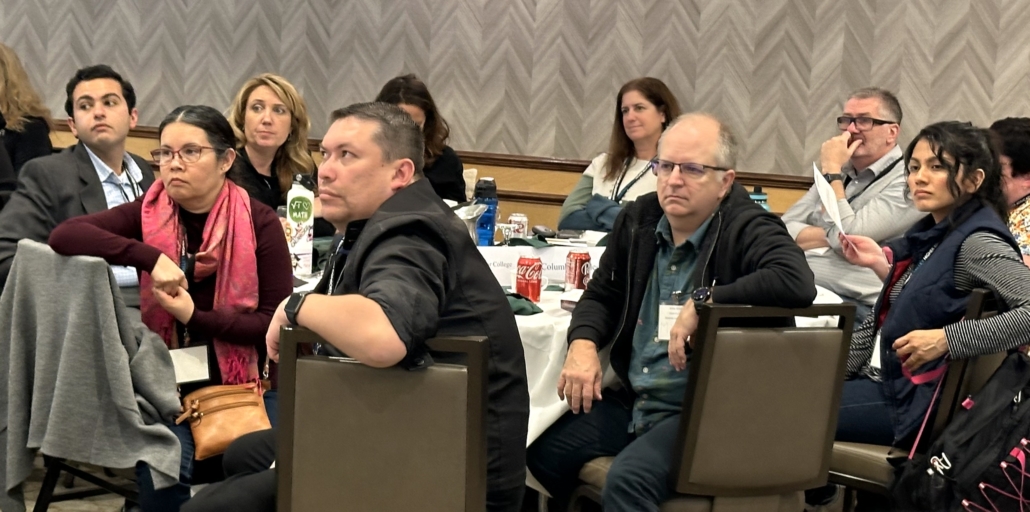
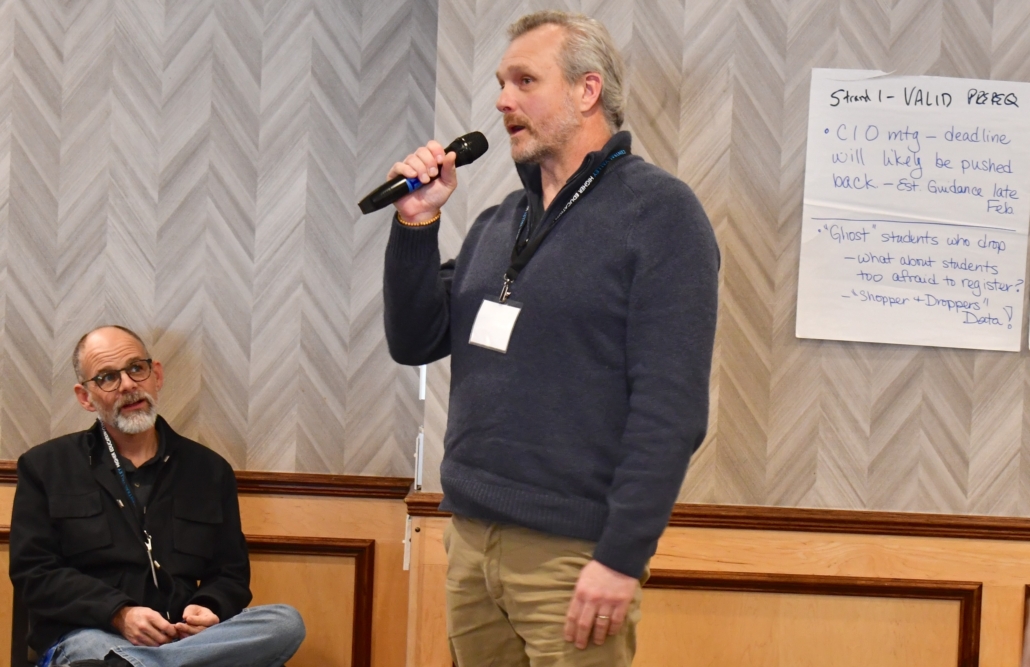
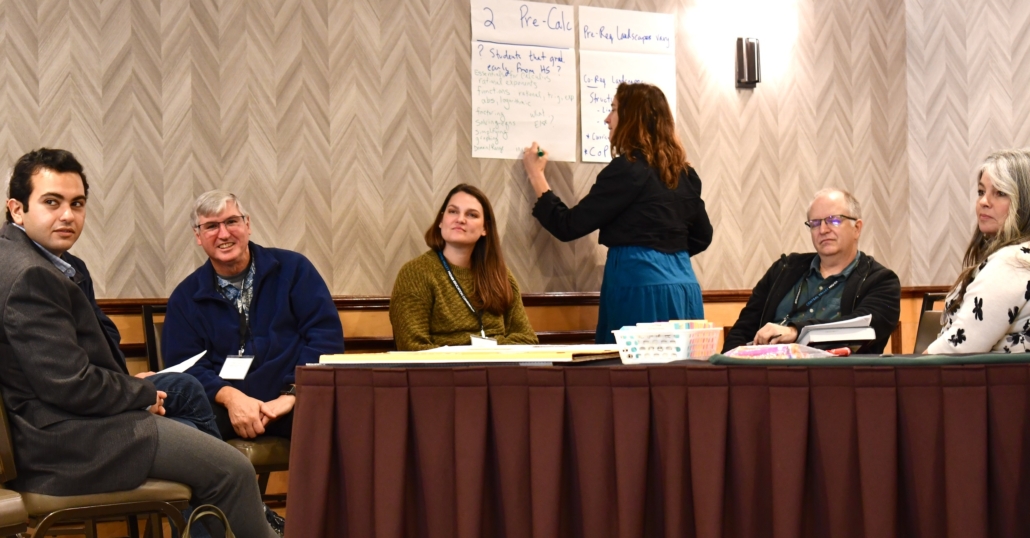
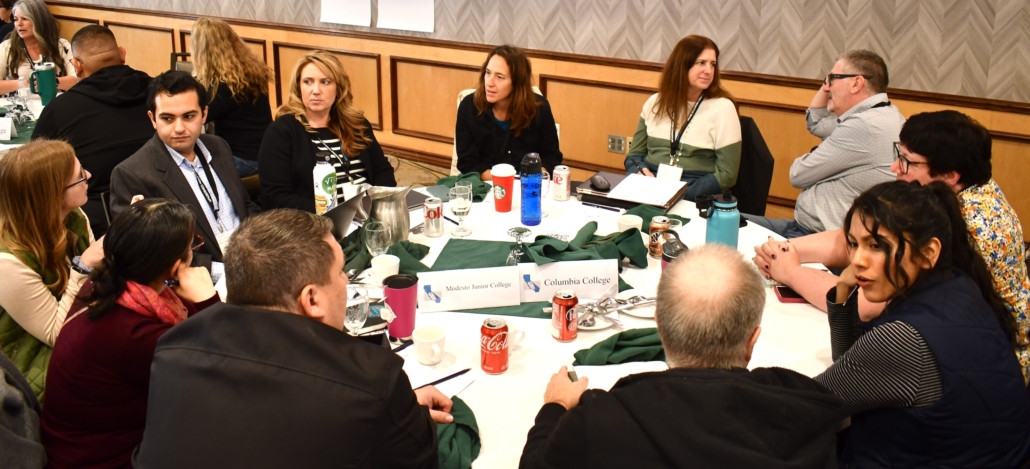
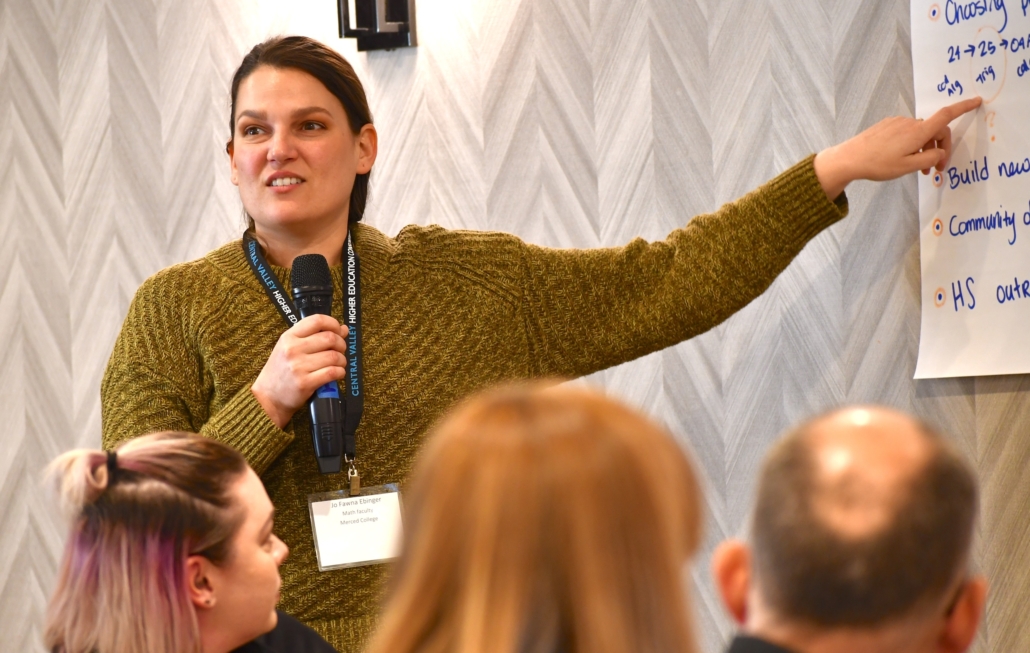
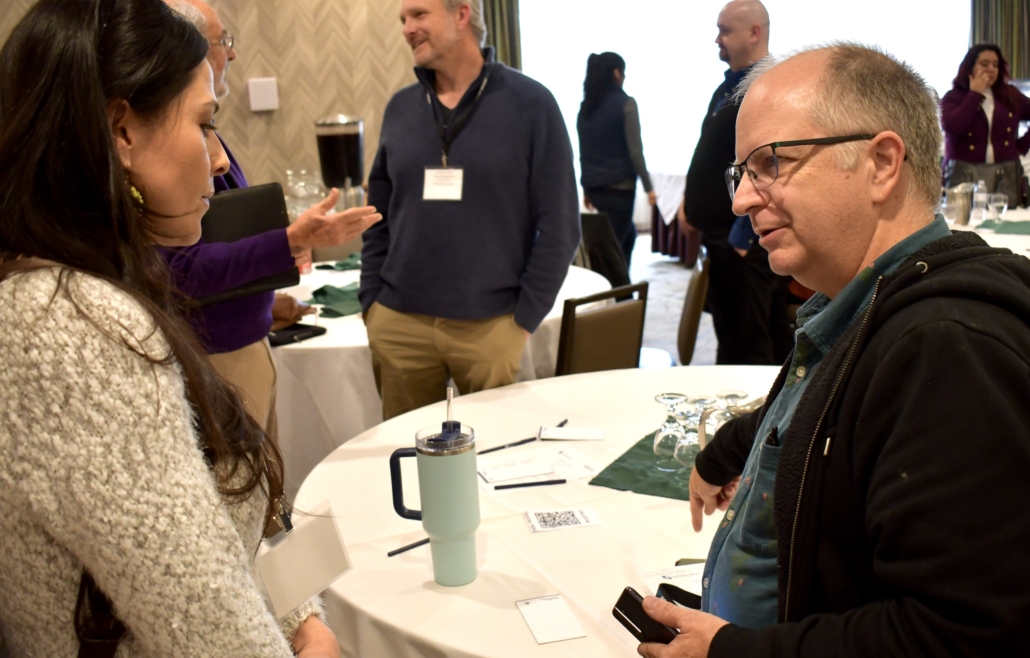
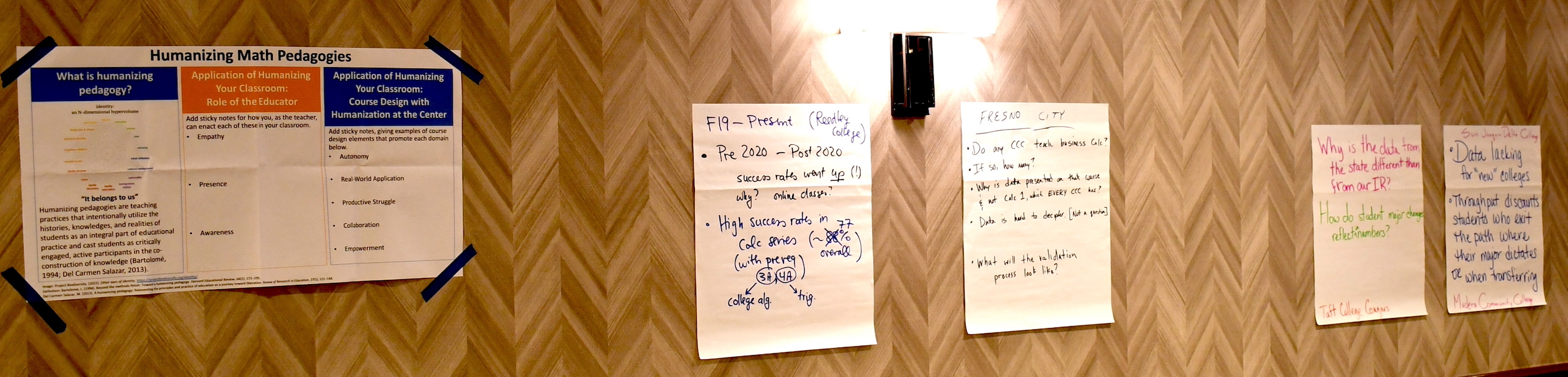
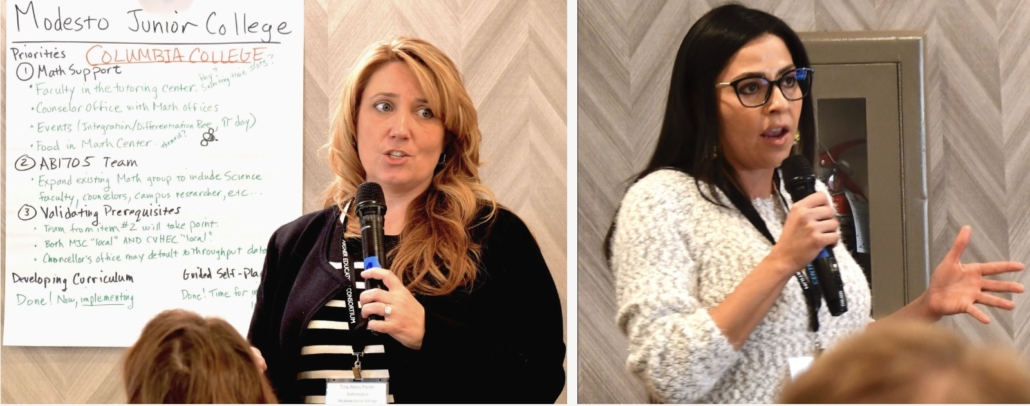
Modesto Junior College math professor Tina Akers-Porter discusses her strand group’s deliberations at “The Central Valley Way to AB1705 Success” Convening Jan. 26 where a call for a “principals task force” by Orosi High School Principal Marlena Celaya would bring more secondary education voices to the table.

‘Something extraordinary is happening in math in California’s Central Valley’

Math Task Force latest AB1705 session leads to calls

for more data, high school input, re-convene April 19

BY TOM URIBES
CVHEC Media/Communications Coordinator

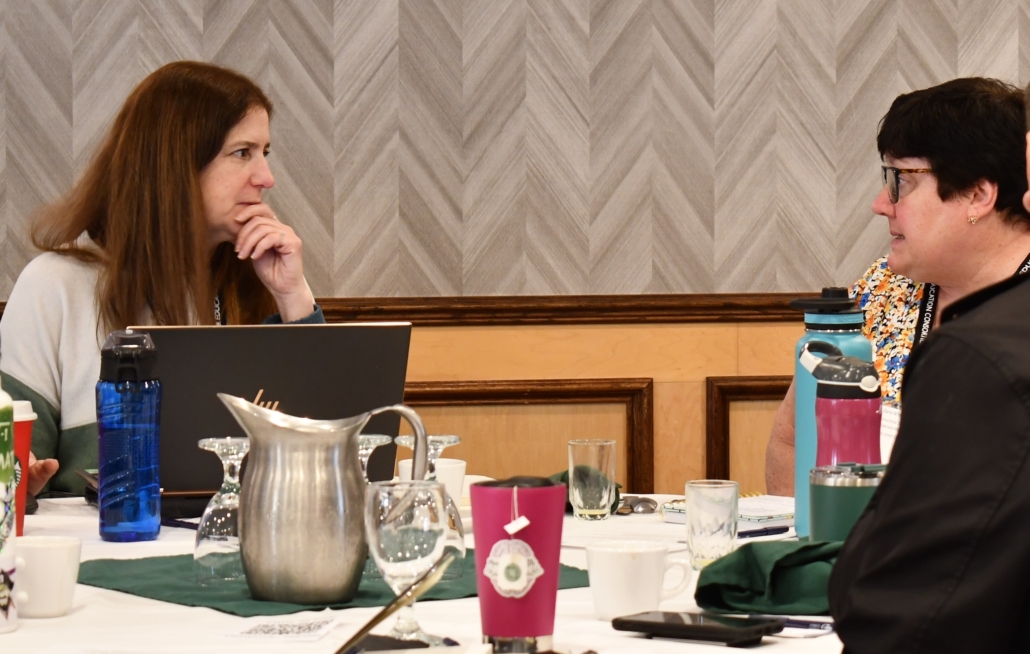
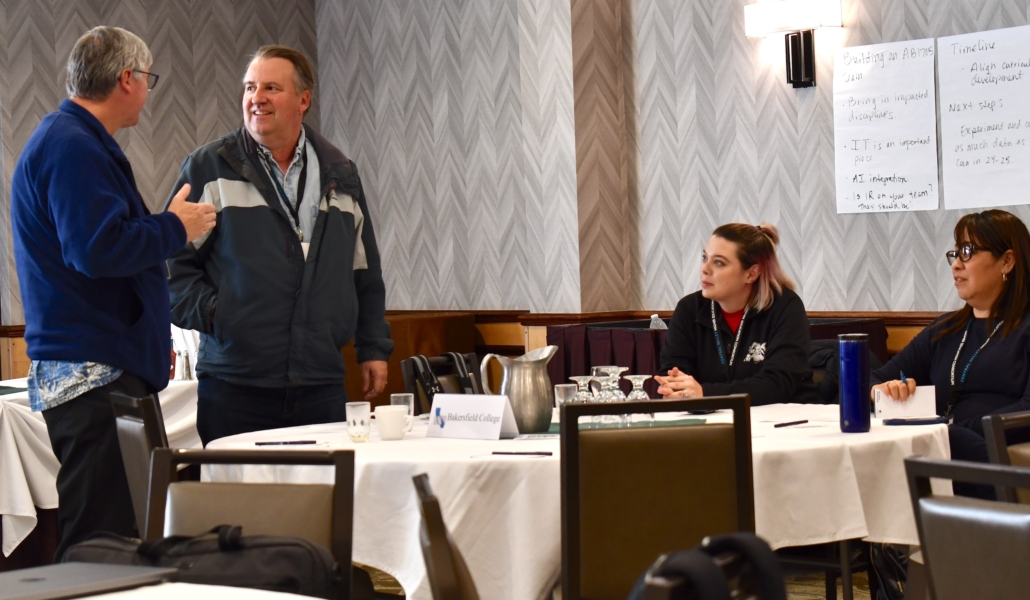
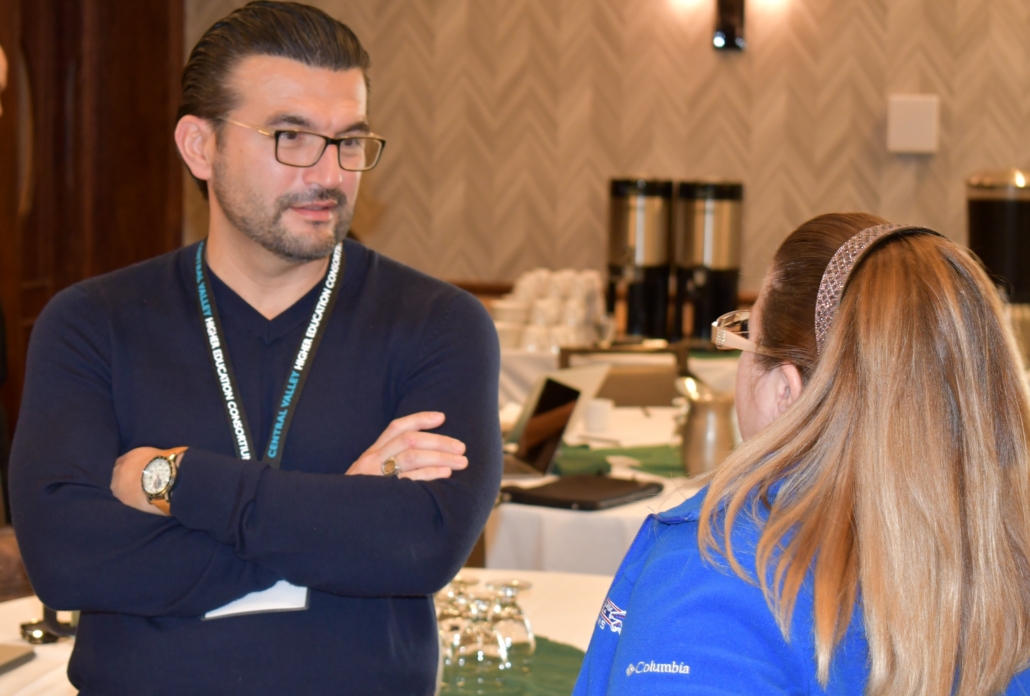
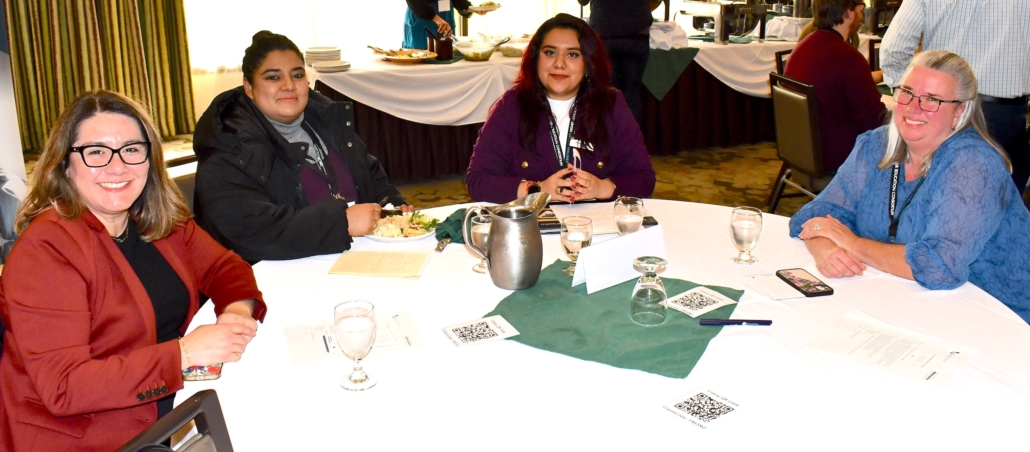
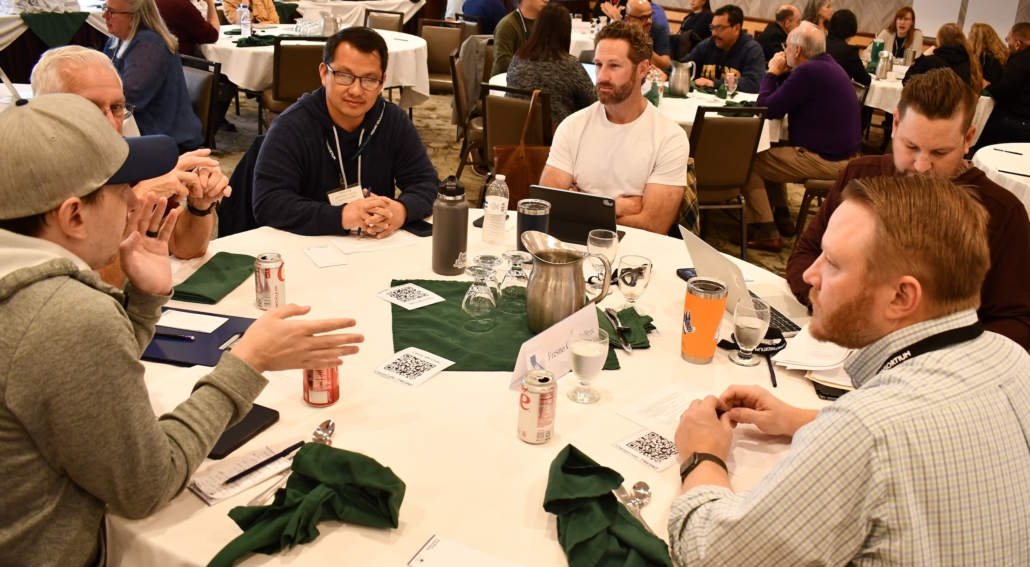
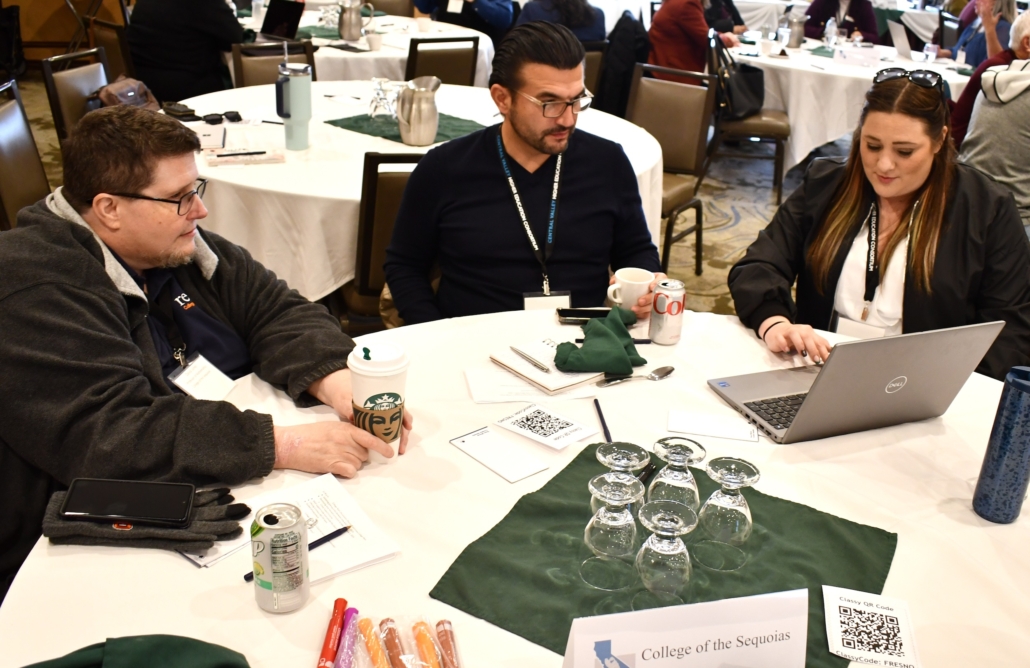
Realizing that state guidance surrounding Assembly Bill 1705 remains elusive, valley community college math educators and officials forged ahead at “The Central Valley Way to AB1705 Success” convening Jan. 26 in Fresno with a determined and unified mindset to develop implementation plans that will serve the best interests of their students including a follow-up session set for April.

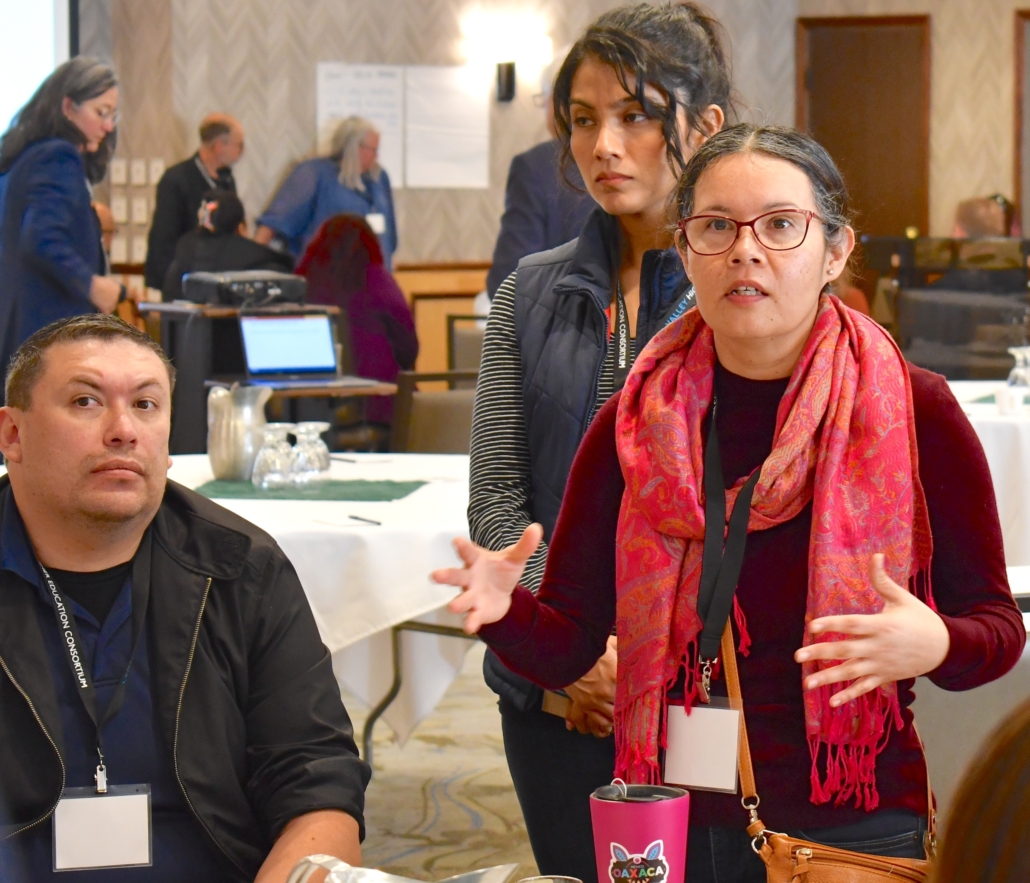
In addition, the Central Valley Higher Education Consortium (CVHEC) Math Task Force discussion centered around five strands of curriculum planning for implementation before the law goes into effect July 1, two aspects emerged at the lively day-long work session: the increased participation of institutional researchers for pertinent data-collecting and a call for a “principal’s task force” to bring upper secondary education voices to the table.

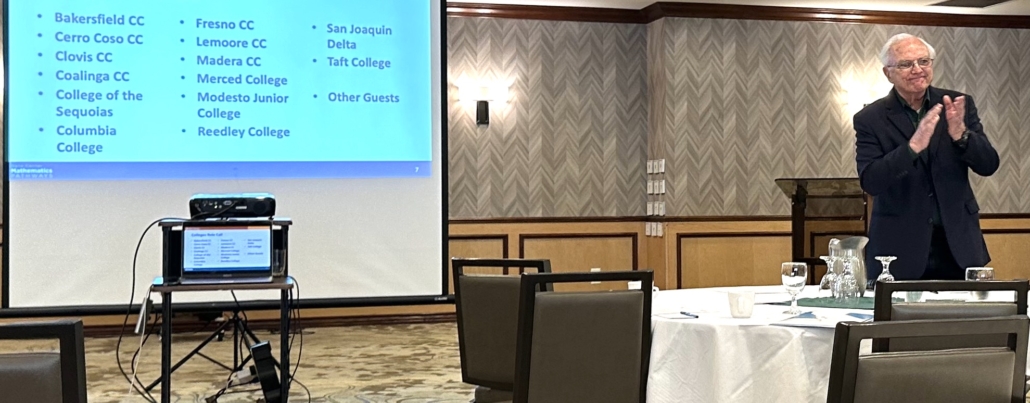
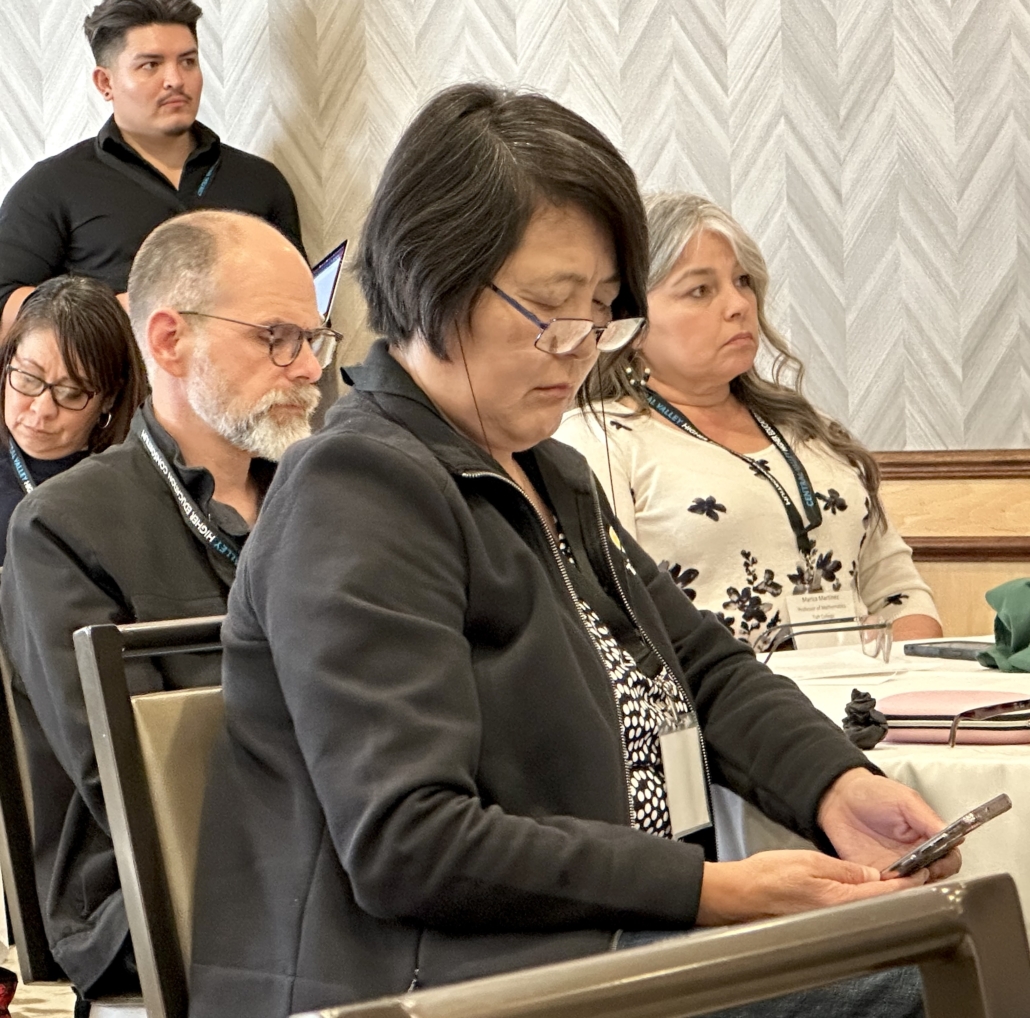
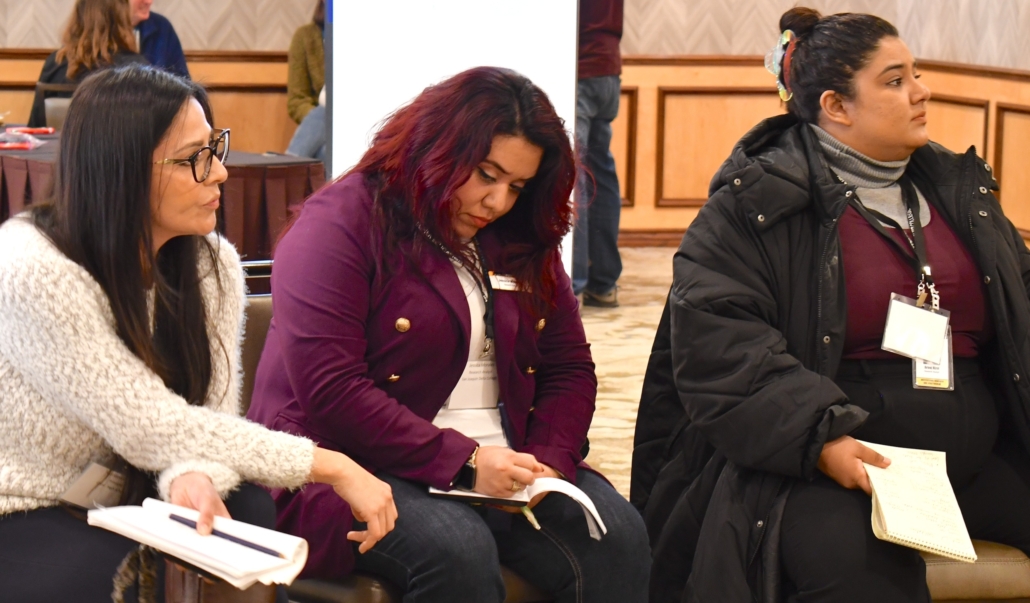
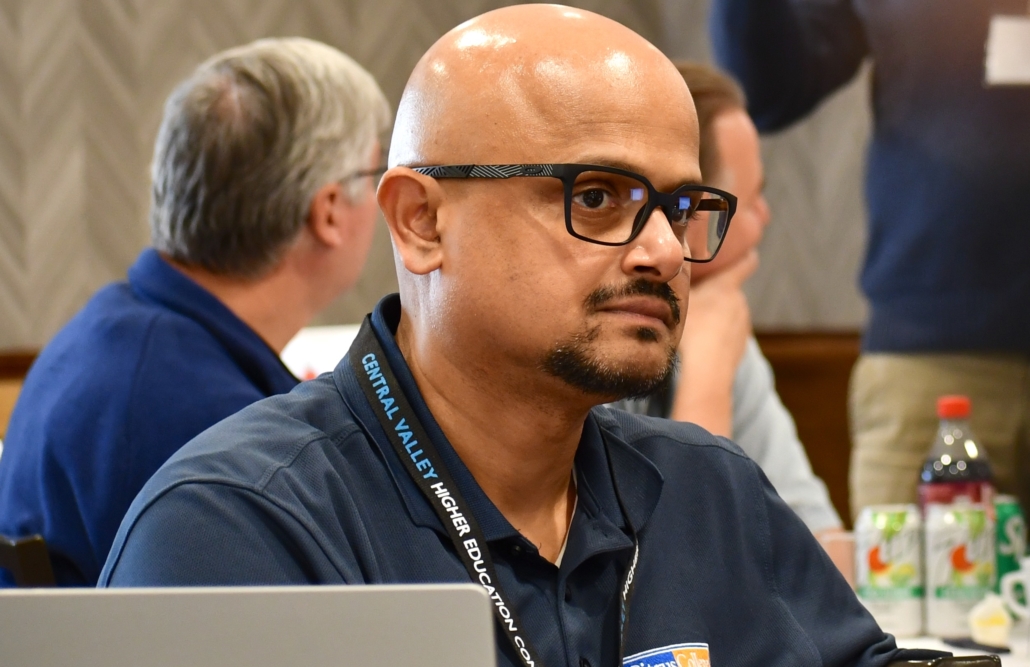
Presented by CVHEC, the convening — the latest in a series of deliberations since fall — was attended by 82 representatives from the consortium’s 19-member community colleges, one high school principal and campus research professionals.

They agreed to reconvene April 19 for reports on follow-up work that will occur as a result of this most recent event. Registration for that event will open next month with additional details forthcoming.

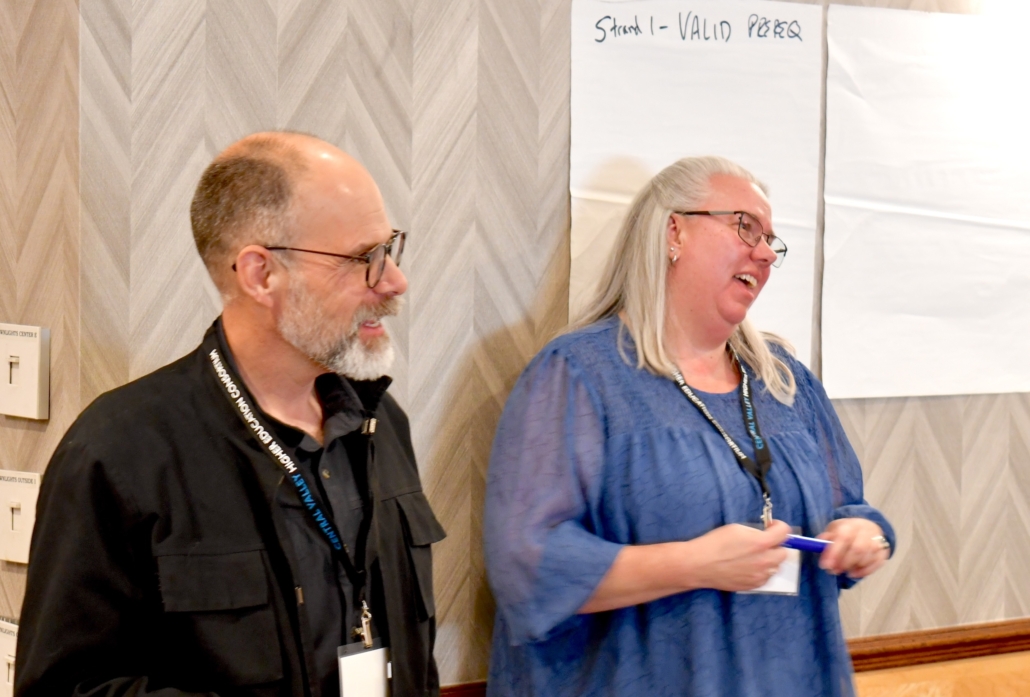
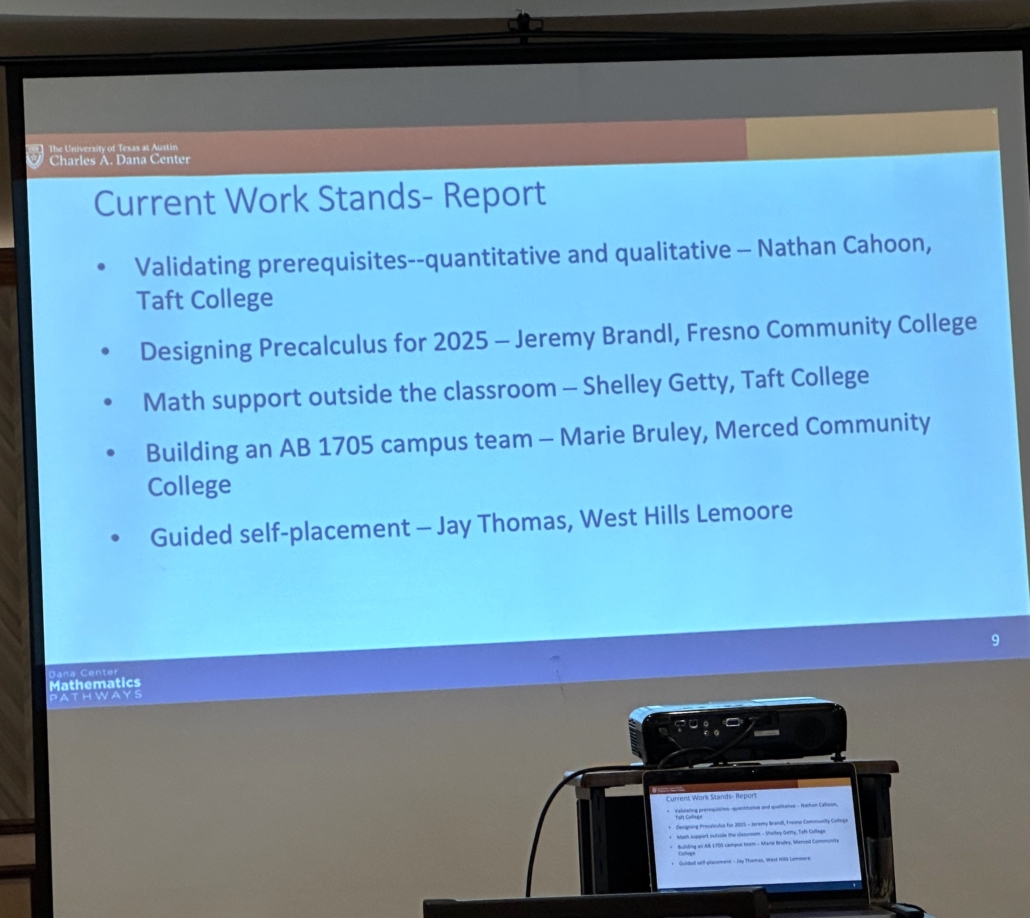
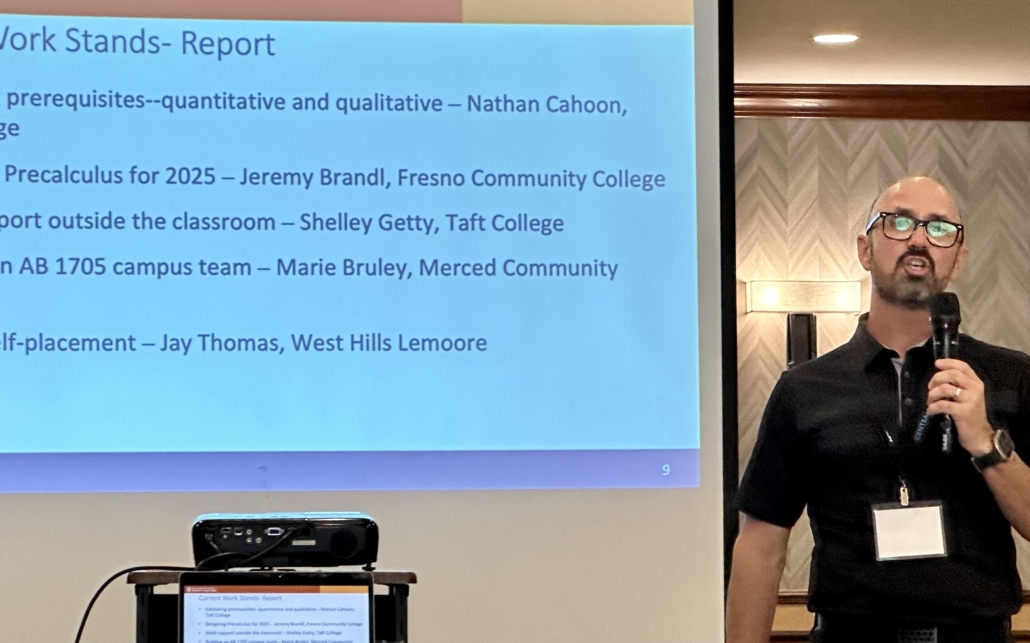
Facilitated by the Charles A. Dana Center at the University of Texas at Austin, the session last month reviewed five strands of curriculum planning: Validating Prerequisites; Designing Precalculus for 2025; Math Support Outside and Inside the Classroom; Building an AB 1705 Campus Team; and Guided Self-Placement.

“With tensions high and little guidance surrounding AB1705, the 19 community colleges and districts that comprise the CVHEC nine-county region are rolling up their sleeves and getting to work on this math movement the ‘Central Valley Way’,” summarized Tammi Perez-Rice of the Dana Center.

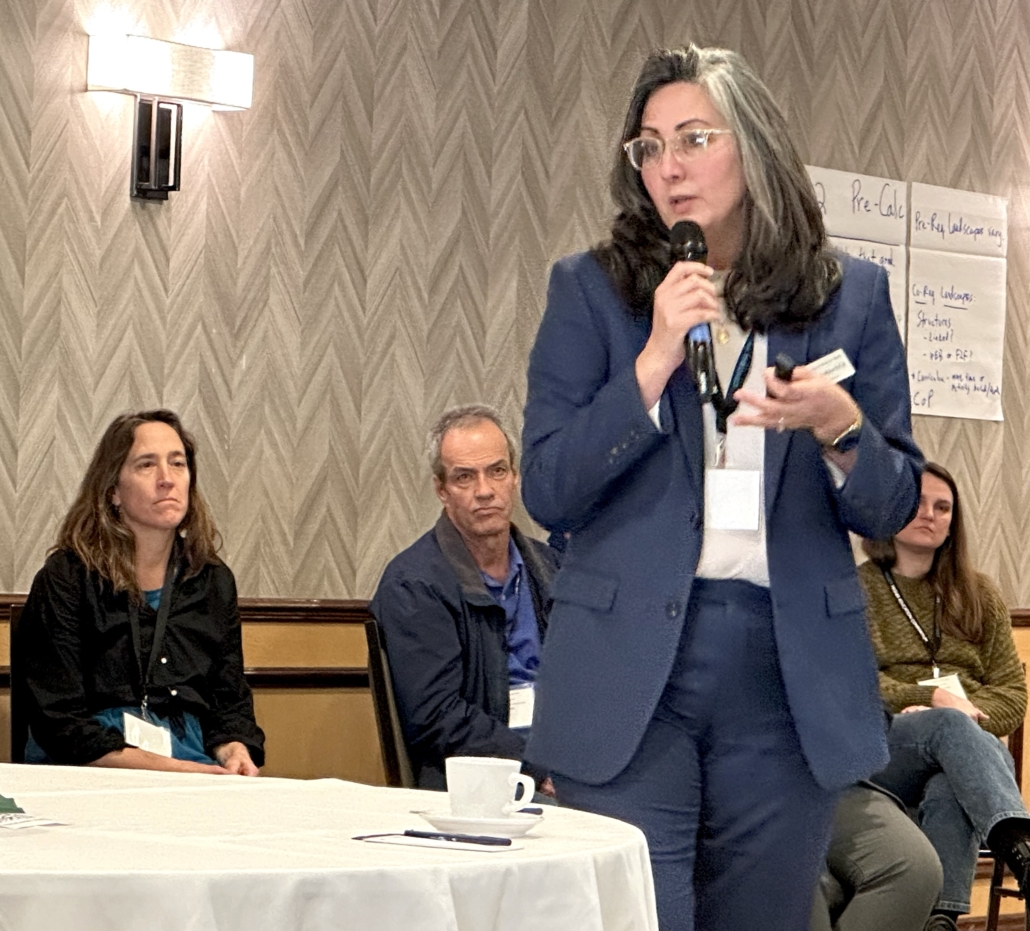
Perez-Rice, who co-facilitated the event, said the convening was solely dedicated to working and planning at a regional and institutional level in two parts. The first part was dedicated to expanding the five work groups that emerged from the Nov. 17 webinar and creating a plan to move forward.  The second half of the convening was devoted to institutional planning.

“The fruits produced from these convenings are already being felt around the region,” Perez-Rice said.  “The plans and implementations emerging from these convenings are more than just a response to AB705 and AB1705; they cultivate systemic reforms that will benefit all students in the CVHEC region and beyond.”

John Spevak, CVHEC regional coordinator who oversees the consortium’s Math Task Force and co-facilitator of the Jan. 26 gathering, said in the short-term, the five strands work groups will continue to communicate and provide updates in preparation for the April 19 convening. The strand leads are preparing summaries of their Jan. 26 breakout discussions and member college teams are preparing summaries of the tentative plans they developed in the afternoon breakout sessions for oral reports in April.

“In the longer term, our Math Task Force will continue to monitor what the California Community College Chancellor’s Office says, while mainly going forward with our own Central Valley approach to the five strands.”

That “Central Valley Way” stems from the work undertaken by the CVHEC Math task Force, first formed in 2019, in the past year that was intensified with four work sessions beginning Oct. 6 in a virtual convening with CCC vice-chancellor Eric Cooper. The first in-person session followed Oct. 13 in Fresno and another virtual session was held in two parts Nov. 17 before the Jan. 26 session.

These sessions may represent the only concerted effort by a region’s community college math community actively meeting to collaborate across campus boundaries for ways to unite as one voice and determine a curriculum course of action that meets the law’s intent, Spevak said.

“We at CVHEC, along with the Dana Center representatives and our College Bridge partners in the Math Bridge Program, feel that something extraordinary is happening in math in the Central Valley of California,” Spevak said.

After the Jan. 26 session ended, Perez-Rice reiterated a point she made the first time she visited Fresno for the first in-person convening last fall:

“This collaboration today was amazing. As I travel and talk to math faculty all over the country, what I see pulsating from the CVHEC community here in Central California is just compassion; caring about their students; putting their students first; understanding what their students need; and more importantly collaborating with each other working across institutions to make things happen.”

Inviting secondary ed voices to ‘align syllabi’

A key development of the convening was the assertion and agreement that a crucial next step is “to involve high schools in the discussion and determine how to breakdown barriers between systems for a cohesive collaborative effort to put students first across the state of California,” a message delivered by Marlena Celaya, principal of Orosi High School who was the only secondary education official in attendance.

Celaya’s comments, first in a strand session and later in general comments before the assembled group, resonated with the community college professionals as she offered to lead a task force of principals/administrators who would unify with the CVHEC community college math educators for implementation strategy — to listen and hear what the needs are and how to meet those needs.

“I’m willing to lead this work because I don’t want people to go through the wars I went through teaching algebra and volunteering all my time,” said Celaya, a former math teacher at Dinuba High School. “We would want to  hear from community colleges and say to them ‘what do you need?’

“We heard something from you today: ‘I want to know what courses are offered at the high school and what does that course description look like?’ Aligning syllabi is what I’d like to do,” Celaya said. “Mathematics is my passion.”

Perez-Rice said the April 19 convening promises more high school representation, with over twelve principals who are part of the Math Bridge Program by CVHEC and College Bridge being invited. Other secondary education officials from throughout the valley are welcome she said.  

Participant feedback: ‘great to see we’re not alone in this …’

After the event, several participants shared their assessment of the Jan. 26 convening.

“The conversations were amazing and we really appreciated being here,” said Joshua Lewis, chair of the Bakersfield College Mathematics Dept.

“There have been so many legislative changes and so many unknowns it’s nice to see the work that other campuses are doing and realize that we’re not alone, that we have shared values; that we have shared emphasis on student learning and really care about doing right by all of our students,” he added.

Nathan Cahoon, Taft college math professor, felt that the efforts of CVHEC’s Math Task Force as exhibited at the convening is strengthening the voice of the valley’s math community which will have an impact.

“It was amazing to work with incredible professionals who have some really amazing ideas,” he said. “I know I took many good notes about ideas to implement at our college.  The connections we are building here with each other will be powerful down the road as we build a cohesive effort to get some good research together that we can send to the state as one voice from all the colleges.”

Modesto Junior College math professor Marina Hernandez said coming together within the region is relished because when attending other statewide or national conferences, the focus is not as localized.

“It was very helpful to learn what other colleges in the Central Valley are doing because we share similar student population and resources characteristics and their best practices are applicable to us here in our region,” Hernandez said.

Tina Akers-Porter, Modesto Junior College math professor, said the Math Task Force work has helped her better understand what AB1705 is and what it means for her students.

“I feel like I have a better understanding of some of the challenges of the legislation and what others are worried about,” she said.  “We share some of those worries but it’s great to hear different points of view on that. A byproduct of this is we are seeing how we need to support underprepared students more, inside and outside the classroom, and sharing ideas to do that.”

Shelly Getty, Taft college math faculty and a strand leader, echoed Akers-Porter: “We left knowing we are going to start some specific tutoring and targeting students for tutoring. We will try to advertise it better and recruit so students get more access to the services we already provide which will greatly impact them.  We shared some good ideas on how to do that effectively.”

Marissa Martinez, Taft college math professor, said, “We have our work cut out for us. There’s a lot of things that we have to address with a lot of moving parts. Everything keeps changing but it was great to be able to see that we’re not alone in this, that we’re working together to better serve our students.”

She said this intercollegial collaboration and the feedback from the colleges helps “so we don’t have to reinvent the wheel — what worked, what didn’t work.”

Next steps? Data research

“I would say the next step is collecting our data to see how the numbers show where we are so we can prove that these courses are important for our student success,” Martinez said.

This data aspect was also a key part of the convening as institutional research professionals were invited and directly participated such as Arooj Rizvi, research analyst in the Office of Institutional research and Effectiveness at San Joaquin Delta College.

“Researchers have a monumental role in the implementation of AB 1705 because policymakers are going to depend a lot on what we are able to produce as a group or even as an institution,” Rizvi said. “Being a part of these conversations helps us to see the bigger picture, the context and the requirements of what exactly it is that we are looking for in the data.”

She said it was exciting to hear at the convening what area colleges are going through.

“I realized how similar our challenges are from institution to institution, “she said.  “Working through that together and being solution-oriented is something that’s going to take all of us towards a beneficial direction. Seeing us all here today was a defining moment in history.”

Owynn Lancaster, vice president of academic strategy for CVHEC partner College Bridge, said the event was “a huge success seeing folks come together from math to talk about math and really pool their resources to address actual challenges.

“The most powerful focus of change in education is always the educator,” Lancaster said. “I know everything’s heaped on them but in a lot of ways they have the greatest power of the greatest agency for this.”

For more info: centralvalleyhec@gmail.com

For CVHEC media inquiries: Tom Uribes – cvheccommunications@mail.fresnostate.edu (or text 559.348.3278).

See also:

Math Task Force

https://bit.ly/MTFconveneKSEE24

Valley’s math ed experts unite to address AB 1705 challenge for student success

The CVHEC Way to Math Success — Implementing AB1705

Math Task Force begins discussion of AB1705 implementation – Nov. 17 next
CVHEC Math Task Force meets in-person Oct. 13 for AB 1705 follow-up

NEWS RELEASE – CVHEC Math Task Force: Impactful legislation (AB 1705) Convenings Oct. 6 & 13

CVHEC Website Feature: Math Task Force Page

PHOTO GALLERY  

CVHEC members’ ongoing mission for

students’ successful academic journey


Greetings and welcome to 2024 from the CVHEC Team,

Welcome to our February CVHEC e-newsletter as we share how our Central Valley colleges and universities are ensuring that the academic journey of our students is successful and rewarding for their individual experience and growth.

I hope you enjoyed the days of note this month: President’s Day and Valentine’s Day. But we especially observe African American History month and the many contributions of African American educators past and present. Thank you for all you do for our communities.

As you read on, please note how the Central Valley Math Task Force continues its valiant work addressing issues around high school and college math pathways such as AB1705 implementation with another successful convening in January. We now look to the follow-up session April 19 as faculty from both systems undertake an unprecedented partnership that will provide leadership for this important endeavor and deliver a meaningful experience in the classroom for our students.  We call it “the Central Valley Way.”

Also illustrating this professional collaboration amongst faculty members is our “What the CV-HEC is Happening” guest blog by Owynn Lancaster of College Bridge. Student recruitment is underway and Owynn updates our joint Math Bridge Program and how the work of colleague Dr. Nicole Korgie and her team impacts targeted high school students in the region helping them embark on a journey to successfully complete college level math through dual enrollment courses.  We are encouraged by the success rates of those students and their performance once they get to our local community college.

We are also delighted to share that Fresno State has joined California State University, Bakersfield,  Stanislaus State and the University of California, Merced in working with our regional community colleges in the Central Valley Transfer Project which is unique in California.  This innovative approach is the only one in the state that includes a University of California campus collaborating with California State University and community college partners — all members of the consortium — in establishing transfer pathways for Central Valley students to get them into and through college in a timely manner.

And last but far from least, congratulations to Dr. Kristen Clark, our CVHEC Board of Directors chair, who recently announced her retirement as chancellor of the West Hills Community College District effective June 30 which means she will be stepping down from our board as well. Please see my statement about Chancellor Clark, who is truly a champion of higher education for all.

Please enjoy this edition and look for some of the new initiatives fueling up on our launchpad in the months to come, such as Online Educational Resources/Zero Textbook Costs that assists our students with the high cost of getting educated in today’s environment.

As always, thanks for joining us.

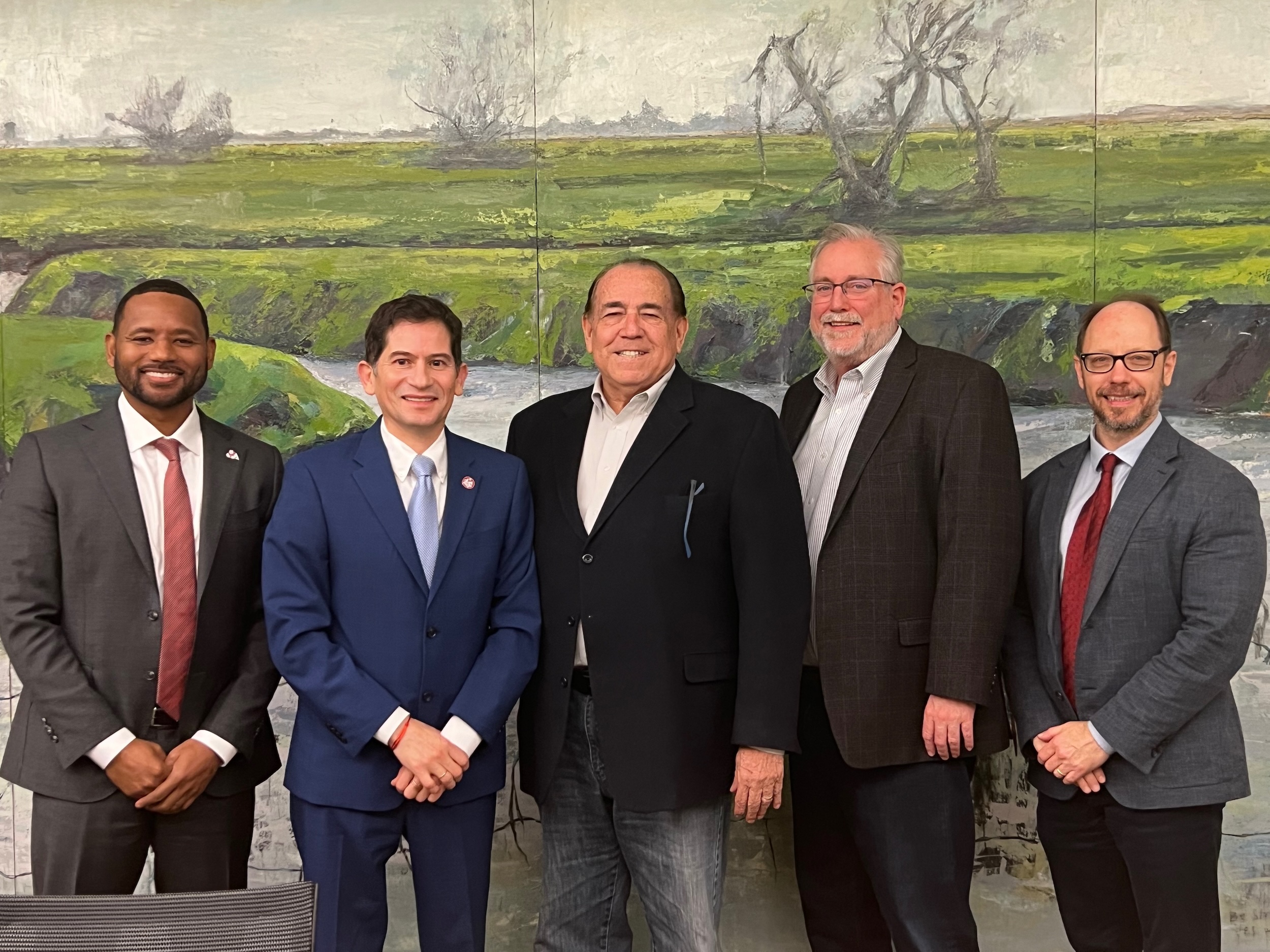
Fresno State, a founding CVHEC member, joined CVHEC’s historic Central Valley Transfer Project in January with (from left): Dr. Kent Willis, vice president of Fresno State Student Affairs and Enrollment Management; University President Saúl Jiménez-Sandoval; Dr. Benjamin Duran, CVHEC executive director; Tom Burke, CVHEC regional coordinator; and Dr. Sergio La Porta, associate dean of the Fresno State College of Arts and Humanities.

Fresno State joins in transfer ‘centerpiece’ with

11 CVHEC community colleges, 3 CSUs, UCMerced

 The Central Valley Transfer Project is now partnered with the region’s three California State University campuses after Fresno State signed on in January joining Bakersfield and Stanislaus in the historic Central Valley Higher Education Consortium initiative designed to open new doors for students’ successful transfer from community college.

Along with founding partner University of California, Merced, this means the valley’s four public institutions of higher education are working in unison with 8 community colleges currently through CVHEC’s project using the groundbreaking Program Pathways Mapper software. The project has also gained the full support of the California Community College Chancellor’s Office.

The community colleges already in the CVTP, with several more expected to sign on this year, are: Bakersfield College, Clovis Community College, Madera Community College, Merced College, Porterville College, Reedley College, West Hills College-Coalinga and West Hills College-Lemoore.

The Transfer Project is also expanding participation in the north end of the Central Valley with Modesto Junior College, Columbia College and San Joaquin Delta College scheduled to begin onboard this spring for a total of 11 community college partners said Stan Carrizosa, CVHEC regional coordinator and consortium lead for the project.

All Transfer Project partners are members of the consortium with their respective chancellors and presidents serving on the CVHEC Board of Directors.

“The Transfer Project is now a centerpiece for students to both enter and transfer from community college to their four-year universities,” said Dr. Benjamín Durán, CVHEC executive director. “We are excited to share this latest progress of the project which has been featured statewide and nationally at conferences such as the Community College League of California and Complete College America.”

He added, “This innovative approach is the only one in the state that includes a University of California campus collaborating with partner California State University and community colleges in establishing transfer pathways for Central Valley students to get them to and through college in a timely manner.”

Dr. Saúl Jiménez-Sandoval, Fresno State president and CVHEC board member, said,  “I’m proud that Fresno State will be a dynamic partner in the Central Valley Transfer Project, as this pathway will empower community college students to become visionary Bulldogs.”

The Fresno State agreement was finalized Jan. 17 between Durán and President Jiménez-Sandoval, with Tom Burke, CVHEC regional coordinator and Transfer Project team member; Dr. Kent Willis, vice president of Enrollment Services; and Dr. Sergio LaPorta, associate dean of the College of Arts and Humanities.

At CVHEC’s Higher Education Summit last fall, CCC Chancellor Sonya Christian announced that the statewide system has designated the Transfer Project as a demonstration project as set forth in her Vision 2030 for all California community colleges. The Transfer Project’s participating community colleges are serving as the pilot campuses with plans to implement statewide.

Carrizosa said the state budget continues to support and fund the onboarding costs for all community colleges to subscribe to the Program Pathways Mapper.

Established in 2021 with UC Merced, Merced College and Bakersfield College, the project is designed to open new doors for students to successfully transfer from community college with its Program Pathways Mapper, Carrizosa said.

He said the Program Pathways Mapper — a public facing, internet-based app that can be downloaded and accessed by the public software platform — provides unprecedented ease of access for students, counselors, advisors and parents much more so than other existing platforms.

“There are no typical requirements for access to PPM such as other internal college systems like Degree Works, Assist.Org and the CSU Transfer Planner,” he said. “These are all course tracking systems but in order to use them, students need to be successfully enrolled in college and have a student email address or other form of login to try and plan. Through PPM students simply upload the public PPM app to their devices and have immediate access.”

Carrizosa said the PPM helps simplify the transfer planning process which can be the most difficult task for many students.

“In much of our Central Valley region, as many as seven out of 10 incoming college freshmen will be first generation students to attend college,” he said. “Research shows that the most difficult task for them is often the application process itself and completing the required steps for enrollment. Systems like Degree Works and others do nothing to remove this common barrier because these systems cannot be accessed until a student successfully enrolls.”

He explained that a high school student can start the Transfer Project journey as a junior or senior by enrolling in college dual enrollment courses enabling them to complete their transfer level English and Math courses while still in high school. These units roll up with them as they enter community college and track the completion of their lower division requirements for their Associate Degree for Transfer in their chosen major via PPM.

“Students can easily select a community college they wish to attend and a major they want to pursue and the lower division courses required are sequentially laid out for them through the Program Pathways Mapper software.”

In addition, the PPM then links those lower division courses to an upper division institution of the student’s choice and shows a clear sequence of upper division courses needed to complete the degree, Carrizosa added.

“The PPM contains clear and accurate information directly from course catalogues from all participating colleges,” Carrizosa said.  “The Central Valley Transfer Project is becoming an alternative continuum of courses to the traditional high school A-G or Career Technical Education continuums and is unprecedented in the state’s community college system. We call it ‘The Central Valley Way!’”

“Through the use of PPM, students complete exactly what is required of them to successfully transfer to their four-year university and they follow PPM through their last two years to degree/certificate completion,” Carrizosa said.

Baseline data results also demonstrate the promise that PPM delivers in the Transfer Project.

In a sample of 5,000 incoming freshmen to Bakersfield College in 2022 the students using the PPM increased their “percentage of on-path course completion” to over 80 percent which also closed the equity gap in this statistic for ethnic minority students when compared to their white counterparts, Carrizosa said.

“The same sample showed students using the PPM reduced the ‘number of units-to-degree’ from an average of 87 down to 67,” he added.

The project is now gearing up to expand the partnership with the College Bridge Math Project and to onboard community colleges from the northern region of the Central Valley.

For more information about the CVTP, contact Carrizosa at centralvalleyhec@gmail.com.


CVHEC media inquiries: Tom Uribes – cvheccommunications@mail.fresnostate.edu or text 559.348.3278.

Fresno State media inquiries: PIO Lisa Bell – lbell@csufresno.edu.

See:

·  Pilot CVHEC/UC Merced Transfer Project improves process for students  

·  CVHEC Web Site Feature: Transfer Project

·  Historic Transfer Project spurs statewide movement to increase transfer rates

·  WHAT THE CV-HEC IS HAPPENING BLOG (January 2024): CVHEC 2023 — surging forward for Central Valley students

·  HIGHER ED NEWS: College Bridge to expand Math Bridge; CVHEC Transfer Project

•  A-G

·   Career Technical Education

Two cohorts from the Kern Master’s Upskilling Program (MA English) are eligible to participate and walk in the 2024 National University Commencement May 18 at Petco Park in San Diego. The program’s high school teacher participants are now qualified to teach English dual enrollment community college courses on their respective campuses. A third English cohort and the first Kern math cohort graduate in June.

Kern Master’s Upskilling Program

reaches another milestone

Second English cohort graduation – recruitment underway for a fall math cohort

The Kern Master’s Upskilling Program for high school teachers seeking a master’s degree in English or Math that qualifies them to teach dual enrollment courses at their respective campuses reached its second milestone last month when 11 participants completed post-baccalaureate requirements in English through National University.

Formally known as the Dual Enrollment Teacher Upskilling Pathway for English and Mathematics, the Central Valley Higher Education Consortium initiative is in partnership with the Kern Regional K-16 Education Collaborative that was funded as part of an $18 million statewide competitive grant in June 2022 to improve student progress from high school to postsecondary education and ultimately into the workforce.

The program also announced recruitment is underway for a third math cohort of 21 students to begin this fall for completion in spring 2026 though Fresno Pacific University in concert with the Kern County Superintendent of Schools (KCSOS), which serves as the administrative agent for the Kern K-16 Collaborative.

Informational meetings are set for March 21 and April 11 at 4:30 p.m.

A potential fourth English cohort pilot through CSU, Bakersfield with seven students is also in the works said Tom Burke, CVHEC’s Kern Masters Upskilling Program lead who reports that the program progress “has been very good” since it was funded two years ago.

“With the first two cohorts of English graduates to be joined by our first cohort of math graduates this summer, we are well on the way to significantly increasing the number of faculty in Kern County eligible to teach dual enrollment or community college courses in math and English,” Burke said.

The January graduation follows the first cohort of 11 English students who graduated in September for the innovative state-funded CVHEC initiative that helps reduce the cost of tuition for high school teachers to pursue a master’s degree, a state requirement to teach community college dual enrollment courses.

Each NU cohort group of students is eligible to participate and walk in the 2024 Commencement services set for Saturday, May 18, at Petco Park in San Diego, said Jessica Gladney, senior director for Partnership Development/ Workforce Education Solutions for National University,

The first Kern Master’s Upskilling Program cohort — MA, English with a specialization in Rhetoric — began in January 2023 with 13 out of 15 students completing their program in November 2023 (nine of the 13 will graduate with honors with a grade point average of 3.85 and above).

The two remaining students are currently in the process of completing their capstone, which is the culminating course of the master’s program, Gladney  said.

The second Kern Master’s Upskilling Program cohort of MA, English with a specialization in Rhetoric, began in March 2023, and 10 out of 15 students completed their program in January 2024. The remaining students are currently in the process of completing their capstone course, Gladney reports.

She said each NU cohort group of students is eligible to participate and walk in the 2024 Commencement services set for Saturday, May 18, at Petco Park in San Diego.

“We are proud of these candidates and we are excited to assist with building a qualified candidate pool of eligible dual-enrollment English teachers to meet the workforce demands in the Central Valley,” Gladney said.

CVHEC, made up of 28 institutions of higher education in the valley’s nine-county region from San Joaquin to Kern counties, is one of several partners in the Kern Collaborative.

South Valley CVHEC members include California State University, Bakersfield; Kern Community College District; Bakersfield College; Cerro Coso College; Taft College; Porterville College; Fresno Pacific University; and National University.

The project also includes the CVHEC Mentor Program that pairs the master’s candidates with a community college mentor to support them along the way and help them navigate the process to becoming an adjunct community college faculty member.

Under coordinators Dr. Liz Rozell (math) and Dr. Vikash Lakhani (English), the program is still accepting community college professors to serve as mentors, Burke said.

For more details about the fall 2024 math cohort through Fresno Pacific, potential students can contact:

  • Manjula Joseph, program director – manjula.joseph@fresno.edu or 559.453.2096
  • Nathan Lyness, senior Outreach & Admissions representative – nathan.lyness@fresno.edu or 559.453.7183

See:

$1 million USDA grant awarded to West Hills CCD for broadband cooperative formation Project director recruitment underway   The West Hills Community College District (WHCCD) has received a $1 million […]

Math Task Force Convening Jan. 26:

‘Central Valley Way To AB1705 Success’


With the agenda released this week, over 60 Central Valley math education experts will convene in Fresno Jan. 26 to plan math pathways for student success as they brainstorm within five strands of implementation around Assembly Bill 1705 that goes into effect this summer.

The Central Valley Higher Education Consortium’s “Central Valley Way To AB1705 Success” Convening from 9 a.m. – 3 p.m. at the DoubleTree by Hilton Hotel Fresno Convention Center, will bring together community college math educators, administrators and institutional researchers.

Presented by the CVHEC Math Task Force and facilitated by the Charles A. Dana Center at the University of Texas at Austin, the convening is free with advance registration and includes lunch.

Discussion for the historic convening — with administrators and IR experts joining in the conversation — will center around five strands that the region’s community college math academicians can undertake for student success when the new law goes into effect July 1:  Validating Prerequisites; Designing Precalculus for 2025; Math Support Outside and Inside the Classroom; Building an AB 1705 Campus Team; and Guided Self-Placement.

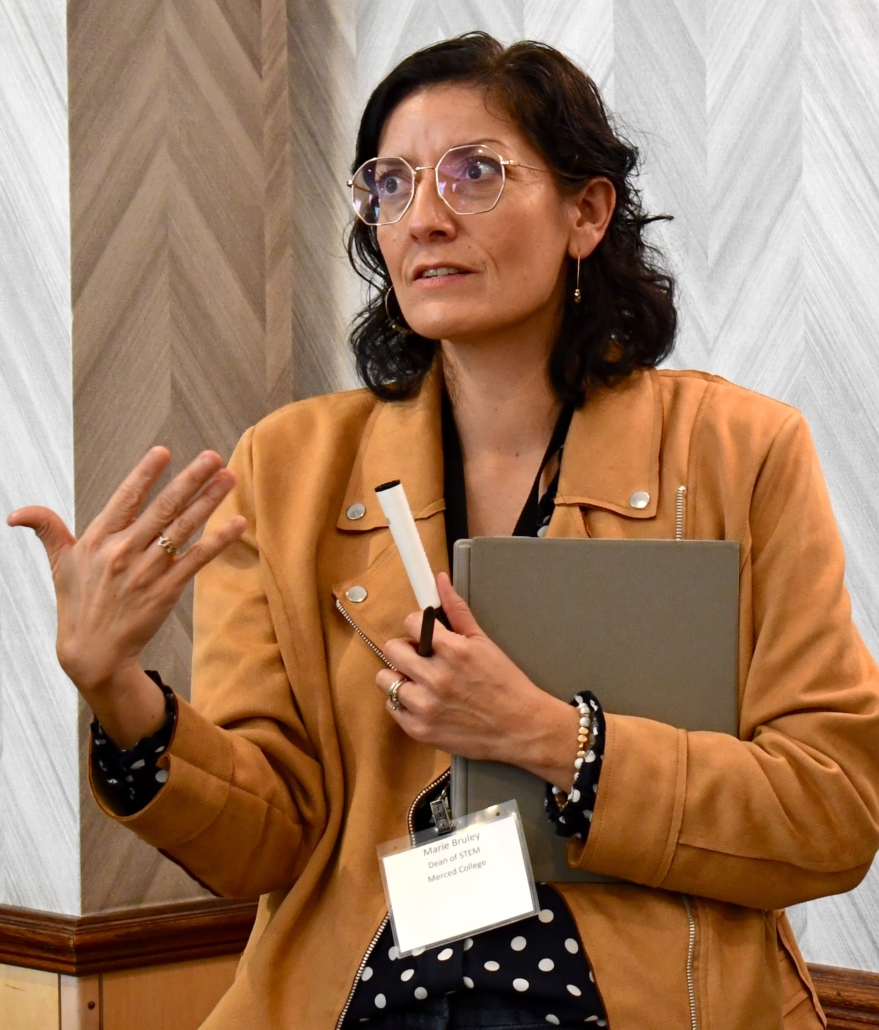
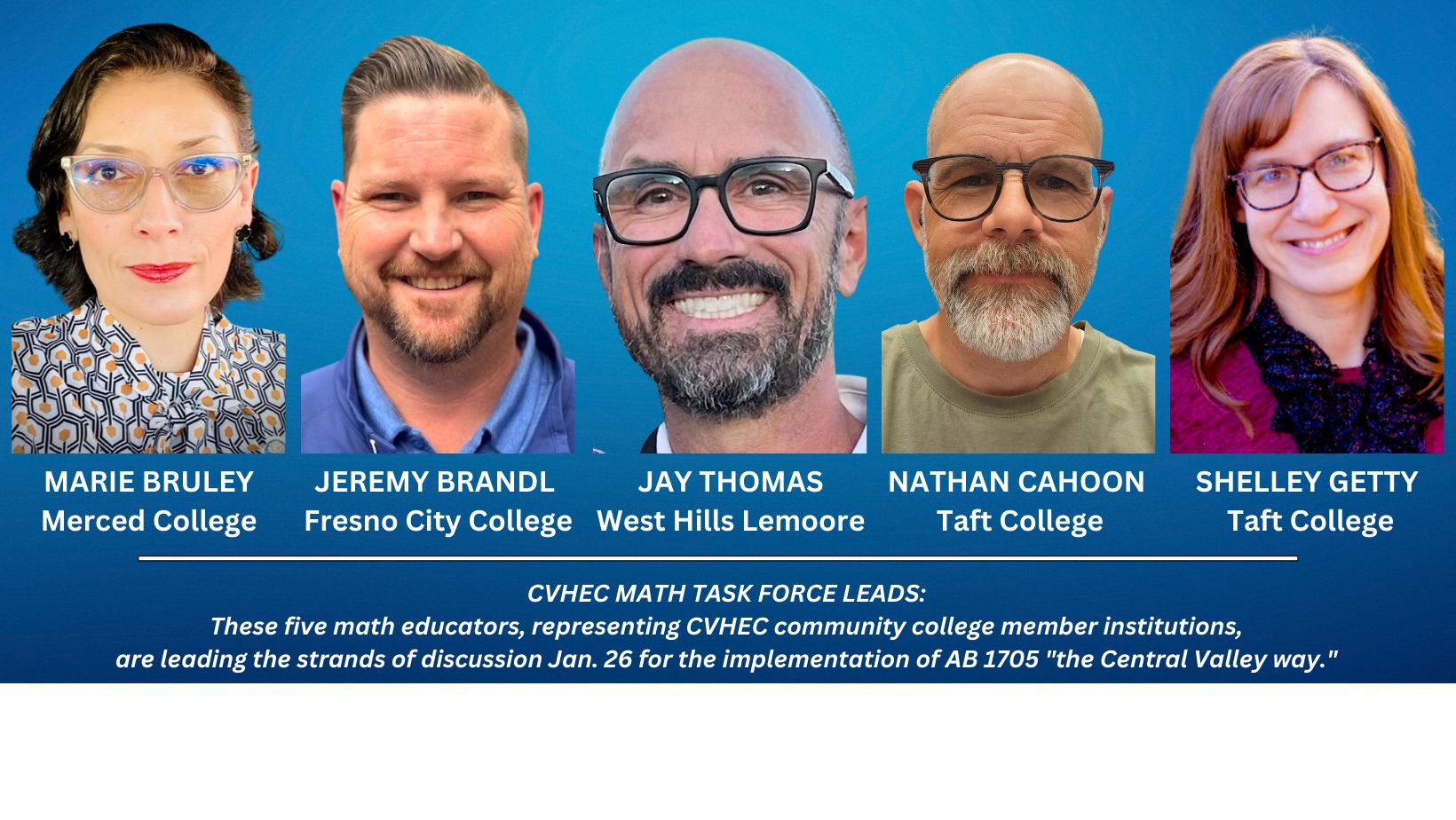
Five Math Task Force members serving as strand leads are: Jeremy Brandl, Fresno City College math professor; Nathan Cahoon and Shelley Getty, both Taft College math professors; Marie Bruley, Merced College dean of Science, Technology, Engineering, and Math (STEM); and Jay Thomas, West Hills College Lemoore math professor.

After the event opens with a welcome and brief introductions, the strand subcommittees open the discussion by presenting reports regarding preliminary strand deliberations over the past few months that started at three meetings the Math Task Force held in the fall.

Participants will then break into tabletop talks for feedback and to brainstorm new ideas, a timeline and next steps followed by report outs of those subcommittee sessions.

Following lunch, the participants will break into their respective college teams to discuss “Preliminary College Plans” in two parts: “Validating Prerequisites Between Now and July 1, 2024;” and “Developing New/Revised Curriculum to Take Effect July 1, 2025.”

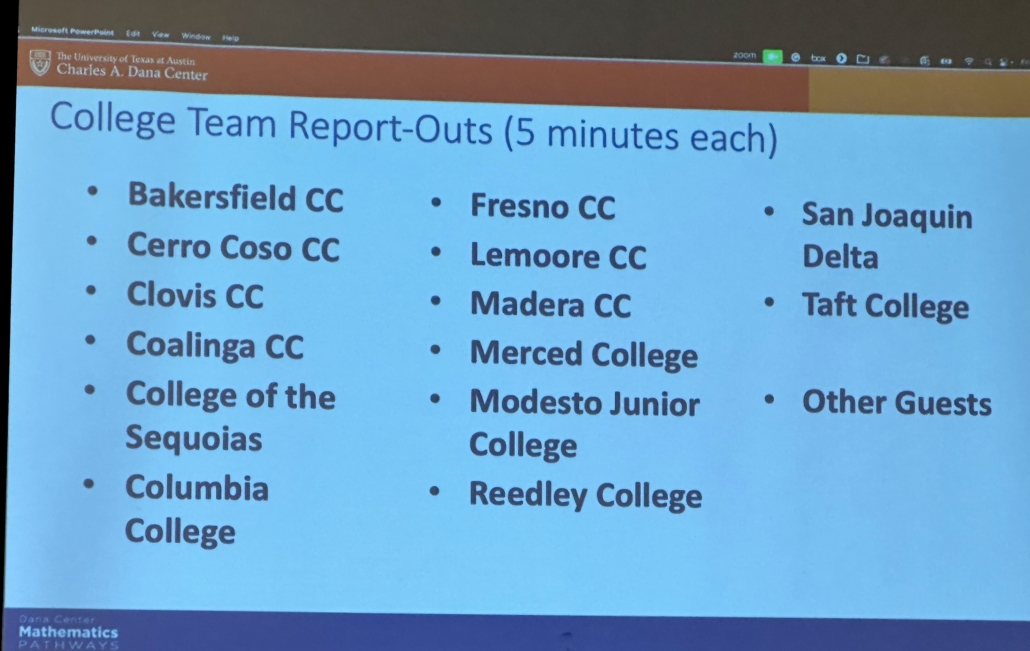
“College Team Report Outs” will follow before the final session “Where Do We Go From Here?” looks towards the future and the role of Math Task Force sub-committees, college teams and CVHEC.

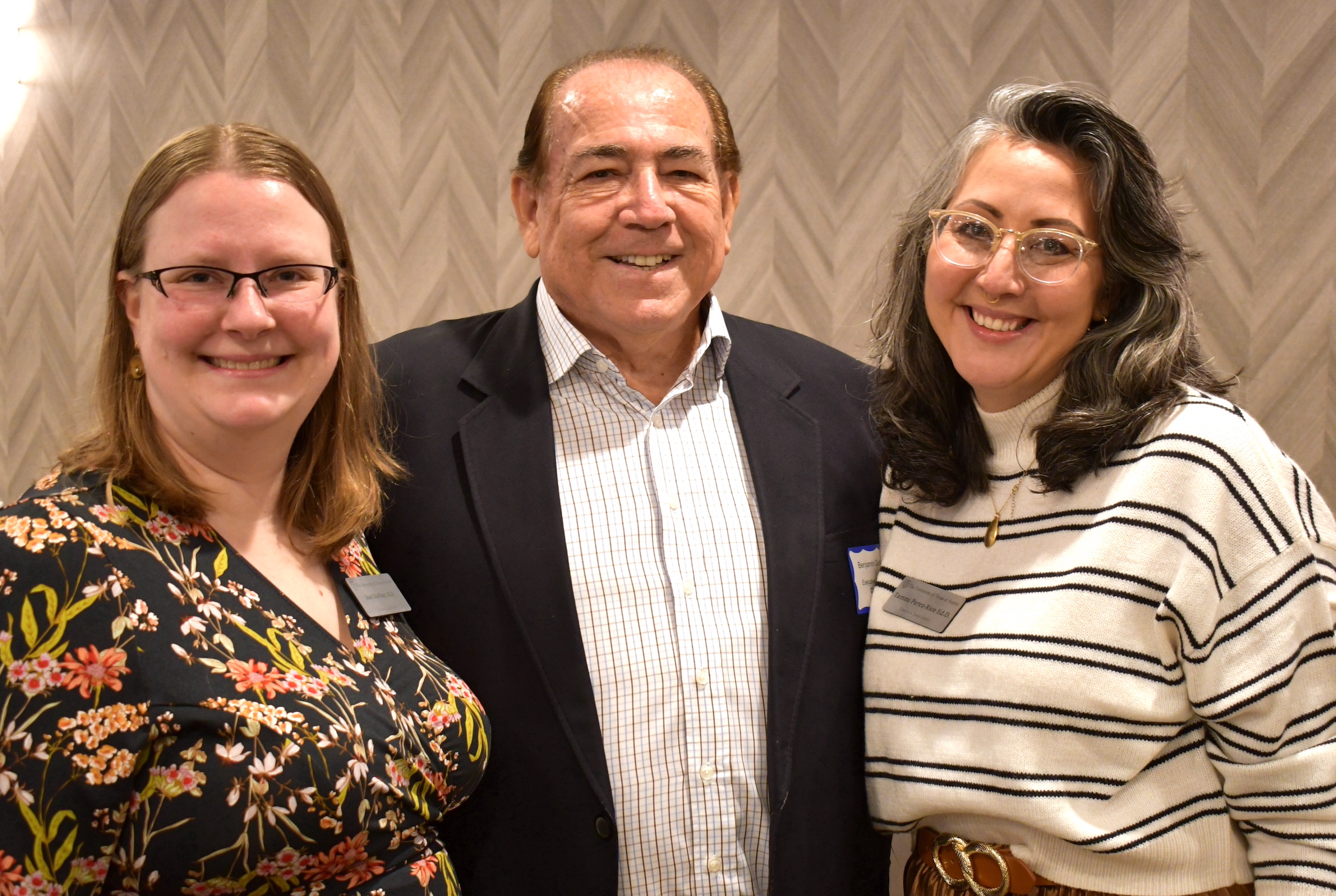
Dr. Benjamín Durán of CVHEC with Dana Center reps Joan Zoellner and Tammi Perez-Rice at the Oct. 13 Math Task Force convening in Fresno.

 Dr. Benjamín Durán, CVHEC executive director, said, “We are proud that our Central Valley community colleges are leaning in on the expertise of their own math experts to figure out the best way to support our students within the guidelines of the legislation.”

AB 1705 — passed in 2022 for implementation July 1, 2024  —  expands the provisions established in AB 705 (2017) by explicitly requiring community colleges not only to place students directly into transfer-level English and math courses but also to ensure that students actually enroll in those courses.

The legislation also establishes that for students who need or desire extra academic support, community colleges shall provide access to such support. The new law clarifies that a community college can require students to enroll in additional concurrent support if it is determined that the support will increase the student’s likelihood of passing transfer-level English or math.

Community colleges have been tasked with ensuring they comply with both AB705 and AB1705 designed to strengthen support for student success and increase degree completion.

CVHEC helped start the conversation by bringing together its Math Task Force — made up of representatives from CVHEC community colleges — and other math educators to discuss ideas and options regarding implementation within the Central Valley community college mathematics community last fall.

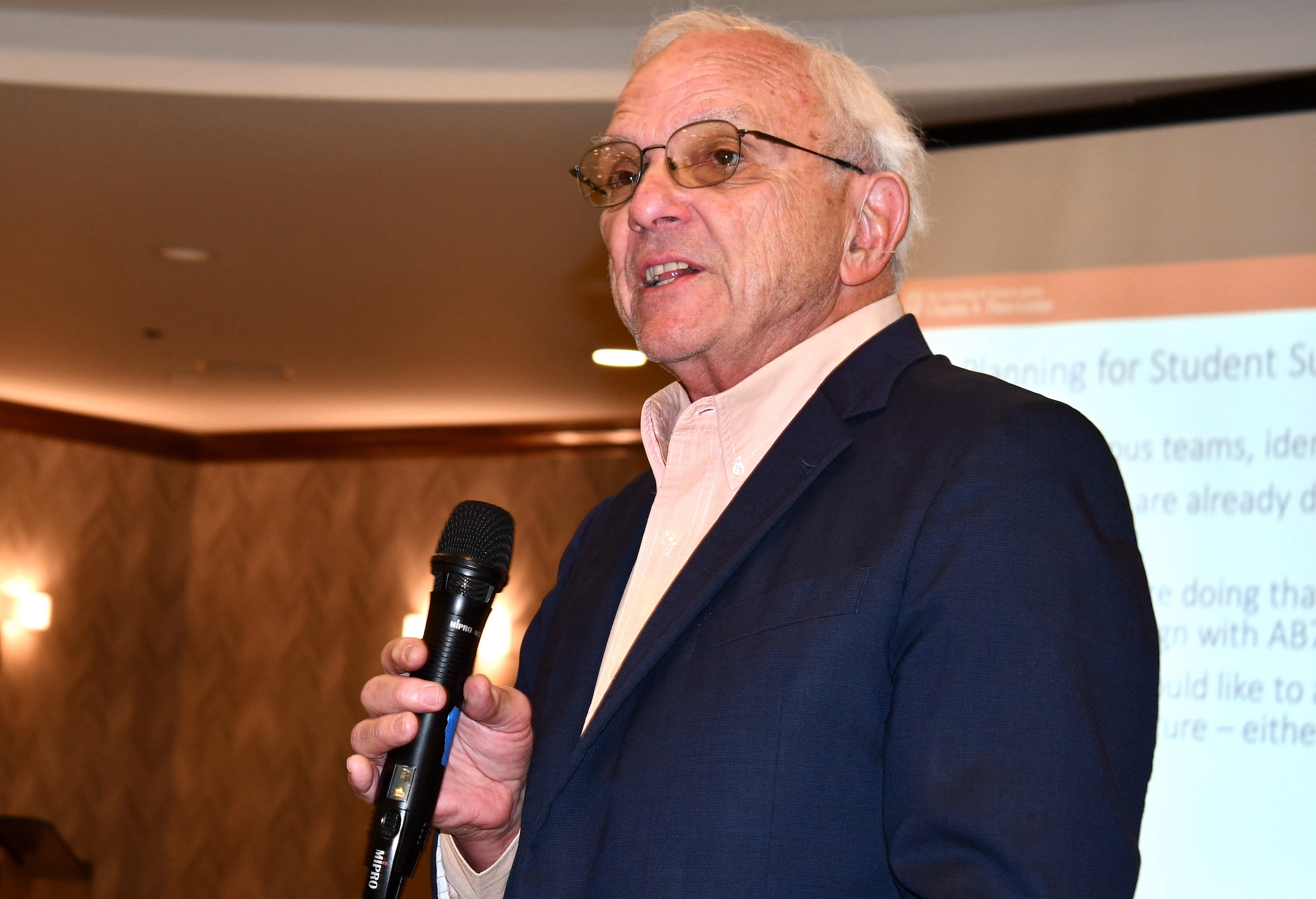
Dr. John Spevak, CVHEC regional coordinator

In three virtual sessions and one in-person convening in 2023,  the Math Task Force created a collaborative “Central Valley Approach” to each,  said Dr. John Spevak, CVHEC regional coordinator who oversees the consortium’s Math and English Task Forces.

“Now, for the January session, administrators and researchers are joining the Math Task Force to develop data-driven and college-endorsed solutions that help meet the challenge head on and in unity for the best interests of students.”

The fall inaugural sessions were facilitated by two Dana Center representatives who will return to Fresno for the Jan. 26 convening:  Joan Zoellner, M.A., who is the lead for the Dana Center’s Launch Years Initiative; and Dr. Tammi Perez-Rice, Postsecondary Course Program specialist.

Dr. Erik Cooper, assistant vice chancellor of the California Community College Chancellor’s Office Cooper, also participated in the first virtual session to discuss the recent history of math education reform in California and answer questions as well as present the CCCCO’s AB 1705 Implementation Guide and FAQ webpage.

“With the passage of AB 705 then later 1705 – all designed to strengthen support for student success – CVHEC has been moving full steam ahead in assuring that our member colleges and their feeder high schools have a good understanding of the seemingly turbulent waters of the legislation,” Durán said.

Strand breakdown: 

  • Validating prerequisites — quantitative and qualitative: creating a Central Valley collaborative approach which would help make a strong case with the state. Point person: NATHAN CAHOON, Taft College math professor.
  • Designing Precalculus for 2025: An effective single-course prerequisite for Calculus 1 (especially valuable if the state allows in 2025-26 only one prerequisite course for Calculus 1). Point person: JEREMY BRANDL, Fresno City College math professor.
  • Math support outside and inside the classroom:  What’s working best in the Central Valley, including math lab centers, tutoring, embedded tutoring, supplemental instruction, etc. Point person: SHELLEY GETTY, Taft College math professor.
  • Building an AB 1705 campus team: Who needs to be on the team? Math and English professors, IR/IT staff, counselors, administrators, etc. How does it best function? Point person: MARIE BRULEY, Merced College dean of Science, Technology, Engineering, and Math (STEM).
  • Guided self-placement: Helping ensure with the best possible questionnaire that students are taking the right math class when they start college. Point person: JAY THOMAS, West Hills College Lemoore math professor.

(Links to recordings of the two previous sessions are available below).


REGISTER – “The CVHEC Way to Math Success — Implementing AB1705” (Jan. 26, 2024)

EVENT AGENDA For questions: centralvalleyhec@gmail.com.

For media inquiries: Tom Uribes 559.348.3278 (text msg) or cvheccommunications@mail.fresnostate.edu 


SEE:

  • Previous sessions recordings:

CVHEC “AB1705 in the Central Valley” Webinar with Dr. Erik Cooper Oct. 6, 2023

MTF meeting  Nov. 17 (10 a.m. session)

MTF meeting Nov. 17 (1 p.m. session)


  • Coverage of the fall sessions:

Math Task Force begins discussion of AB1705 implementation – Nov. 17 next (with Oct. 13 photo gallery).

CVHEC Math Task Force meets in-person Oct. 13 for AB 1705 follow-up  

NEWS RELEASE – CVHEC Math Task Force: Impactful legislation (AB 1705) Convenings Oct. 6 & 13


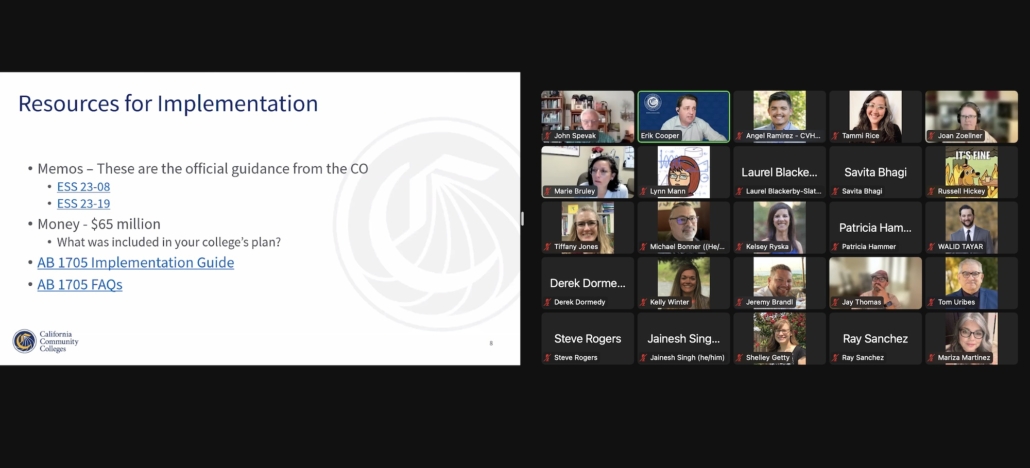
Dr. Erik Cooper of the California Community Colleges Chancellor’s Office zoomed into the Oct. 6 CVHEC Math Task Force session to address AB1705 implementation.


A promising 2024!


Greetings and welcome to 2024 from the CVHEC Team,

We are excited about what the new year holds for our member Central Valley colleges and universities and the thousands of students they serve in this part of California.

As we find ourselves halfway through the 2023-24 Academic Year, you will find in this first newsletter of the new year updates on the exciting initiatives and projects that we undertook during the fall semester and will continue into the spring of this year.

In the fall, our Board of Directors introduced the CVHEC Strategic Plan that will guide the consortium for the next three years.  One way to plan your future ventures is to take stock of where you have been. Please enjoy the blog by team member Stan Carrizosa who has masterfully laid out the collective efforts and accomplishments of the CVHEC team, its colleges and universities and its contributing partners this last year as a guide into 2024.

Also, to help carry out that plan, we will soon be rolling out our 2024 CVHEC Campaign which will serve as the umbrella under which our higher education and K12 partners will do their work.  We have found that the talent and insights of our Central Valley higher education professionals are reflected in the collaborative approach to developing and implementing innovative strategies to addressing student success challenges the Central Valley way.

These efforts will include work from CVHEC’s Math Task Force, English Task Force, Online Educational Resources/Zero Textbook Cost Task Force and the CVHEC Dual Enrollment for Equity and Prosperity (CVDEEP) Task Force.  Keep an eye out for more details about our campaign!

We are also delighted you will read about the continued support for the consortium from the College Futures Foundation as well as new federal funding awarded College Bridge, one of our partners working with us to deliver the innovative Math Bridge intervention in partnership with regional community colleges and their feeder high school partners in the valley.  This includes new Math Bridge collaborations with our Central Valley Transfer Project as well.

Last but not least, our member institutions were engaged this month in their annual local efforts to bring community members to their campuses for Dr. Martin Luther King Jr. Day celebrations and activities in observance of the contributions and sacrifices of this great American leader of civil rights and next month for Black History Month.

Thanks for joining us in kicking off a great 2024!!